Non-alcoholic wine: what the label means, and whether it fits early sobriety
It looks like wine, pours like wine and costs like wine. Here is what the words on the bottle promise, what they do not, and what research says about people who are cutting down or quitting.
Non-alcoholic wine is a drink made to resemble wine with little or no alcohol. The US label rules are clearest for beer: TTB says “non-alcoholic” may be used only with the statement “contains less than 0.5 percent (or .5%) alcohol by volume” next to it, and “alcohol free” only on products with no alcohol [1]. For wine, TTB says wines under 7% alcohol by volume fall outside its labeling provisions and follow FDA food labeling rules [2]. We found no TTB definition of “non-alcoholic wine” itself, so read the stated percentage. Whether it suits early sobriety is unsettled: a 2026 commentary says no/lo drinks may help people cutting down, and may carry a real risk of relapse for people recovering from alcohol use disorder [3].
What it is
Researchers describe non-alcoholic beverages as drinks that emulate characteristics of their alcoholic counterparts while containing little or no alcohol [4]. “Non-alcoholic wine” is one of those: a drink built to look and taste enough like wine to take its place at a table. The important phrase is “little or no”. The two are not the same thing, and the label words are what separate them.
Track it in Sober Girl
What the label words mean in the US
| Label wording | What the rule says | Applies to |
|---|---|---|
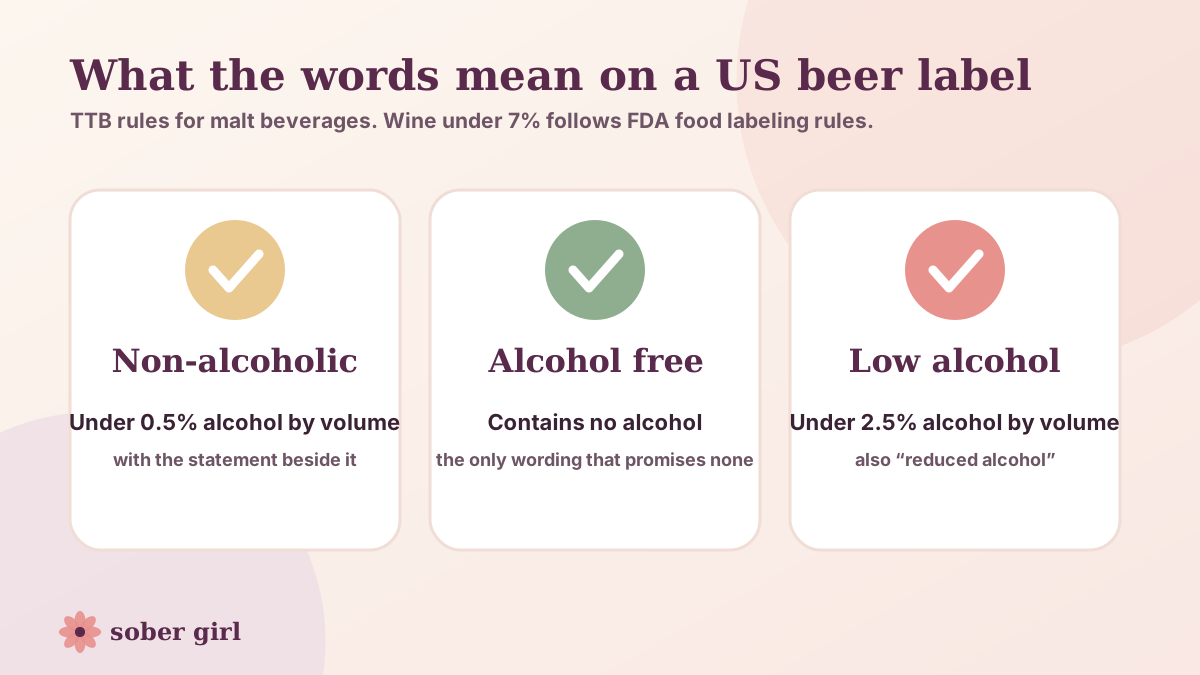
| “Non-alcoholic” | May be used only with the statement “contains less than 0.5 percent (or .5%) alcohol by volume” immediately adjacent [1] | Malt beverages (beer) |
| “Alcohol free” | May be used only on products containing no alcohol [1] | Malt beverages (beer) |
| “Low alcohol” or “reduced alcohol” | May be used only on products containing less than 2.5% alcohol by volume [1] | Malt beverages (beer) |
| Wine under 7% alcohol by volume | The labeling provisions of the Federal Alcohol Administration Act do not apply, and FDA food labeling and packaging requirements apply instead [2] | Wine |
| Health warning statement | Required on wines containing at least 0.5% alcohol by volume that are intended for human consumption [2] | Wine |
In plain terms: a beer labelled “non-alcoholic” can still contain up to just under 0.5% alcohol, and only “alcohol free” promises none [1]. For wine, we could not find a TTB definition of “non-alcoholic”, and we will not present the beer rule as if it applied. If it matters to you, the percentage printed on the bottle is the number to read.
What research says about no-alcohol drinks and recovery
The evidence is new and thin, and it points two ways. A 2026 commentary in Addiction argues that no/lo drinks may be useful for people who drink at higher-risk levels but do not have severe alcohol use disorder, and may carry significant risk of relapse for people recovering from it. The authors say experimental and longitudinal studies are still needed [3].
One follow-up study of 198 Japanese men treated for alcohol dependence found one-year abstinence was higher among non-users of non-alcoholic beer than users (51.2% against 15.3%), and the authors urged caution about non-alcoholic beer as a potential threat to abstinence [5]. It was observational and men only, so it shows an association, not that the drink caused the relapse.
A content analysis of 153 posts on a recovery forum found most were positive or neutral about these drinks (86.8%), and also noted warnings that some contain low amounts of alcohol (9.8% of posts) and cases of being served alcohol by mistake after ordering one (6.5%) [4]. It describes what people say, not what happens to them.
The honest summary: for some people a drink in a wine glass keeps the ritual without the alcohol. For others the taste, the glass and the label are a cue. Research cannot yet tell you which group you are in.
Before you buy: a short checklist
- Read the percentage, not just the name. “Non-alcoholic” and “0.0%” are different promises.
- Decide what your count means. Whether a drink under 0.5% breaks your streak is a personal rule. Settle it before the first bottle, not after.
- Notice the cue. If pouring it into a wine glass makes you want the real thing, that is information.
- Be careful when ordering out. Some recovery-forum posters report being served alcohol by mistake [4]. Ask, and look at the bottle.
- If you are recovering from alcohol use disorder, ask your clinician. The evidence above is a reason to ask, not a rule.
Does it break your sober count?
There is no official answer. Some people count only alcohol-free days and treat anything under 0.5% as fine; others keep a stricter line and use only drinks labelled “alcohol free”. In Sober Girl you choose your own sober date and what it means to you, and the app counts from the date you set. See our guide to counting sober days and what to do instead of drinking.
Is Sober Girl right for you?
- use an Android phone (the iPhone app is coming soon)
- want a private tracker, with your journal kept on your device
- want a day counter, money saved and a daily check-in in one calm place
- want a Craving SOS with a breathing exercise and a 10-minute timer
- want to start free and add Plus only if you need the journal, insights or milestone cards
- need it on an iPhone today (the App Store version is coming soon)
- want a community feed, live coaching or an AI chat
- want a structured multi-week education program
- need medical help for heavy drinking or withdrawal. An app is not treatment, so see the safety notes above
Frequently asked questions
Is non-alcoholic wine really alcohol-free?
Not necessarily. Under TTB’s beer rules, “non-alcoholic” means less than 0.5% alcohol by volume with a statement beside it, and only “alcohol free” means none. We found no TTB definition of non-alcoholic wine, so check the stated percentage.
Can I drink non-alcoholic wine in early sobriety?
The evidence is unsettled. A 2026 commentary says no/lo drinks may carry a real risk of relapse for people recovering from alcohol use disorder, and may help some people who are cutting down. Ask your clinician if you are in recovery.
Does non-alcoholic wine break sobriety?
That is a personal rule. Some people accept drinks under 0.5% alcohol by volume; others use only drinks labelled alcohol free. Decide before you start and keep to it.
Is non-alcoholic wine safe in pregnancy?
We did not find a source on this that we could cite. Ask your doctor or midwife, and note that non-alcoholic does not mean zero alcohol.
What is the difference between non-alcoholic and alcohol free?
On US beer labels, non-alcoholic means under 0.5% alcohol by volume with a statement, and alcohol free means no alcohol at all.
Sources
- Malt Beverage Labeling: Alcohol Content. US Alcohol and Tobacco Tax and Trade Bureau (TTB), page updated 2025. Covers malt beverages (beer). It does not cover wine.
- Wine Labeling: Overview of Labeling Requirements for Domestic Wines, Less than 7 Percent Alcohol by Volume. US Alcohol and Tobacco Tax and Trade Bureau (TTB), updated 18 November 2025.
- Zero tolerance for 0%? How should clinicians and other practitioners respond to the use of alcohol-free and low-alcohol products in higher risk groups. Holmes J, Oldroyd CK, Drummond C, et al. Addiction, 2026. A commentary. It says the available evidence is limited and calls for more studies.
- Characterizing sentiment and self-reported experiences with nonalcoholic beverages in the context of efforts to quit or cut down on drinking. Acuff SF, Bowdring MA, Kelly JF, Russell AM. Alcohol and Alcoholism, 2026. A content analysis of 153 posts on an online recovery forum, so it describes what people say, not outcomes.
- Self-help group participation, avoidance of nonalcoholic beer, and nonsmoking independently predict better drinking outcomes in Japanese alcohol-dependent men. Yokoyama A, Kimura M, Yoshimura A, et al. Alcohol: Clinical and Experimental Research, 2026. 198 men treated for alcohol dependence, followed for 12 months. Observational and men only.
How we write these. Every figure above links to the source it came from, and we label self-reported and observational results as such. Where we could not find a source we trust, the page says so instead of filling the gap. Sober Girl is made by ShipAI Lab and this is not medical advice. Sources were checked on 6 October 2026. If you spot an error, email us at integrateopenai@gmail.com.
Keep reading
Today is day one.
Sober Girl is a private sobriety tracker for women, on Android now and coming soon to iPhone: day counter, money saved, craving SOS and a tree that grows with you. Free to start.