Lapse vs relapse: what a slip means, and what to do next
You drank after a stretch without. Before you decide what it says about you, here is what the research distinguishes, and what NIAAA recommends doing next.
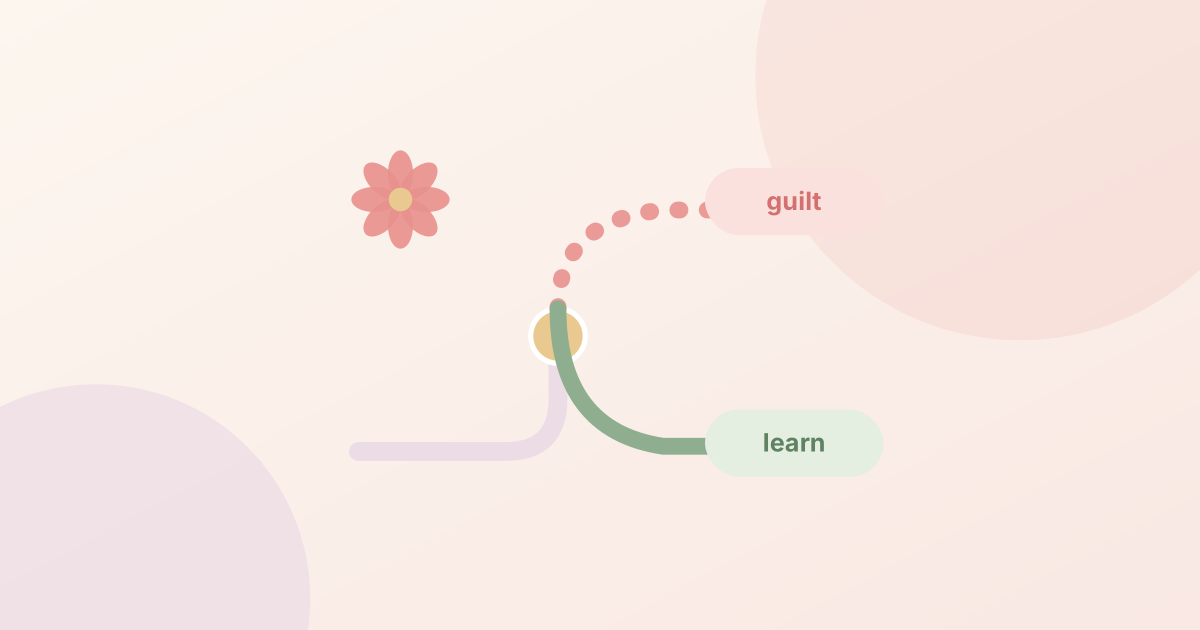
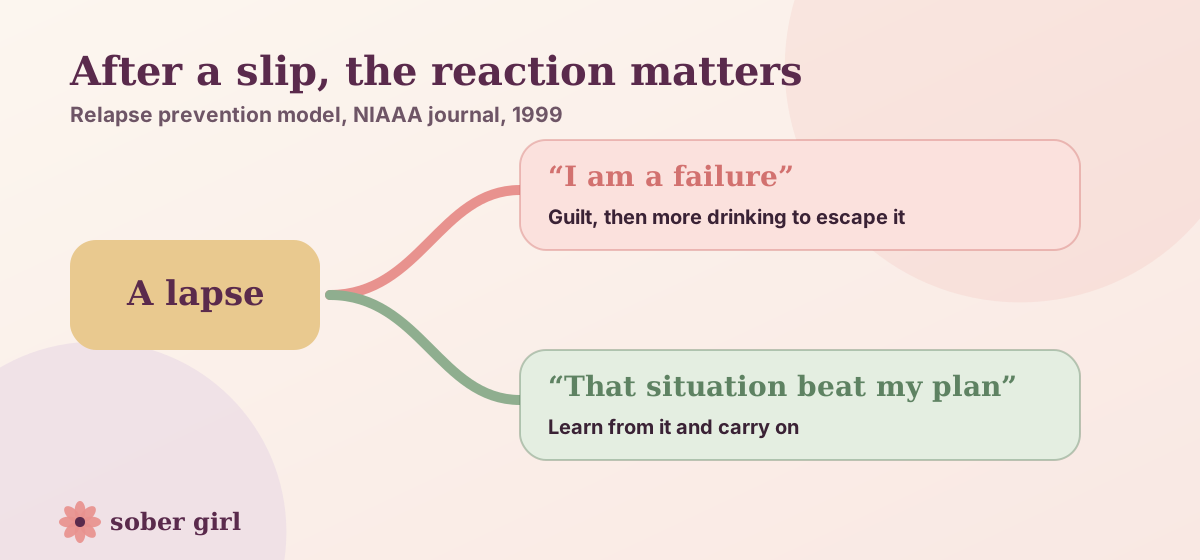
A lapse is a first violation of an abstinence goal, such as one drink. A relapse is a return to uncontrolled drinking or abandonment of the goal, according to an NIAAA journal overview of the relapse prevention model [1]. A lapse greatly raises the risk of eventual relapse, but the progression is not inevitable [1]. What seems to matter is the reaction: people who read a lapse as personal failure and feel guilt are more likely to keep drinking [1]. NIAAA’s advice is to stop right away, treat the next day as a fresh start and tell a supportive person [2].
Lapse and relapse, defined
| Lapse | Relapse | |
|---|---|---|
| What it is | The first violation of the abstinence goal [1] | A return to uncontrolled drinking, or abandonment of the abstinence goal [1] |
| Example | One glass of wine at a wedding | Drinking as before, or deciding the attempt is over |
| Does one lead to the other? | A lapse greatly increases the risk of eventual relapse, but the progression is not inevitable [1] | Not applicable |
Terminology varies between clinicians and between people in recovery, and some avoid "relapse" altogether. The distinction is useful because it separates an event from a pattern. A lapse is a thing that happened. A relapse is a path, and the path is not set by the first step.
Track it in Sober Girl
Why the story you tell yourself matters
The relapse prevention model describes what it calls the abstinence violation effect: the drinker’s emotional reaction to a first lapse, and what they attribute it to [1]. People who blame personal failure feel guilt and negative emotion, which can lead to more drinking as a way to escape those feelings [1]. People who say "I have no willpower and will never stop" are more likely to abandon the attempt altogether [1].
The alternative the authors describe is attributing the lapse to not being able to cope with a specific high-risk situation. That group realises one needs to learn from one’s mistakes, and may develop more effective ways to cope [1]. In practice: "I was exhausted, it was a wedding, and I had no plan" is information. "I am a failure" is a story that makes the next drink more likely.
What NIAAA says to do next
- Stop right away. NIAAA’s advice is to get back on track, the sooner the better [2].
- Treat tomorrow as a new day. Each day is a chance to start over [2].
- Expect setbacks. NIAAA says setbacks are common when people undertake a major change, and not to run yourself down [2].
- Tell someone. Contact your healthcare provider or a sober, supportive friend right away to talk about what happened [2].
- Work out why, with some distance. Look at the timing and setting, then decide what you will do differently and write it down [2].
- Remove what makes it easy. Get rid of alcohol at home, and keep busy with things not associated with drinking [2].
If you were drinking heavily
What to do with your count
There is no rule. Some people restart on the day after the slip; others keep a running total of alcohol-free days so one drink does not erase months. Our guide on how to count sober days covers both. The count is a tool, and the useful question is which version keeps you going.
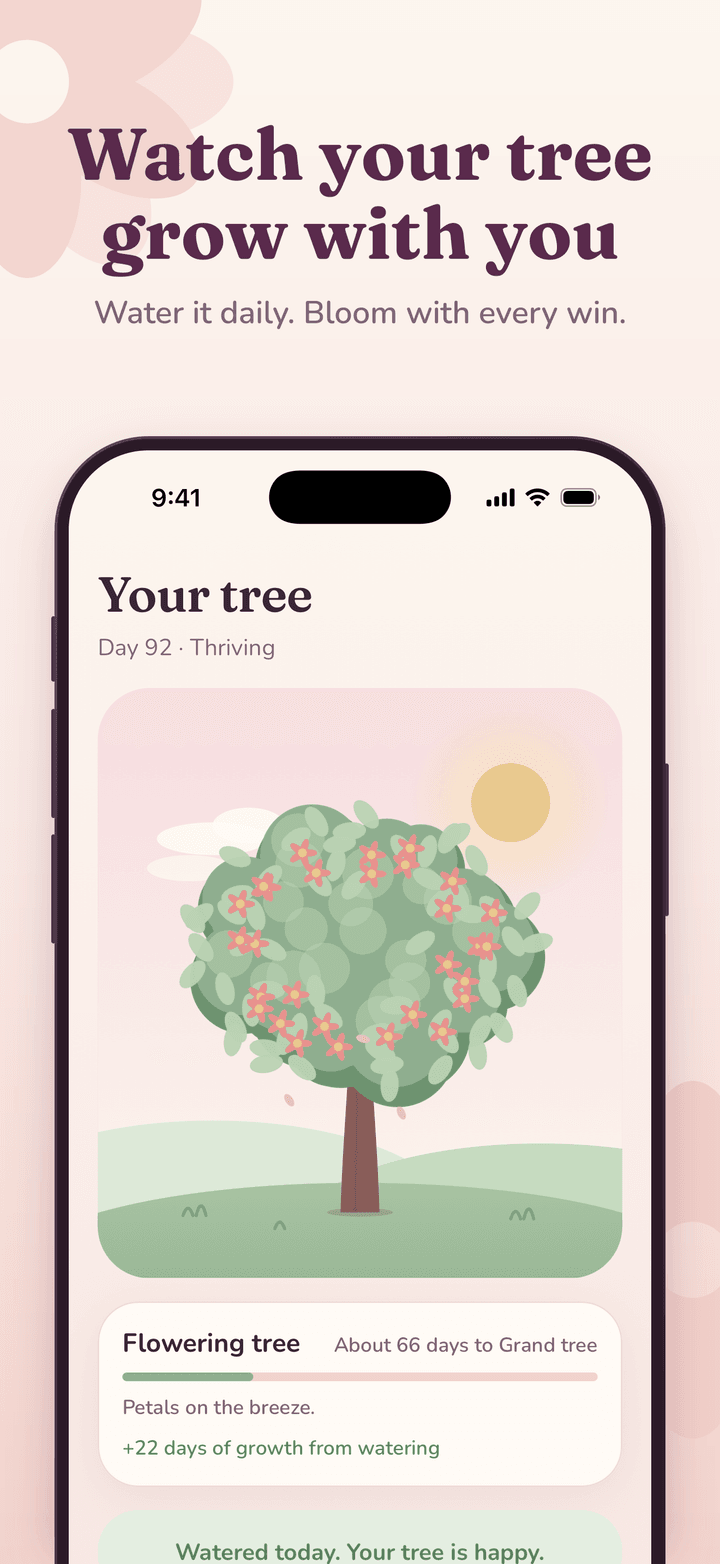
In Sober Girl, you can change your sober date in Settings under "Sober since", and your journal is not affected. The tree never dies: if you miss check-ins it fades toward olive, and a check-in brings it back. The app is built so a hard week does not punish you.
Relapse over years
A cohort of 461 people who sought help for alcohol problems was followed for 16 years. Among those in remission at three years, the likelihood of relapse by 16 years depended on factors including drinking level, self-efficacy and reliance on avoidance coping [5]. The authors warned that remission achieved by cutting down on your own may be followed by a high likelihood of relapse, so preventive support may be worthwhile [5]. The point is not that relapse is certain. It is that skills and support matter for years, not only the first month.
When a slip is a sign to get more help
If slips keep happening, or you cannot stop once you start, an app is not enough. NIAAA says a health professional can help and lists three FDA-approved medications for alcohol use disorder that you can discuss [6]. The NIAAA Alcohol Treatment Navigator helps adults find evidence-based care [7], and the SAMHSA National Helpline (1-800-662-4357) is free, confidential and open 24/7 [4]. If you feel hopeless, call or text 988 in the US [8].
Is Sober Girl right for you?
- use an Android phone (the iPhone app is coming soon)
- want a private tracker, with your journal kept on your device
- want a day counter, money saved and a daily check-in in one calm place
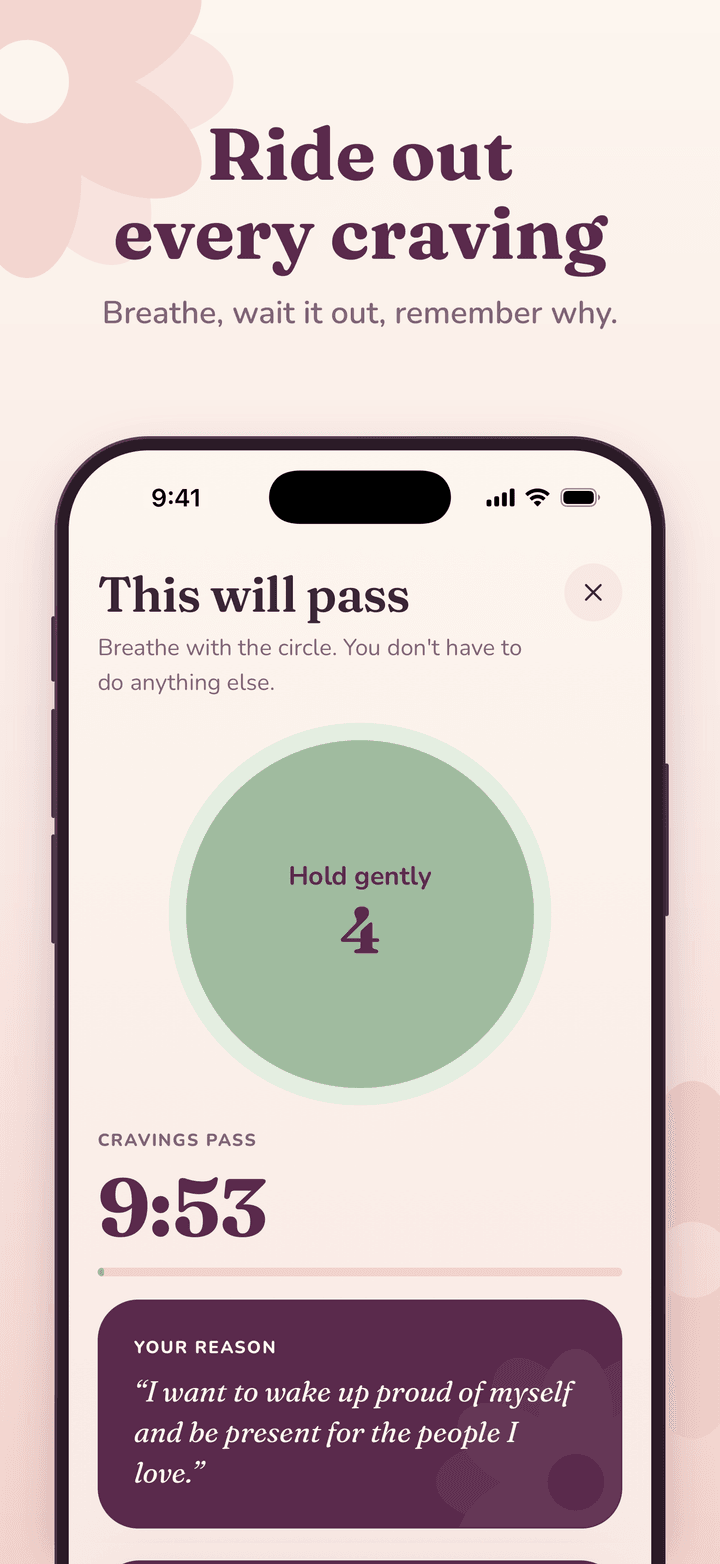
- want a Craving SOS with a breathing exercise and a 10-minute timer
- want to start free and add Plus only if you need the journal, insights or milestone cards
- need it on an iPhone today (the App Store version is coming soon)
- want a community feed, live coaching or an AI chat
- want a structured multi-week education program
- need medical help for heavy drinking or withdrawal. An app is not treatment, so see the safety notes above
Frequently asked questions
What is the difference between a lapse and a relapse?
A lapse is the first violation of an abstinence goal, such as one drink. A relapse is a return to uncontrolled drinking or abandonment of the goal. A lapse raises the risk of relapse but does not make it inevitable.
Does one drink mean I have relapsed?
Not by the research definition. One drink is a lapse. What happens next, and how you interpret it, decides whether it becomes a relapse.
I relapsed after 30 days. Did I lose all my progress?
No. What you learned, the skills you built and the days you spent without drinking remain. NIAAA says setbacks are common and advises treating the next day as a fresh start.
What should I do right after a slip?
Stop drinking right away, tell a supportive person or your healthcare provider, work out what led to it when you have some distance, remove alcohol from the house, and keep busy with other things.
Should I reset my sober counter after a slip?
It is your choice. Some people restart; others keep a running total of alcohol-free days. Choose the version that keeps you going.
Sources
- Relapse Prevention: An Overview of Marlatt’s Cognitive-Behavioral Model. Larimer ME, Palmer RS, Marlatt GA. Alcohol Research & Health 1999;23(2):151-160 (NIAAA).
- Recovering from a Drinking Episode When Your Goal is to Quit. NIAAA, Rethinking Drinking.
- Alcohol withdrawal. MedlinePlus (US National Library of Medicine), reviewed 1 January 2025 by Frank D. Brodkey, MD.
- National Helpline. SAMHSA. Free, confidential, 24/7 treatment referral line: 1-800-662-4357.
- Rates and predictors of relapse after natural and treated remission from alcohol use disorders. Moos RH, Moos BS. Addiction 2006. 461 people followed for 16 years. A cohort study of people who sought help, not a trial.
- Professional support. NIAAA, Rethinking Drinking. Lists the three FDA-approved medications for alcohol use disorder and when to see a health professional.
- NIAAA Alcohol Treatment Navigator. NIAAA.
- 988 Suicide & Crisis Lifeline. 988 Lifeline. Call, text or chat, free and confidential, 24/7.
How we write these. Every figure above links to the source it came from, and we label self-reported and observational results as such. Where we could not find a source we trust, the page says so instead of filling the gap. Sober Girl is made by ShipAI Lab and this is not medical advice. Sources were checked on 6 October 2026. If you spot an error, email us at integrateopenai@gmail.com.
Keep reading
Today is day one.
Sober Girl is a private sobriety tracker for women, on Android now and coming soon to iPhone: day counter, money saved, craving SOS and a tree that grows with you. Free to start.