3 years sober: why researchers use this mark
Three years is a number researchers chose on purpose. Here is why, what the longest follow-up found, and what it suggests for staying power.
Three years is a recognised checkpoint in alcohol research. A 16-year study of 461 people who sought help used three-year remission as its starting point and then tracked who relapsed [1]. People remitted at three years were more or less likely to relapse by 16 years depending on drinking level, self-efficacy and reliance on avoidance coping [1]. At 14 US standard drinks a week, three years is 2,190 drinks skipped, about 30,660 g of alcohol and 214,620 kcal from the alcohol alone [2] [3].

Why three years
Moos and Moos followed 461 people who had started to seek help for an alcohol problem, surveying them at baseline and at 1, 3, 8 and 16 years [1]. They examined who reached three-year remission and, among those who did, who relapsed over the following 13 years [1]. Three years is therefore a research checkpoint: far enough from the first attempt to count as sustained, and a useful starting line for asking what keeps people there.
It sits inside NIAAA’s "sustained" band, which runs from 1 to 5 years [4]. In that framing you are around the middle of it.
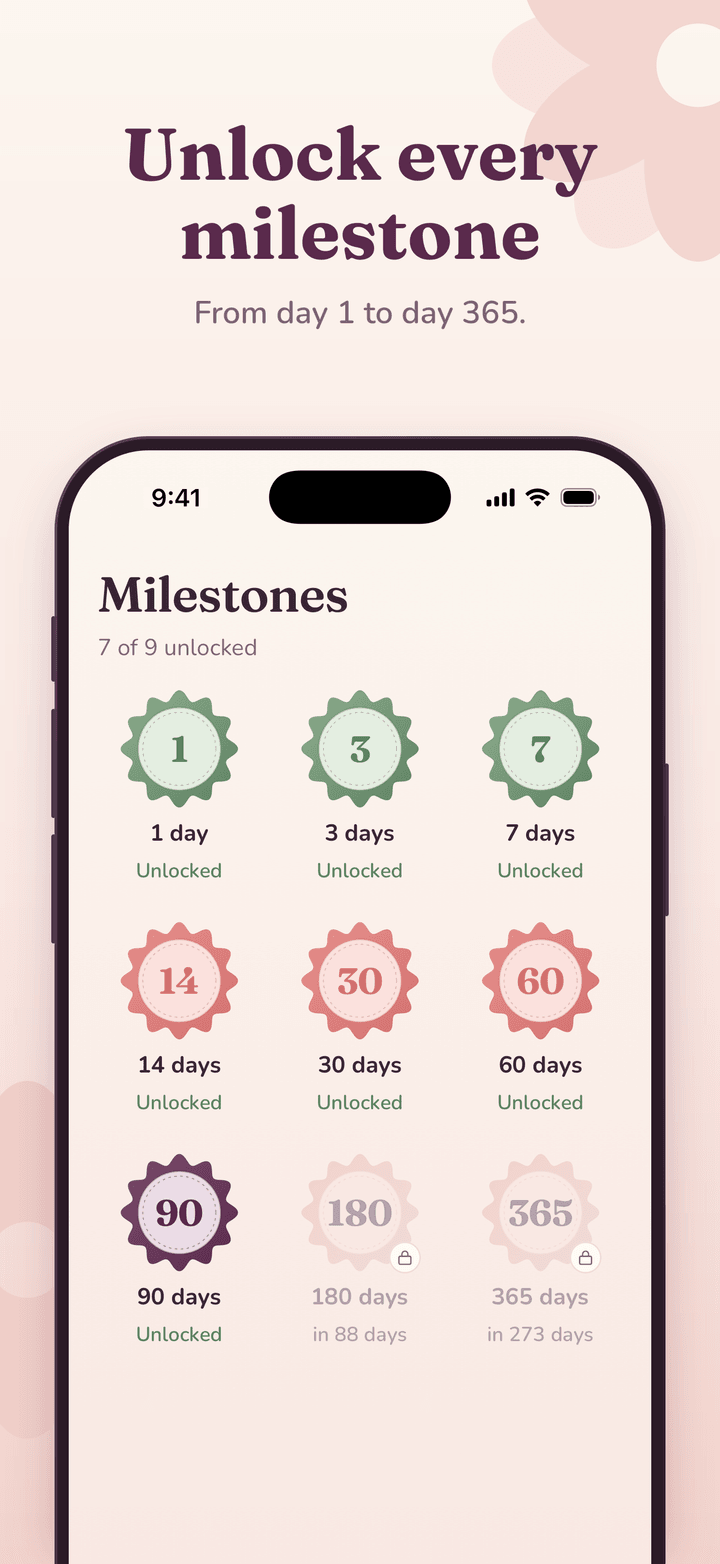
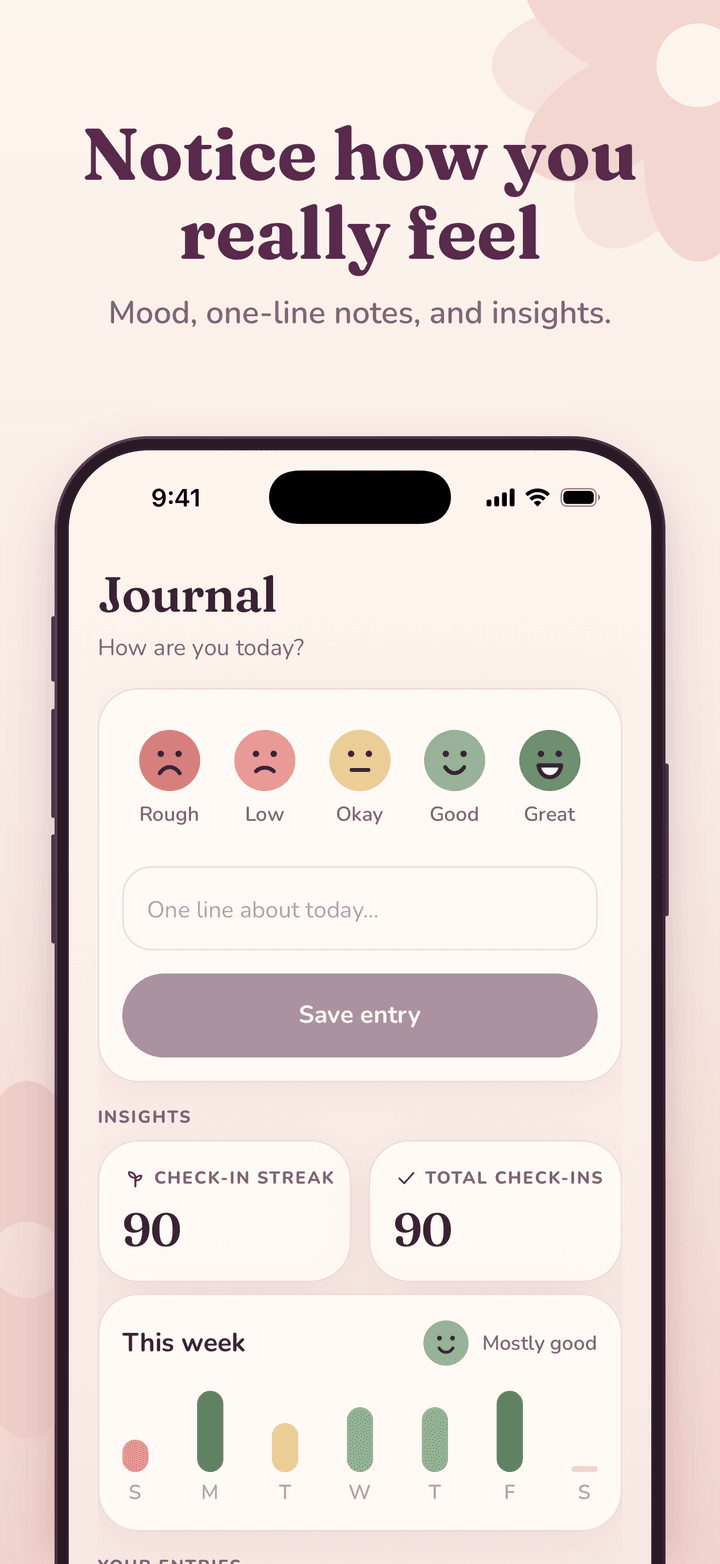
Track it in Sober Girl
What predicted relapse after three years
Among people who were remitted at three years, those who were more likely to relapse by 16 years had consumed more alcohol, were less likely to see their drinking as a significant problem, had less self-efficacy and relied more on avoidance coping [1]. These findings held both for people who obtained help and for those who did not [1]. Translated into plain language:
- Self-efficacy is believing you can handle a hard situation without drinking. It can be built by doing it, one situation at a time.
- Avoidance coping is handling feelings by not facing them. Staying away from everything hard works until it does not.
- Seeing it as a problem is the part that fades as years pass. Remembering why you stopped is not dwelling; it is maintenance.
The authors also concluded that remission achieved by cutting down without help may be followed by a high likelihood of relapse, so preventive support may be useful [1]. That is the study speaking about its sample of people who had sought help, not a prediction for any one person.
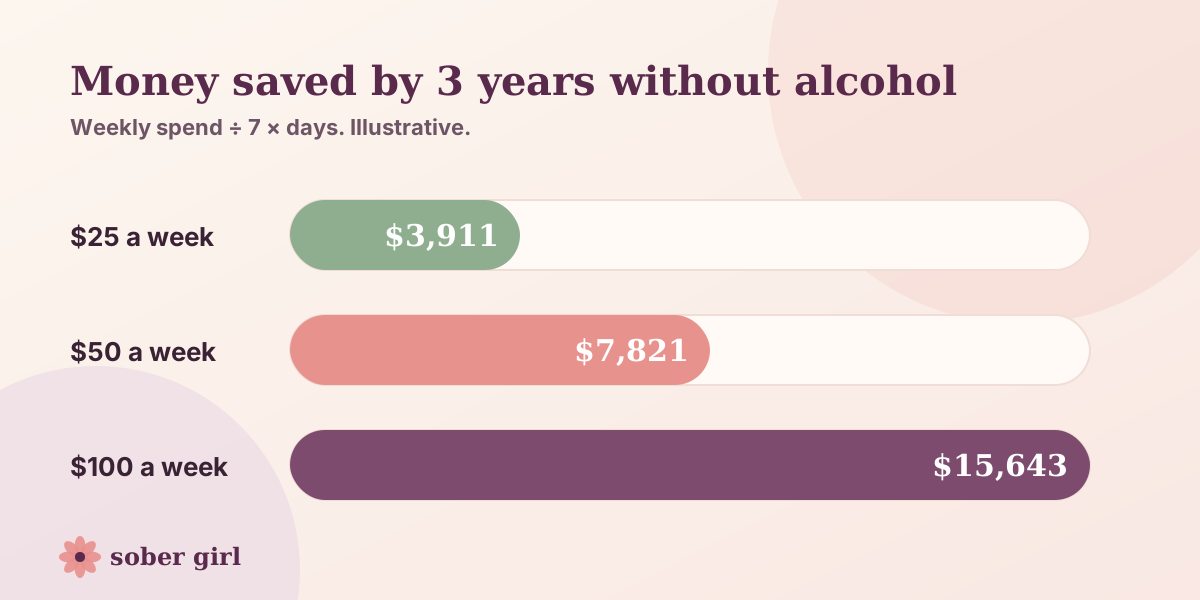
Three years in numbers
| If you used to spend | Saved by 3 years |
|---|---|
| $25 a week | $3,911 |
| $50 a week | $7,821 |
| $100 a week | $15,643 |
| If you used to drink | Drinks skipped by 3 years | Alcohol skipped | Calories from alcohol skipped |
|---|---|---|---|
| 7 standard drinks a week | 1,095 | 15,330 g | 107,310 kcal |
| 14 standard drinks a week | 2,190 | 30,660 g | 214,620 kcal |
| 21 standard drinks a week | 3,285 | 45,990 g | 321,930 kcal |
Staying power: a short list
- Keep one daily anchor. A check-in, a note, a walk. One is enough.
- Plan hard dates in advance, even at year three. Birthdays, anniversaries of losses and big work events do not announce themselves.
- Practise on small things. Each hard moment handled without drinking adds to self-efficacy, which the research links with staying.
- Know where help is. NIAAA’s Alcohol Treatment Navigator [5] and the SAMHSA helpline (1-800-662-4357) [6] are there years in, not only at the start.
If you slip, our guide to lapse vs relapse explains why one drink does not undo three years. See also 2 years sober and 5 years sober.
Is Sober Girl right for you?
- use an Android phone (the iPhone app is coming soon)
- want a private tracker, with your journal kept on your device
- want a day counter, money saved and a daily check-in in one calm place
- want a Craving SOS with a breathing exercise and a 10-minute timer
- want to start free and add Plus only if you need the journal, insights or milestone cards
- need it on an iPhone today (the App Store version is coming soon)
- want a community feed, live coaching or an AI chat
- want a structured multi-week education program
- need medical help for heavy drinking or withdrawal. An app is not treatment, so see the safety notes above
Frequently asked questions
What happens after 3 years of sobriety?
There is no list of body changes tied to year three. Researchers use three-year remission as a checkpoint: in a 16-year study, people remitted at three years were more or less likely to relapse depending on drinking level, self-efficacy and coping style.
Is it still possible to relapse after 3 years sober?
Yes. In the 16-year study, some people remitted at three years did relapse by 16 years. The factors linked to it include lower self-efficacy and more avoidance coping.
How much money do you save in 3 years of not drinking?
Weekly spend divided by 7, times 1,095. At $50 a week, about $7,821.
What is the 3-year sobriety coin?
Many twelve-step groups give an annual coin or chip. Colours and intervals vary by group, and there is no official AA coin.
Sources
- Rates and predictors of relapse after natural and treated remission from alcohol use disorders. Moos RH, Moos BS. Addiction 2006. 461 people followed for 16 years. A cohort study of people who sought help, not a trial.
- What Is A Standard Drink?. NIAAA.
- Alcohol Consumption and Obesity: An Update. Traversy G, Chaput JP. Current Obesity Reports, 2015. A review. It reports that alcohol provides 7 kcal per gram and that the evidence on weight is mixed.
- NIAAA Recovery Research Definitions. NIAAA. Research definitions for remission and recovery from alcohol use disorder, with duration bands.
- NIAAA Alcohol Treatment Navigator. NIAAA.
- National Helpline. SAMHSA. Free, confidential, 24/7 treatment referral line: 1-800-662-4357.
How we write these. Every figure above links to the source it came from, and we label self-reported and observational results as such. Where we could not find a source we trust, the page says so instead of filling the gap. Sober Girl is made by ShipAI Lab and this is not medical advice. Sources were checked on 6 October 2026. If you spot an error, email us at integrateopenai@gmail.com.
Keep reading
Today is day one.
Sober Girl is a private sobriety tracker for women, on Android now and coming soon to iPhone: day counter, money saved, craving SOS and a tree that grows with you. Free to start.