Does alcohol cause hair loss? What the research actually found
Search results say yes with confidence. The best summary of the studies says: maybe, a little, and the data are inconsistent.
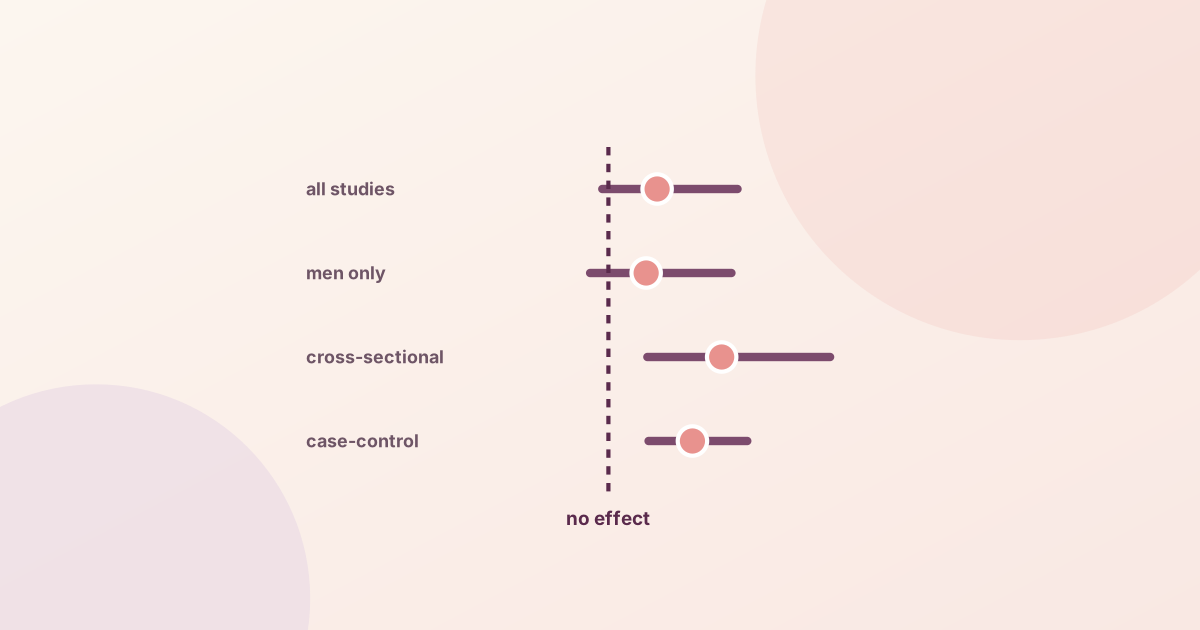
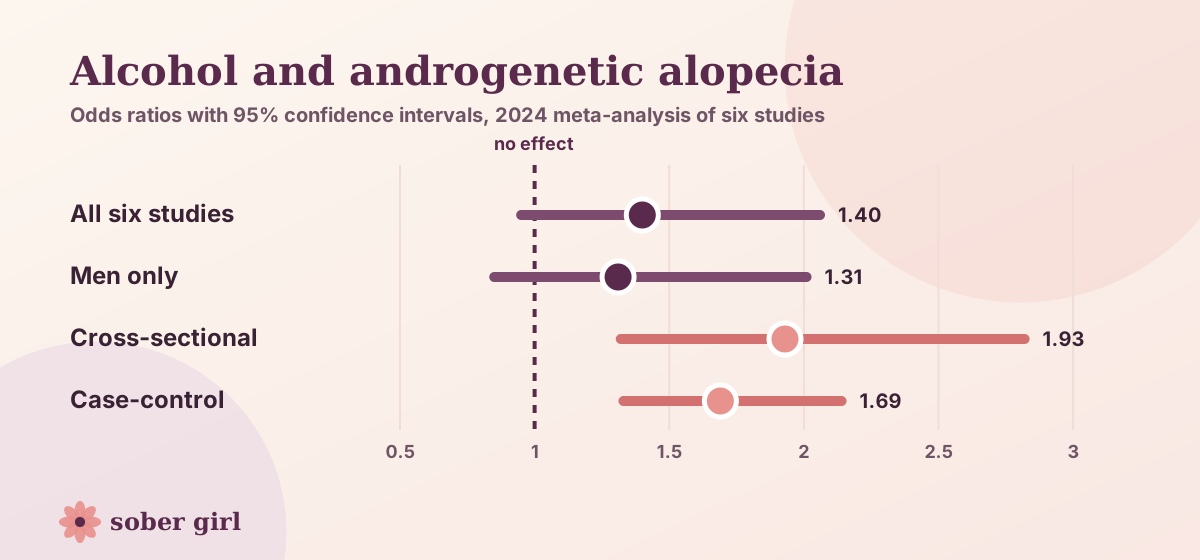
A 2024 systematic review and meta-analysis of six studies found people who drink had 1.40 times the odds of androgenetic alopecia, the most common form of hair loss, compared with people who do not, but the 95% confidence interval ran from 0.95 to 2.06, which includes no effect [1]. Cross-sectional and case-control studies showed larger associations, the studies disagreed with each other (heterogeneity 77%), and the authors concluded alcohol’s effect on this kind of hair loss may be less than initially assumed [1]. It covers one type of hair loss and does not speak to other kinds.
What the review found
Yang and colleagues searched five databases up to March 2024 for studies of alcohol consumption and clinically diagnosed androgenetic alopecia, and pooled six of them [1]. The authors describe the association between alcohol and this kind of hair loss as uncertain and controversial before their analysis [1].
| Group of studies | Odds ratio | 95% confidence interval | Includes 1 (no effect)? |
|---|---|---|---|
| All six studies | 1.40 | 0.95 to 2.06 | Yes |
| Men only (four studies) | 1.31 | 0.85 to 2.01 | Yes |
| Cross-sectional studies (three) | 1.93 | 1.32 to 2.82 | No |
| Case-control studies (two) | 1.69 | 1.33 to 2.14 | No |
Track it in Sober Girl
How to read those numbers
- Odds ratio 1.40 means that, across the studies, the odds of this hair loss were about 40% higher in drinkers than in non-drinkers. It does not mean 40% more hair loss.
- A confidence interval that includes 1 means the data are compatible with no effect. The overall result and the men-only result both do.
- Two sets of studies did not include 1, but cross-sectional and case-control designs are the weaker ones for showing cause: they look at one moment, or compare people with and without the condition, and cannot show what came first.
- Heterogeneity of 77% is high. It means the studies disagreed with each other more than chance would explain, so a single pooled number should be held loosely [1].
What this does not show
The review covered androgenetic alopecia only [1]. It does not tell you whether heavy drinking affects other kinds of hair loss, whether alcohol-related nutrient problems matter, or whether your hair will regrow if you stop. We found no study that measured regrowth after stopping alcohol.
The male subgroup was reported in the abstract; we found no separate pooled estimate for women [1]. So for a woman asking this question, the answer is that the best summary is mostly about men and does not establish a woman-specific effect either way.
If you are worried about your hair
Hair loss has many possible causes and a dermatologist or doctor can check for them, which is more useful than changing one habit and waiting. If you are cutting down for other reasons, your hair is one more thing you can watch: a photo of your parting each month in the same light is a record you can show a clinician. See our pages on what happens when you stop drinking and alcohol face for what is documented about your body and skin.
Is Sober Girl right for you?
- use an Android phone (the iPhone app is coming soon)
- want a private tracker, with your journal kept on your device
- want a day counter, money saved and a daily check-in in one calm place
- want a Craving SOS with a breathing exercise and a 10-minute timer
- want to start free and add Plus only if you need the journal, insights or milestone cards
- need it on an iPhone today (the App Store version is coming soon)
- want a community feed, live coaching or an AI chat
- want a structured multi-week education program
- need medical help for heavy drinking or withdrawal. An app is not treatment, so see the safety notes above
Frequently asked questions
Does alcohol cause hair loss?
The best summary we found, a 2024 meta-analysis of six studies, found a possible association with androgenetic alopecia (odds ratio 1.40) but the confidence interval, 0.95 to 2.06, includes no effect.
Will my hair grow back if I stop drinking?
We found no study that measured regrowth after stopping alcohol. If you are worried about hair loss, a doctor or dermatologist can look for causes.
Does alcohol cause hair loss in women?
The meta-analysis abstract reports a subgroup for men and we found no separate estimate for women, so a woman-specific effect is not established.
Why do some studies show a stronger link?
Cross-sectional and case-control studies showed larger associations, but they are weaker designs for showing cause, and the studies disagreed with each other.
Sources
- Exploring the association between alcohol consumption and androgenic alopecia: a systematic review and meta-analysis. Yang WJ, Lee JY, Ko DS, et al. Alcohol and Alcoholism, 2024. Six studies. Heterogeneity was high (I² 77%). Androgenetic alopecia only.
How we write these. Every figure above links to the source it came from, and we label self-reported and observational results as such. Where we could not find a source we trust, the page says so instead of filling the gap. Sober Girl is made by ShipAI Lab and this is not medical advice. Sources were checked on 6 October 2026. If you spot an error, email us at integrateopenai@gmail.com.
Keep reading
Today is day one.
Sober Girl is a private sobriety tracker for women, on Android now and coming soon to iPhone: day counter, money saved, craving SOS and a tree that grows with you. Free to start.