Alcohol face: what is proven about drinking and your skin
Red, puffy, dull. "Alcohol face" is everywhere online. Here is what the research supports, what it does not, and what we could not find.
Alcohol face is a popular label, not a medical diagnosis. What research supports is narrower. A 2023 dermatology review proposes that alcohol increases microvascular permeability, which may directly cause flushing [1], and a cohort of 82,737 US women followed for 14 years found alcohol intake was associated with a higher risk of rosacea [2]. The same review calls the rosacea link controversial and finds the acne evidence inconsistent [1]. We found no controlled study of how your face changes after you stop, so before-and-after claims are anecdotes.

What "alcohol face" means
The term is used loosely for a red, flushed, puffy or dull look people attribute to drinking. There is no medical diagnosis called alcohol face, and no single mechanism that explains all of it. The research is organised around specific skin conditions and reactions instead, and that is what this page covers.
Track it in Sober Girl
Flushing
A 2023 review in Clinical, Cosmetic and Investigational Dermatology proposes that alcohol increases microvascular permeability in the skin, which "may be a direct cause of skin flushing" after drinking [1]. The review presents this as a proposed mechanism rather than a measured outcome [1]. The review treats the precise reason as a hypothesis, so the claim here is a proposal, not a finding.
Rosacea
The strongest dataset is a prospective cohort in the Nurses’ Health Study II: 82,737 US women, followed for 14 years, with 4,945 cases of rosacea. Increased alcohol intake was associated with a significantly increased risk of rosacea in women [2]. The authors note it was an epidemiological study without examination of the mechanism [2], which means it shows an association, not a cause.
The 2023 review is more cautious: it says whether alcohol aggravates rosacea "remains controversial", points to two epidemiological studies linking higher intake to risk, and notes that some case-control studies found no correlation [1]. If you have persistent facial redness, it is worth asking a doctor or dermatologist whether it could be rosacea.
Acne
The review says alcohol "appears to be a risk factor for acne" on the basis of cross-sectional studies in European and Asian populations, but that findings are inconsistent: in adults one study found no increased risk, and another linked alcohol to mild acne [1]. Cross-sectional studies cannot show that drinking caused the acne.
What is not proven
- Puffiness. Searches for "alcohol puffy face" are common. We did not find a controlled study that measured facial puffiness after drinking and after stopping, so we do not state a mechanism or a timeline.
- Before and after. The dermatology review does not discuss whether skin conditions improve after stopping or reducing alcohol [1]. Before-and-after photos online are individual cases.
- A date. There is no study that says your face changes by day 14 or day 30. In a 2019 Dry January evaluation, 70% reported better sleep and 54% lost weight [3]; skin was not among the figures on the page.
Sleep is the better-documented piece: alcohol disrupts the second half of the night and reduces REM sleep [4]. We found no study that ties that sleep disruption to a specific change in the face, so we leave it there.
How to see it for yourself
- Take a photo in the same light on day one, day 14 and day 30. A phone camera by a window is enough.
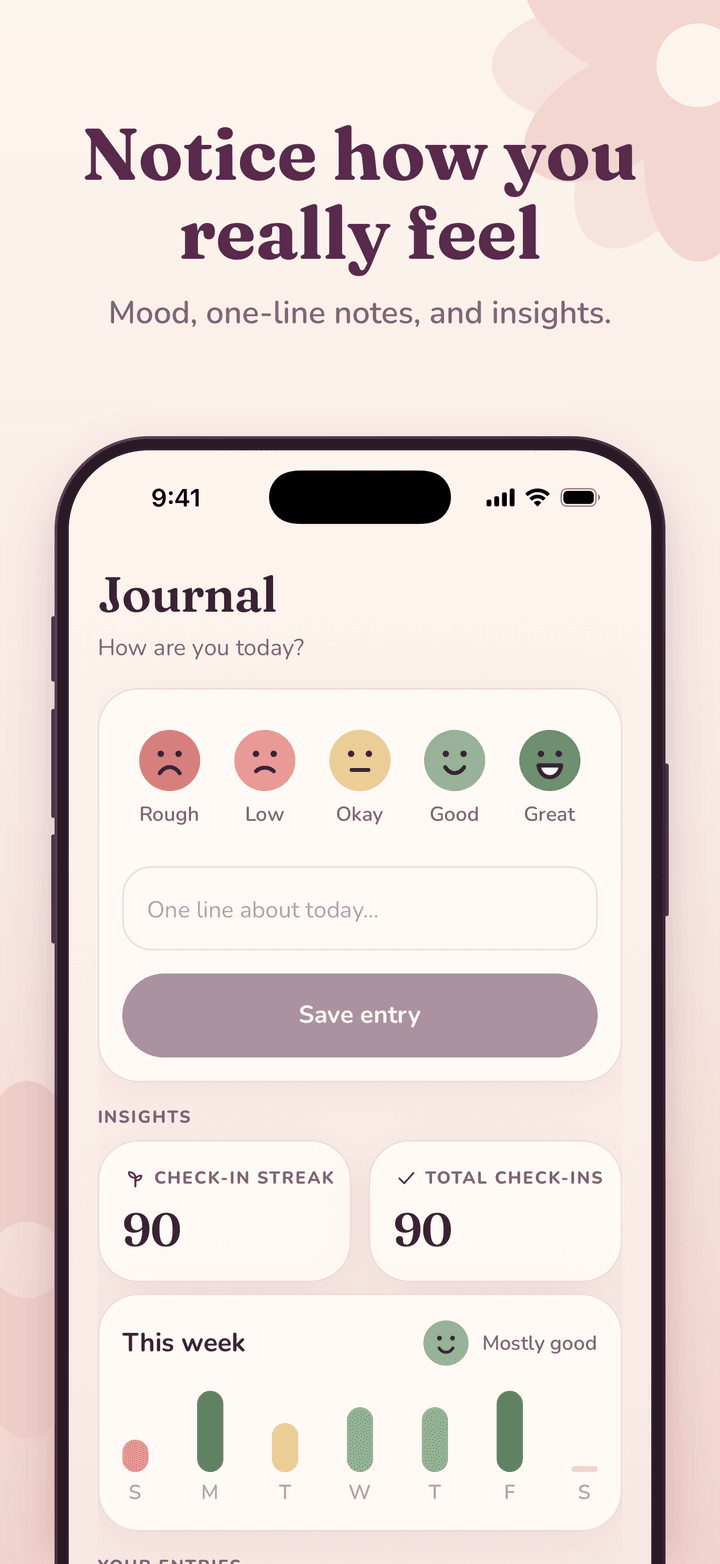
- Note sleep and mood alongside it. A daily check-in, plus a short journal note with a mood (Plus), shows whether the face follows the sleep.
- See a doctor about persistent redness, swelling or acne that does not change. Those can have causes that are not alcohol.
For what is documented at each stage, see what happens when you stop drinking alcohol and sleep after quitting alcohol.
Is Sober Girl right for you?
- use an Android phone (the iPhone app is coming soon)
- want a private tracker, with your journal kept on your device
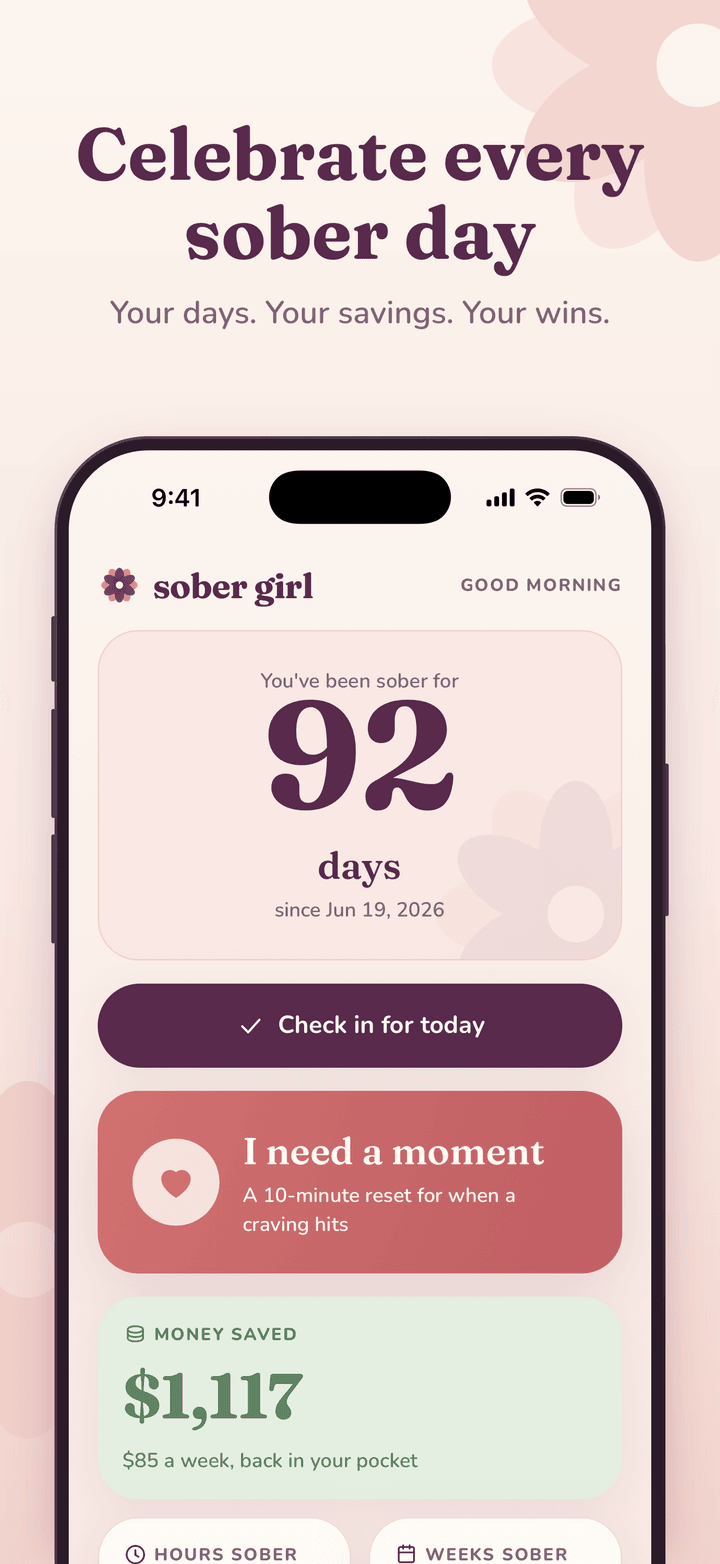
- want a day counter, money saved and a daily check-in in one calm place
- want a Craving SOS with a breathing exercise and a 10-minute timer
- want to start free and add Plus only if you need the journal, insights or milestone cards
- need it on an iPhone today (the App Store version is coming soon)
- want a community feed, live coaching or an AI chat
- want a structured multi-week education program
- need medical help for heavy drinking or withdrawal. An app is not treatment, so see the safety notes above
Frequently asked questions
What is alcohol face?
A popular term for a red, puffy or dull look people link to drinking. It is not a medical diagnosis. Research covers specific things such as flushing, rosacea and acne.
Does alcohol cause rosacea?
A large US cohort of 82,737 women found alcohol intake was associated with a higher risk of rosacea over 14 years. It was observational. A 2023 review calls the link controversial because some studies found no correlation.
How long does it take for alcohol face to go away?
We found no study that measured it. A 2019 Dry January evaluation reported better sleep and weight loss, but skin was not among its figures.
Why does my face get red when I drink?
A 2023 dermatology review proposes that alcohol increases microvascular permeability in the skin, which may directly cause flushing. If it is strong, painful or persistent, speak to a doctor.
Does quitting alcohol clear acne?
The evidence is inconsistent. A review found some studies linked alcohol to acne and others found no increased risk in adults.
Sources
- Advances in Relationship Between Alcohol Consumption and Skin Diseases. Liu L, Chen J. Clinical, Cosmetic and Investigational Dermatology 2023;16:3785-3791. A review. It does not discuss how skin changes after stopping alcohol.
- Alcohol intake and risk of rosacea in US women. Li S, Cho E, Drucker AM, Qureshi AA, Li WQ. Journal of the American Academy of Dermatology 2017. Nurses’ Health Study II: 82,737 women, 14 years, 4,945 cases. Epidemiological, so association and not cause.
- The evidence behind the Dry January challenge: benefits and long-term impact. Alcohol Change UK, summarising evaluations by Dr Richard de Visser, University of Sussex. Self-reported results from people who signed up to Dry January, not a controlled trial.
- Alcohol and the Sleeping Brain. PubMed Central, US National Library of Medicine.
How we write these. Every figure above links to the source it came from, and we label self-reported and observational results as such. Where we could not find a source we trust, the page says so instead of filling the gap. Sober Girl is made by ShipAI Lab and this is not medical advice. Sources were checked on 6 October 2026. If you spot an error, email us at integrateopenai@gmail.com.
Keep reading
Today is day one.
Sober Girl is a private sobriety tracker for women, on Android now and coming soon to iPhone: day counter, money saved, craving SOS and a tree that grows with you. Free to start.