Hangxiety: why you feel anxious after drinking, and what to do
Anxiety the morning after a night out is common enough to have its own nickname. Here is what the research actually shows, what it does not, and how to use the pattern.
Hangxiety is the anxiety some people feel the day after drinking. In a study led by UCL and the University of Exeter, nearly 100 social drinkers were randomised to drink or stay sober: highly shy people felt less anxious while drinking but significantly more anxious the next morning, and next-day anxiety was linked to alcohol use disorder symptoms [1]. Anxiety is also a recognised symptom of alcohol withdrawal [2]. If it keeps happening, tracking your mood on drinking and alcohol-free days shows the pattern.
What hangxiety is
“Hangxiety” is an informal word for anxiety that shows up during a hangover, the day after drinking. It is not a diagnosis. People describe a racing mind, dread, replaying what they said or did, and a sense that something is wrong. It is common enough that the word has stuck, and searches for it are high, which says something about how many people recognise it.
Track it in Sober Girl
What the research found
The best-known study was led by Beth Marsh at UCL with Celia Morgan at the University of Exeter. Nearly 100 social drinkers were randomly assigned to drink (about six units) or to stay sober, and anxiety was measured at baseline, after the drinking or sober period, and the next morning. Highly shy people felt somewhat less anxious while drinking, but showed a significant increase in anxiety the following day. Among highly shy people, higher next-day anxiety was associated with more alcohol use disorder symptoms, which the researchers suggested could be a marker of risk [1].
The limits. The sample was small, the effect was seen in highly shy people rather than drinkers in general, and an association with symptoms is not proof that anything causes anything. It tells you that hangover anxiety is real and measurable. It does not tell you that everyone who feels it has a problem.
Does it hit women harder?
We did not find a study that shows hangxiety is worse in women. A study of 2,446 Dutch students compared 22 hangover symptoms after a heavy night. Women reported higher severity of nausea and tiredness in several groups, but the authors said the differences were small and of little clinical relevance [3]. It did not single out anxiety, so we will not claim a difference.
Hangxiety versus withdrawal
They overlap, and it matters to know the difference. MedlinePlus lists anxiety among the symptoms of alcohol withdrawal, along with shakiness, sweating, insomnia and a rapid heart rate, and notes that symptoms can start within 8 hours of the last drink and, in severe cases, involve confusion, fever, hallucinations or seizures [2]. If your anxiety comes with those, or you feel you need a drink to settle it, speak to a doctor.
What to do about it
This is general advice, not medical guidance:
- Do not drink more to calm it. It can feel like it works, but it sets up the same cycle again.
- Look after the basics. Food, water, a shower, fresh air and rest.
- Name it. “This is a hangover feeling and it will pass” is more accurate than “I have done something terrible.”
- Avoid big decisions or confrontations until you feel steadier.
- Note it. Write down your mood the morning after, and compare it with mornings after alcohol-free days.
Turn it into information
The most useful thing you can do with hangxiety is count it. For two or three weeks, rate your mood each morning from 1 to 5 and mark whether you drank the night before. Most people see a pattern within a few weeks. Try Dry, the free app from Alcohol Change UK, logs mood and sleep alongside your drinking [4], and Sober Girl has a daily check-in alongside its day counter. If a month without alcohol sounds worth testing, our Sober October and Dry January guides explain how.
When to get help
NIAAA advises seeing a doctor or mental health professional if symptoms of anxiety or depression persist or get worse [5]. If you drink heavily, do not stop suddenly on your own, because withdrawal can be dangerous [2]. The SAMHSA National Helpline (1-800-662-4357) is free, confidential and open 24/7 [6].
Is Sober Girl right for you?
- use an Android phone (the iPhone app is coming soon)
- want a private tracker, with your journal kept on your device
- want a day counter, money saved and a daily check-in in one calm place
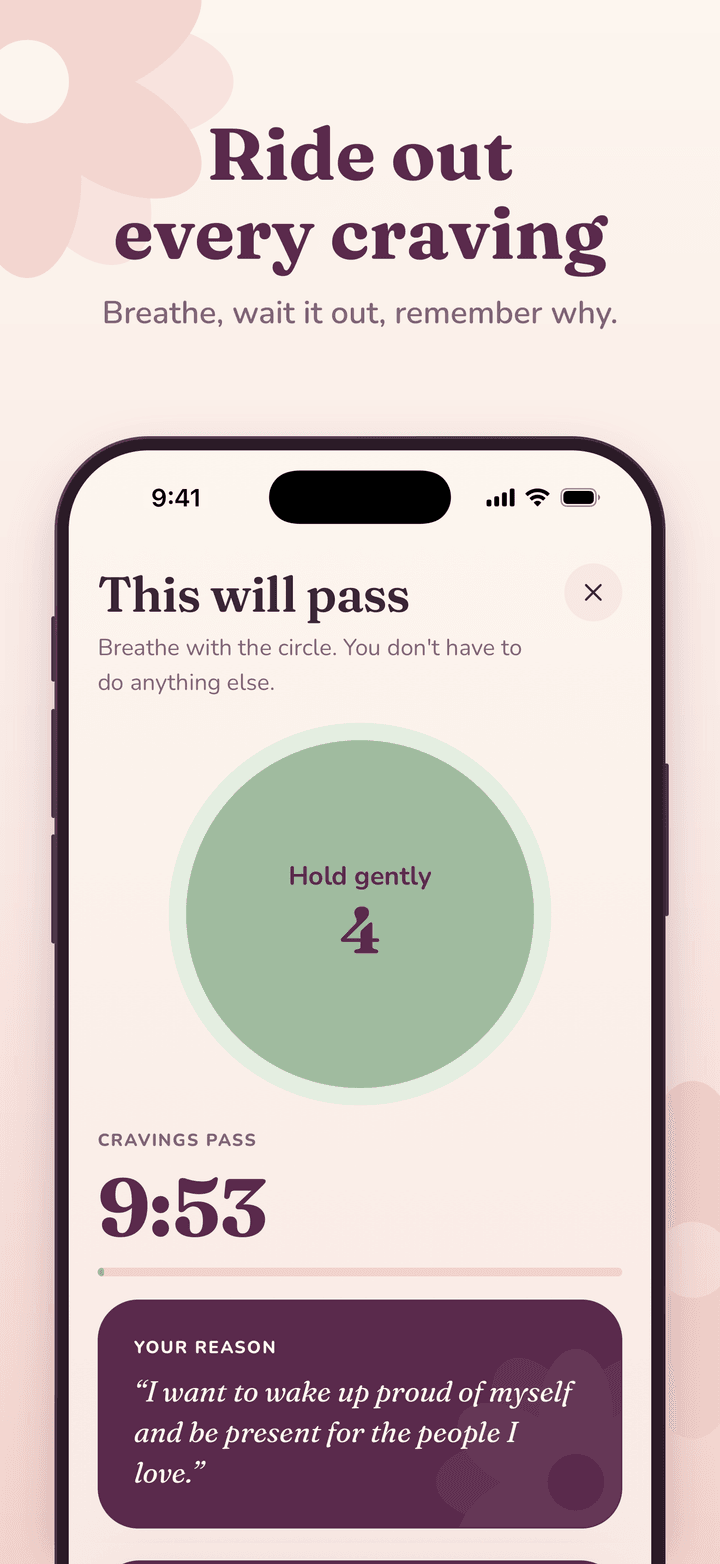
- want a Craving SOS with a breathing exercise and a 10-minute timer
- want to start free and add Plus only if you need the journal, insights or milestone cards
- need it on an iPhone today (the App Store version is coming soon)
- want a community feed, live coaching or an AI chat
- want a structured multi-week education program
- need medical help for heavy drinking or withdrawal. An app is not treatment, so see the safety notes above
Frequently asked questions
What is hangxiety?
An informal word for anxiety during a hangover, the day after drinking. It is not a diagnosis. In a UCL and Exeter study, highly shy people felt less anxious while drinking but significantly more anxious the next morning.
Why do I feel anxious after drinking?
Research shows next-day anxiety is real and can be measured, and anxiety is also a symptom of alcohol withdrawal. A study of nearly 100 social drinkers found highly shy people had a significant increase in anxiety the day after drinking.
Is hangxiety a sign of a drinking problem?
Not on its own. In that study, higher next-day anxiety was associated with more alcohol use disorder symptoms in highly shy people, which researchers suggested could be a marker of risk, but the sample was small. If you are worried, talk to a doctor.
How long does hangxiety last?
We did not find a reliable figure, so we do not give one. If anxiety persists or gets worse, speak to a doctor or mental health professional.
Sources
- Shyness, alcohol use disorders and “hangxiety”: a naturalistic study of social drinkers. Marsh B, Morgan CJA, et al. (UCL and University of Exeter), Personality and Individual Differences, 2018. Summarised in the EurekAlert news release. Nearly 100 social drinkers randomised to drink or stay sober. Small sample; the effect was seen in highly shy people.
- Alcohol withdrawal. MedlinePlus (US National Library of Medicine), reviewed 1 January 2025 by Frank D. Brodkey, MD.
- Sex Differences in the Presence and Severity of Alcohol Hangover Symptoms. van Lawick van Pabst AE, Devenney LE, Verster JC. Journal of Clinical Medicine, 2019. 2,446 Dutch students reporting 22 hangover symptoms.
- TRY DRY: The Dry January App on the App Store (US). Apple App Store listing, retrieved 6 October 2026.
- Professional support. NIAAA, Rethinking Drinking. Lists the three FDA-approved medications for alcohol use disorder and when to see a health professional.
- National Helpline. SAMHSA. Free, confidential, 24/7 treatment referral line: 1-800-662-4357.
How we write these. Every figure above links to the source it came from, and we label self-reported and observational results as such. Where we could not find a source we trust, the page says so instead of filling the gap. Sober Girl is made by ShipAI Lab and this is not medical advice. Sources were checked on 6 October 2026. If you spot an error, email us at integrateopenai@gmail.com.
Keep reading
Today is day one.
Sober Girl is a private sobriety tracker for women, on Android now and coming soon to iPhone: day counter, money saved, craving SOS and a tree that grows with you. Free to start.