Pink cloud sobriety: what it is and what comes after it
Some people feel unusually light and certain in their first weeks without alcohol. Here is what the term means, what research says about it, and how to plan for the day it fades.
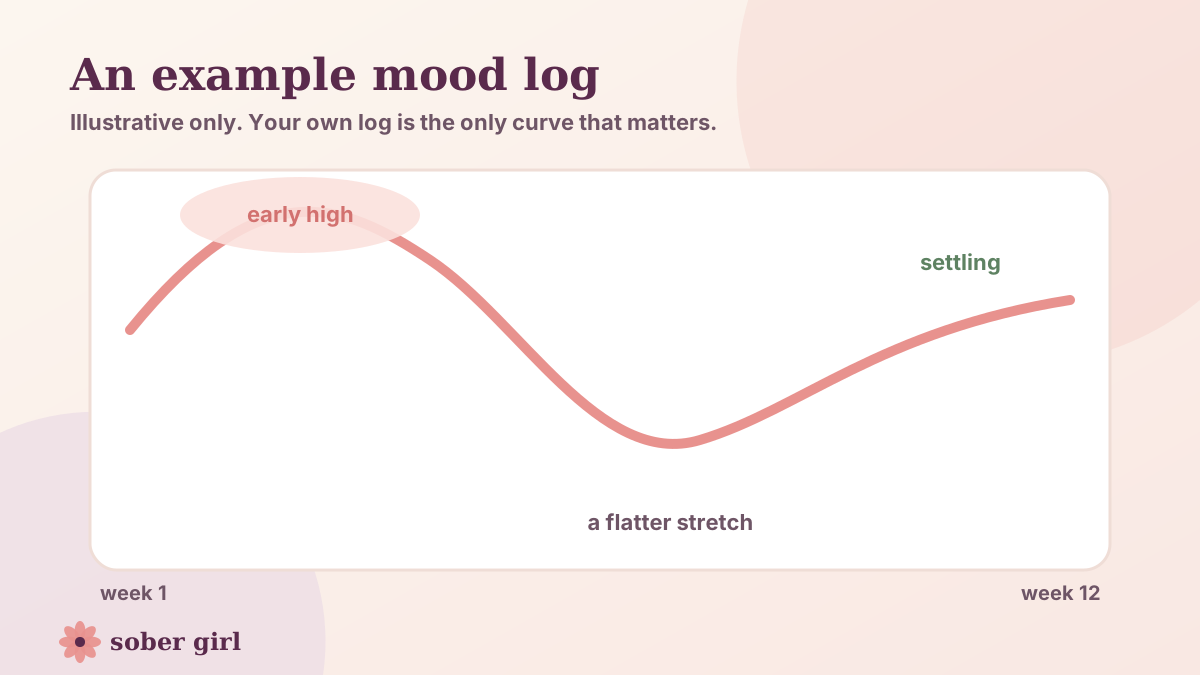
The pink cloud is informal recovery slang for an early stretch of high energy and optimism. It is not a diagnosis, and we found no study that measures how common it is or how long it lasts. In a 2023 interview study of 30 people in recovery from illicit drugs in the Netherlands, some described early recovery as "sitting on a pink cloud", linked it to regaining control over parts of life that had felt out of reach, and said it came with risks. Several said that once it faded they had to find other sources of enthusiasm [1]. The practical use is simple: write down your mood daily, so a quieter week reads as a stage and not as failure.

What the pink cloud means
The pink cloud is a phrase from recovery communities, not from medicine. It describes the weeks when stopping drinking feels like relief, energy and certainty: you sleep, you plan, you tell everyone, and you cannot imagine wanting a drink again. For many people it is a lovely part of early sobriety. The risk is not the feeling. The risk is building a plan that depends on it.
Evidence is thin, and it is worth saying so plainly. The best source we found is one qualitative study that interviewed 30 people in recovery from illicit drugs, not alcohol, with 10 each in early (under a year), sustained (1 to 5 years) and stable (over 5 years) recovery [1]. It describes what people said, and it cannot tell us how many people have a pink cloud, when it starts or how long it lasts. Treat everything below as a pattern some people report, not a rule.
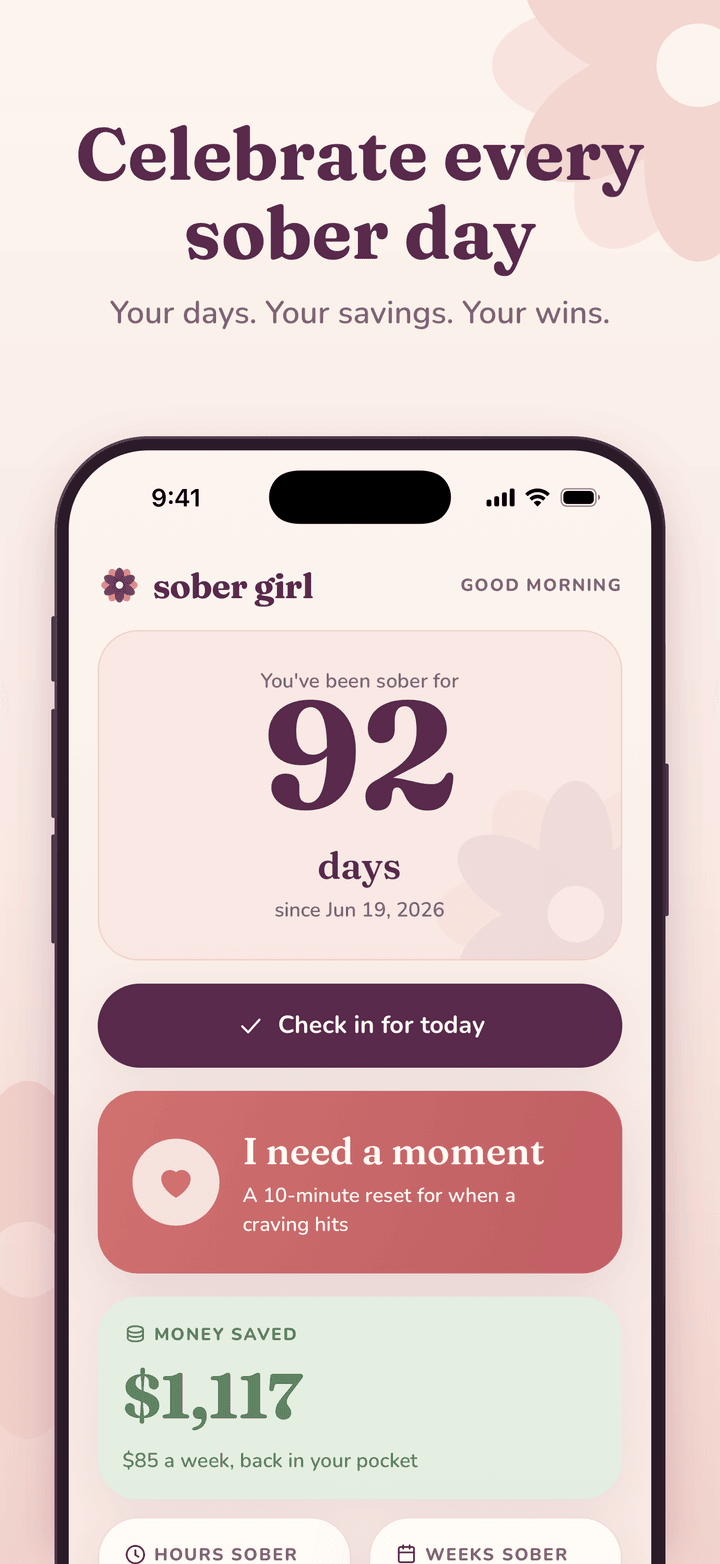
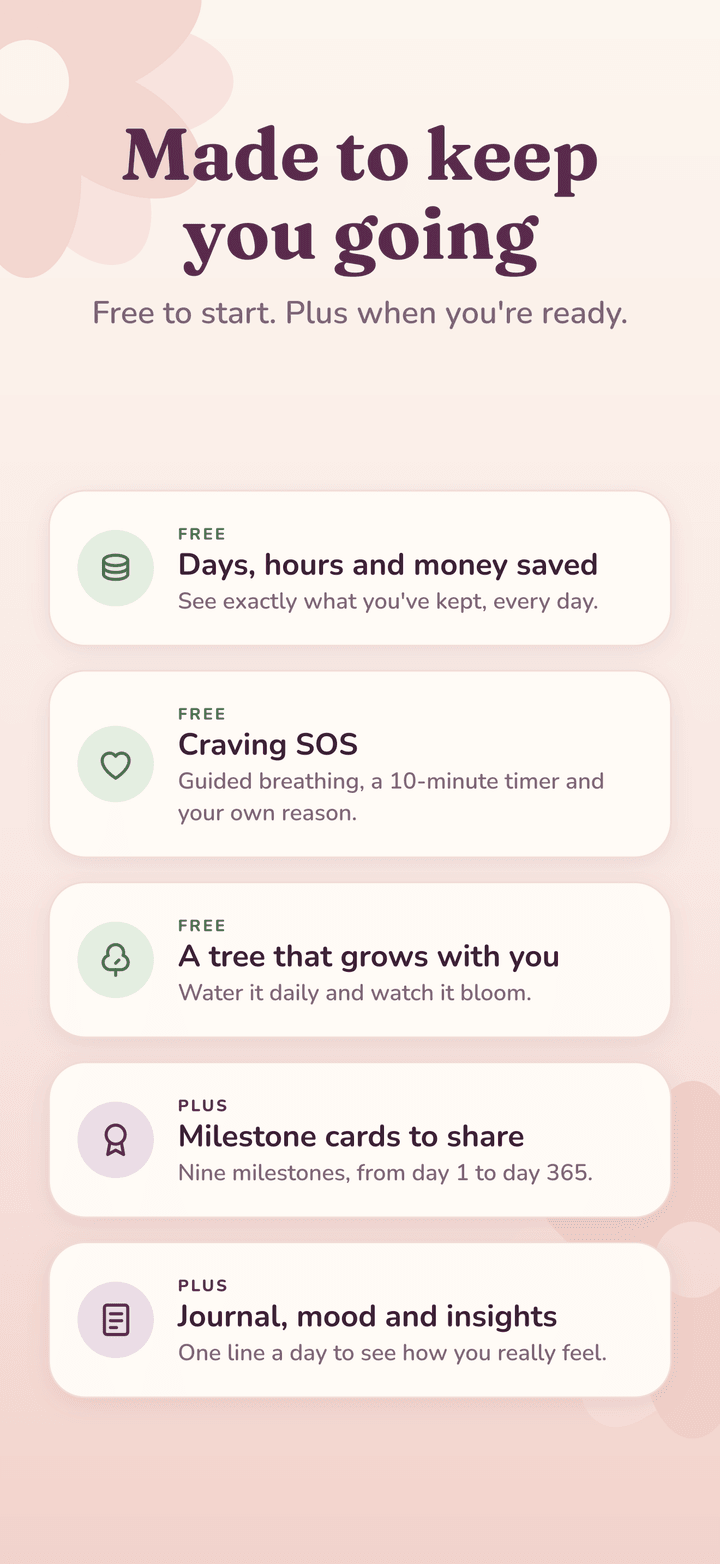
Track it in Sober Girl
What the interview study found
- Some participants described early recovery as "sitting on a pink cloud", with strong positive energy and feeling good, which the authors tie to gaining control over things that had seemed uncontrollable [1].
- The pink cloud "also came with risks". One participant tried to repair relationships so fast, reconciling with four or five people in a week and going to someone almost every day to do penance, that it exhausted them and the people around them [1].
- After it, several participants said they had to find other sources of enthusiasm and energy to keep their recovery moving, and one felt they were not progressing as fast as before [1].
The authors conclude that support needs change over time and that long-term goals matter [1]. In practice that means the first weeks are about getting through days, and the months after are about building a life you want to stay sober in.
Why a dip can feel like failure
When the high ends, the same days can feel flat. Part of that may be ordinary: sleep problems commonly continue for weeks after stopping, with 36% to 91% of patients reporting insomnia while drinking or within several weeks of stopping [2]. A tired brain makes a grey Tuesday feel worse than it is.
The bigger danger is what you decide the dip means. Research on relapse describes an "abstinence violation effect": the emotional reaction to a first lapse, and what the person blames it on [3]. If you decide the pink cloud was the real you and the dip proves you are failing, a bad week becomes a reason to drink. If you decide the dip is a stage, it is one more thing to get through.
How to plan for the dip while you are still up
- Keep the promises small. Do not commit to ten new habits or five difficult conversations in your best week. Pick two.
- Write today’s mood in one word, every day. In the dip, the log is the proof that you have had hard days before and got through them.
- Find the second source of energy now. A class, a walk with a friend, a project. Something that is yours, not something that depends on feeling light.
- Tell one person the plan for a flat day. "If I go quiet, here is what helps" is easier to say now than later.
- Treat a craving in the dip like any other. The tools are the same: a ten-minute wait, a breathing exercise, a call. See urge surfing.
Today’s focus: start the mood log
In Sober Girl, the daily check-in takes seconds, and Plus adds a journal, mood and insights, with your data kept on your device. Start it on a good day. In three weeks, you will be glad to have a line of data to read when the cloud thins. If you are still working out your count, the sobriety calculator turns a start date into days.
If you stopped after heavy drinking
Is Sober Girl right for you?
- use an iPhone or an Android phone
- want a private tracker, with your journal kept on your device
- want a day counter, money saved and a daily check-in in one calm place
- want a Craving SOS with a breathing exercise and a 10-minute timer
- want to start free and add Plus only if you need the journal, insights or milestone cards
- want a community feed, live coaching or an AI chat
- want a structured multi-week education program
- need medical help for heavy drinking or withdrawal. An app is not treatment, so see the safety notes above
Frequently asked questions
What is the pink cloud in sobriety?
It is informal recovery slang for an early stretch of high energy and optimism after stopping. It is not a diagnosis. In a 2023 Dutch interview study of 30 people in recovery from illicit drugs, some described early recovery as sitting on a pink cloud.
How long does the pink cloud last?
We found no study that measures it, so any number you see online is a guess. The Dutch interview study reports that for some people it faded and they then needed other sources of energy, without giving a length of time.
Is the pink cloud dangerous?
The feeling is not. The risks the study describes are overdoing things, such as trying to repair too many relationships at once, and being caught off guard when it fades. Logging your mood daily and keeping commitments small are practical guards.
What do I do when the pink cloud ends?
Treat it as a stage. Keep the daily check-in going, use the tools you already have for cravings, and find a second source of energy that does not depend on mood. See a doctor if low mood or anxiety persists or gets worse.
Can Sober Girl track my mood?
Yes. The daily check-in is free, and Plus adds a journal, mood and insights. Your data stays on your device. It is a tracker, not treatment.
Sources
- Understanding the Process of Drug Addiction Recovery Through First-Hand Experiences: A Qualitative Study in the Netherlands Using Lifeline Interviews. Martinelli TF, Roeg DPK, Bellaert L, van de Mheen D, Nagelhout GE. Qualitative Health Research 2023;33(10):857-870. 30 people in recovery from illicit drug addiction, not alcohol. Qualitative interviews, so it describes experiences and does not measure how common they are.
- Alcohol and the Sleeping Brain. PubMed Central, US National Library of Medicine.
- Relapse Prevention: An Overview of Marlatt’s Cognitive-Behavioral Model. Larimer ME, Palmer RS, Marlatt GA. Alcohol Research & Health 1999;23(2):151-160 (NIAAA).
- Professional support. NIAAA, Rethinking Drinking. Lists the three FDA-approved medications for alcohol use disorder and when to see a health professional.
- 988 Suicide & Crisis Lifeline. 988 Lifeline. Call, text or chat, free and confidential, 24/7.
- Alcohol withdrawal. MedlinePlus (US National Library of Medicine), reviewed 1 January 2025 by Frank D. Brodkey, MD.
- National Helpline. SAMHSA. Free, confidential, 24/7 treatment referral line: 1-800-662-4357.
How we write these. Every figure above links to the source it came from, and we label self-reported and observational results as such. Where we could not find a source we trust, the page says so instead of filling the gap. Sober Girl is made by ShipAI Lab and this is not medical advice. Sources were checked on 6 October 2026. If you spot an error, email us at [email protected].
Keep reading
Today is day one.
Sober Girl is a private sobriety tracker for women, on iPhone and Android: day counter, money saved, craving SOS and a tree that grows with you. Free to start.