Alcohol and diabetes: what it does to your blood sugar, and how to lower the risk
Many people with diabetes can drink in moderation, and many cannot safely drink at all. The difference is in the details your care team knows about you.
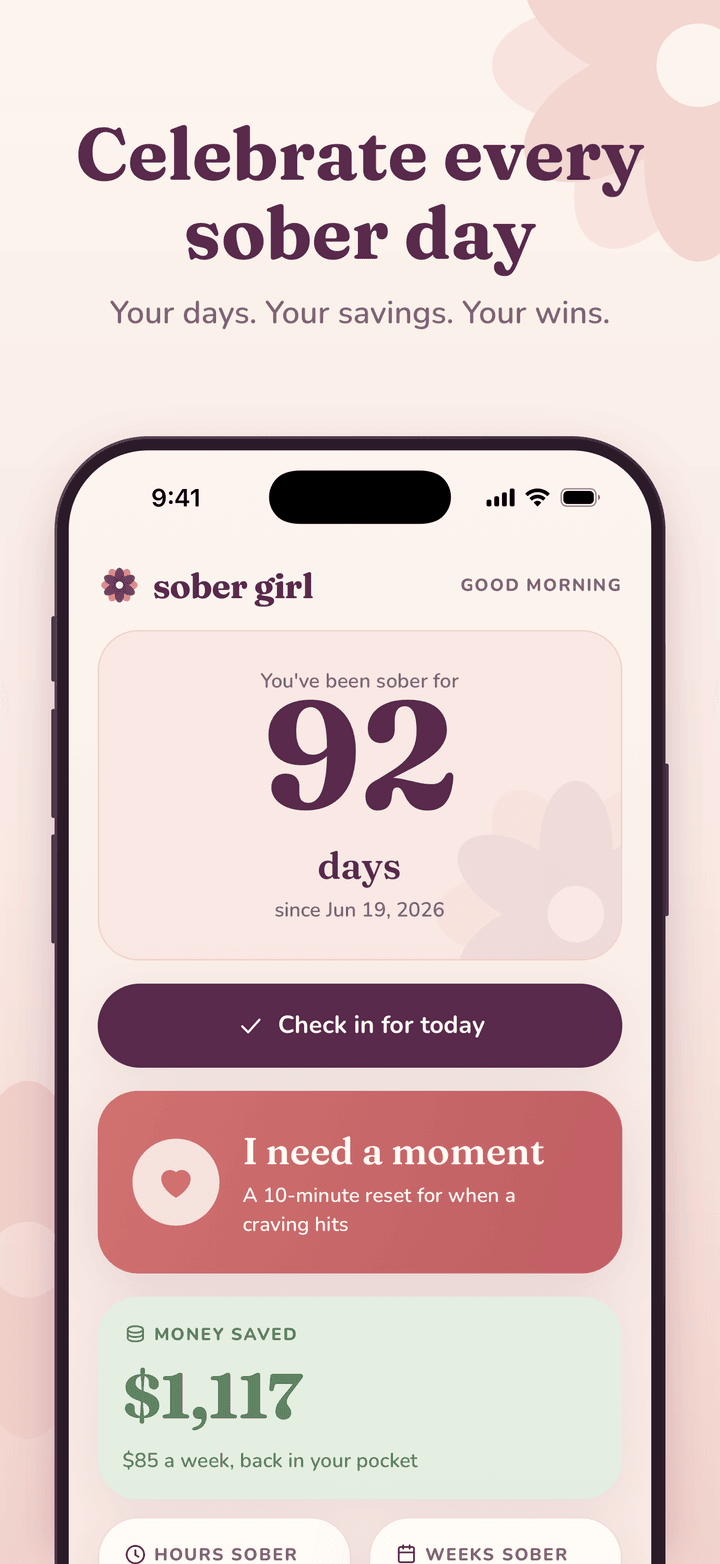
Alcohol can cause low blood sugar, because while your liver is breaking down alcohol it stops releasing glucose, and the risk lasts for hours after your last drink [1]. It can also affect diabetes medicines and, in sweet drinks, raise blood sugar [1]. MedlinePlus says many people with diabetes can drink in moderation, defined as no more than 1 drink a day for women and 2 for men, but only if your diabetes is well controlled, you understand the risks and your provider agrees it is safe. If you have nerve, eye or kidney damage, your provider may advise no alcohol at all [1].
What alcohol does to blood sugar
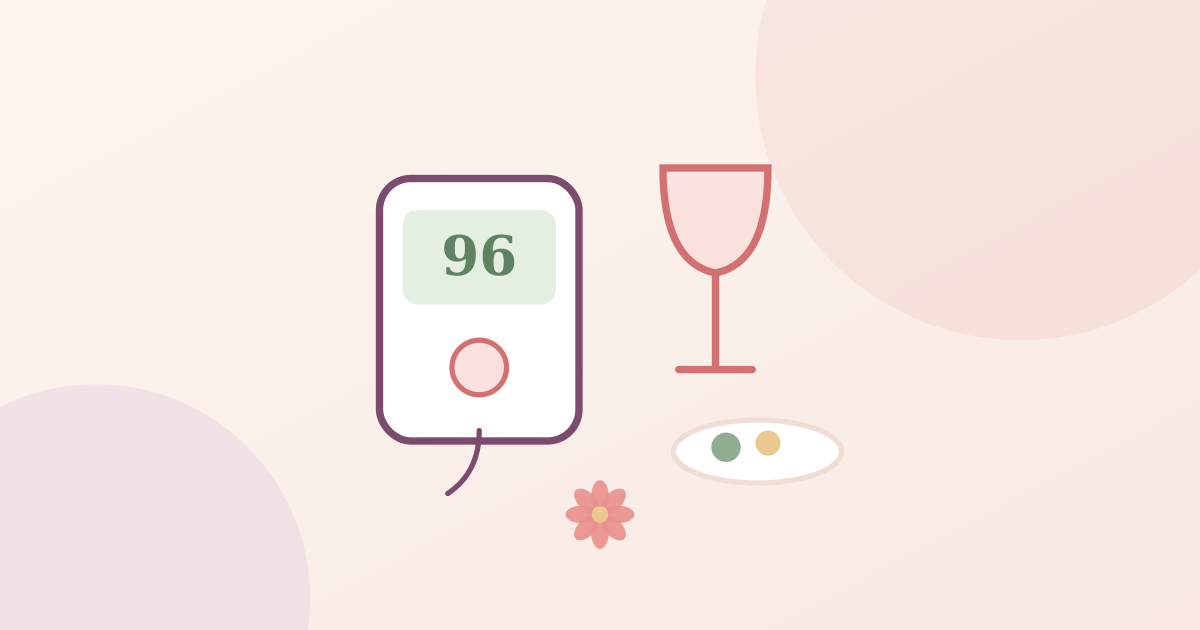
The risk is not what most people expect. You might think a drink spikes your sugar. For many people with diabetes the bigger danger is the opposite. Your liver normally releases glucose into the bloodstream as needed to keep blood sugar steady. While it is busy breaking down alcohol, it stops releasing glucose, so blood sugar can drop quickly [1].
- Low blood sugar (hypoglycemia). If you take insulin or certain diabetes medicines it can be seriously low, and drinking without food greatly increases the risk. The more drinks at one time, the higher the risk [1].
- It lasts. The risk for low blood sugar remains for hours after the last drink [1], which is why a low can hit overnight.
- High blood sugar (hyperglycemia). Beer and sweetened mixed drinks are high in carbohydrates, and alcohol can interfere with some diabetes medicines, which can push sugar up or down depending on the drug and the amount [1].
- Calories and the liver. Alcohol is calorie-dense. Calories from alcohol are stored in the liver as fat, and liver fat makes liver cells more insulin resistant, which can raise blood sugar over time [1].
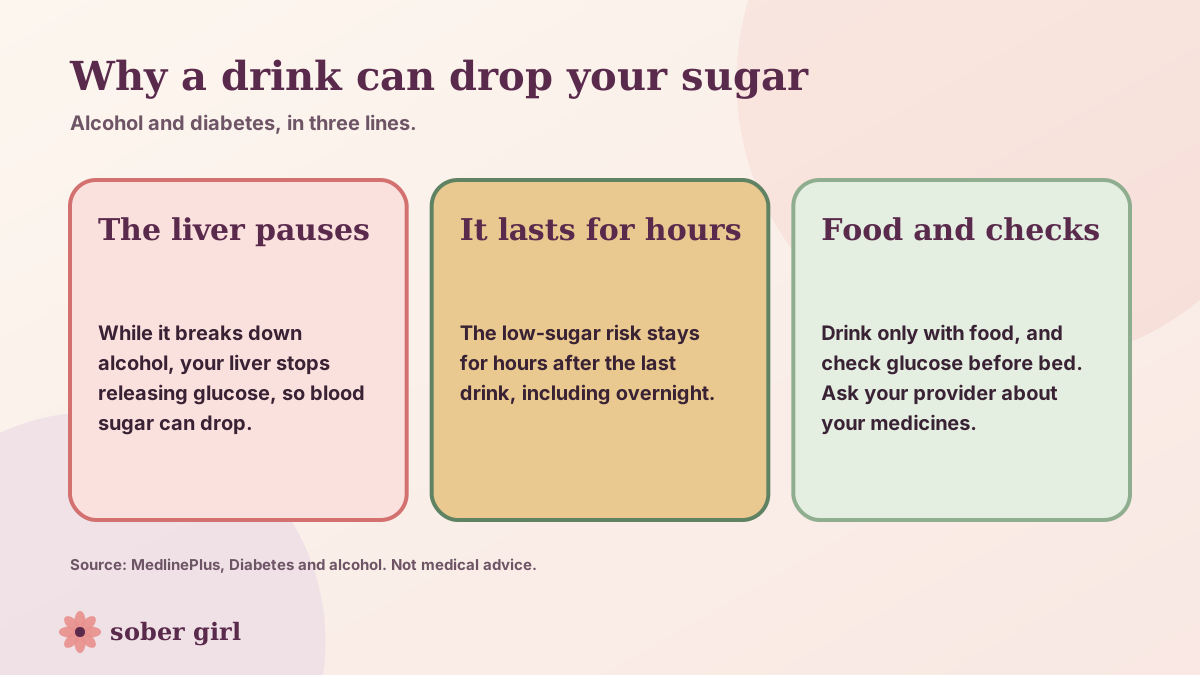
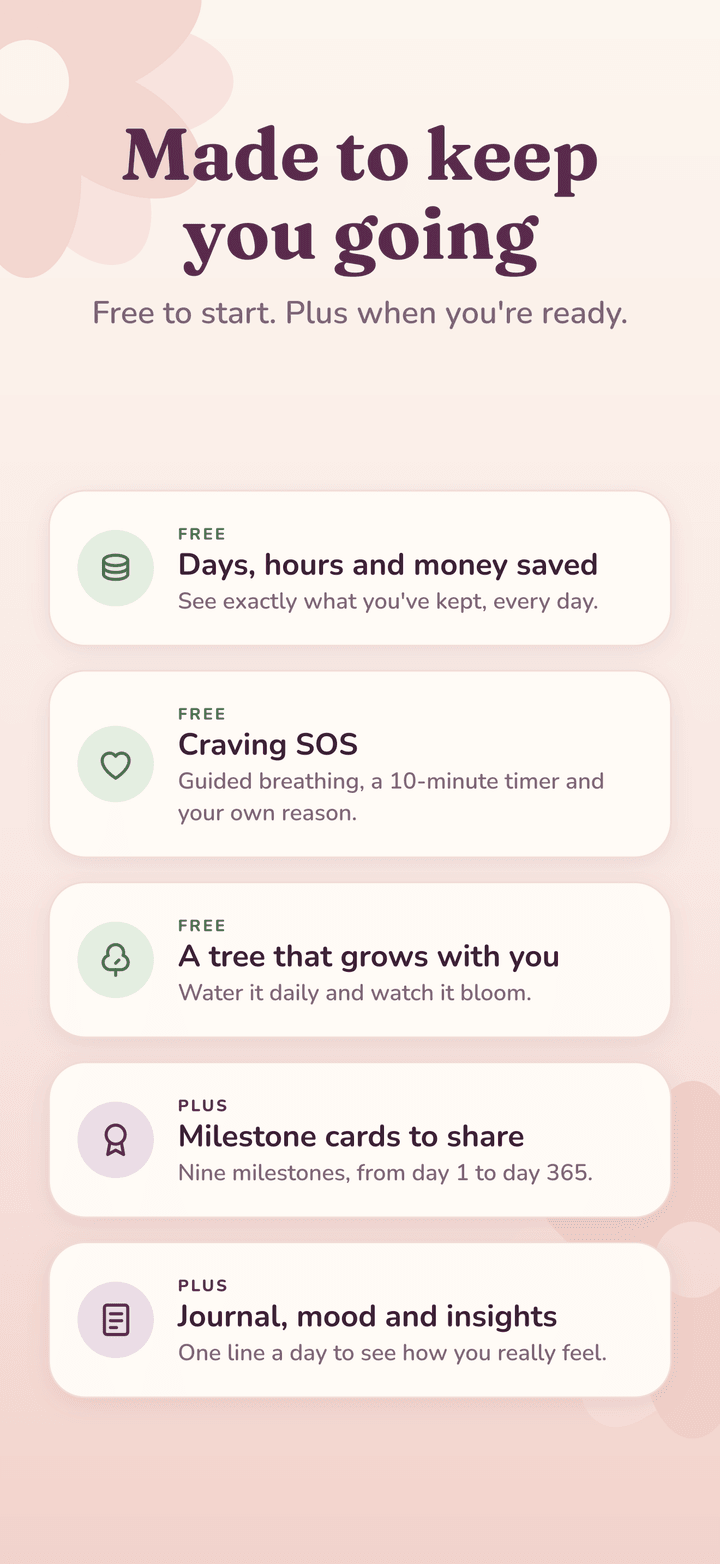
Track it in Sober Girl
The danger of being mistaken for drunk
Symptoms of low blood sugar are very similar to those of alcohol intoxication. If you pass out, the people around you may simply assume you are drunk. Being intoxicated also makes it harder for you to recognize the warning signs of a low [1].
MedlinePlus lists the signs of low blood sugar to watch for: double or blurry vision, a fast or pounding heartbeat, feeling cranky or aggressive, nervousness, headache, hunger, shaking, sweating, tingling or numbness, tiredness, trouble sleeping and unclear thinking [1]. Compare those with the signs in our guide to alcohol poisoning, and carry visible medical ID that says you have diabetes, since the symptoms look alike [1].
How much is safe?
There is no number that is safe for everyone with diabetes. MedlinePlus says that to drink safely you should be sure your diabetes is in good control, you understand how alcohol may affect you and what to do to prevent problems, and your provider agrees it is safe. Anyone who chooses to drink should keep it to moderation: no more than 1 drink a day for women and 2 for men [1].
| Drink | One serving |
|---|---|
| Beer (5% alcohol) | 12 oz (360 mL) |
| Wine (12% alcohol) | 5 oz (150 mL) |
| Liquor (80 proof, 40% alcohol) | 1.5 oz (45 mL) shot |
If you have diabetes complications such as nerve, eye or kidney damage, your provider may recommend no alcohol, since drinking may worsen them [1]. For the wider picture on limits, see how much alcohol is too much.
If you choose to drink: safety steps
- Never on an empty stomach or when your glucose is low. Drink with a meal or a carbohydrate-rich snack, and never skip a meal or have alcohol in place of one [1].
- Drink slowly, and mix liquor with water, club soda, diet tonic water or diet soda [1].
- Check your glucose before you start, while you drink, a few hours after, and for up to the next 24 hours. Make sure it is at a safe level before you go to sleep [1].
- Carry a fast sugar source, such as glucose tablets [1].
- Skip exercise after drinking, since it raises the risk of a low [1].
- Do not drink alone. Drink with someone who knows you have diabetes and what to do if you show signs of a low [1].
- Ask about carb counting. If you count carbohydrates, ask your provider how to account for alcohol [1].
If you want to cut back or stop
Some people with diabetes decide drinking is not worth the extra risk, and that is a reasonable call. Let your provider know if your drinking habits change, and talk to them if you or someone with diabetes has an alcohol problem [1]. If you drink heavily every day, do not stop suddenly on your own; see how to taper off alcohol safely. Our guides on the benefits of quitting alcohol, alcohol and weight and mindful drinking cover the rest.
Is Sober Girl right for you?
- use an iPhone or an Android phone
- want a private tracker, with your journal kept on your device
- want a day counter, money saved and a daily check-in in one calm place
- want a Craving SOS with a breathing exercise and a 10-minute timer
- want to start free and add Plus only if you need the journal, insights or milestone cards
- want a community feed, live coaching or an AI chat
- want a structured multi-week education program
- need medical help for heavy drinking or withdrawal. An app is not treatment, so see the safety notes above
Frequently asked questions
Can people with diabetes drink alcohol?
Many can in moderation, but only if their diabetes is well controlled, they understand the risks and their provider agrees. Anyone with nerve, eye or kidney damage may be advised not to drink.
Does alcohol raise or lower blood sugar?
Either. Alcohol can drop blood sugar because the liver stops releasing glucose while it breaks alcohol down, and sweet drinks or certain medicine interactions can raise it.
How long after drinking can blood sugar drop?
The low-blood-sugar risk remains for hours after your last drink, so check your glucose a few hours later and for up to the next 24 hours, and before you sleep.
How much alcohol can someone with diabetes drink?
MedlinePlus says if you choose to drink, keep it to no more than 1 drink a day for women and 2 for men, with food, and only if your provider says it is safe for you.
Can alcohol interfere with diabetes medicine?
Yes. Alcohol can interfere with some diabetes medicines and raise the risk of low or high blood sugar, depending on the drug and how much you drink. Ask your provider about yours.
Why is low blood sugar mistaken for being drunk?
The symptoms are very similar, so people may assume a person who passes out is intoxicated. Carry medical ID saying you have diabetes.
Should I drink on an empty stomach if I have diabetes?
No. Do not drink on an empty stomach or when your glucose is low. Have alcohol with a meal or carbohydrate-rich snack and never in place of a meal.
What should I do before bed after drinking?
Check your blood glucose and make sure it is at a safe level before you go to sleep, because the low-sugar risk can continue for hours.
Sources
- Diabetes and alcohol. MedlinePlus (US National Library of Medicine), read 7 November 2026. Patient instructions. Alcohol can cause low or high blood sugar, interfere with diabetes medicines, and its low-blood-sugar risk lasts for hours after the last drink. Moderate drinking limits and safety steps if you choose to drink.
How we write these. Every figure above links to the source it came from, and we label self-reported and observational results as such. Where we could not find a source we trust, the page says so instead of filling the gap. Sober Girl is made by ShipAI Lab and this is not medical advice. Sources were checked on 6 October 2026. If you spot an error, email us at [email protected].
Keep reading
Today is day one.
Sober Girl is a private sobriety tracker for women, on iPhone and Android: day counter, money saved, craving SOS and a tree that grows with you. Free to start.