How to taper off alcohol: who can do it at home, who should not, and what published guidance says
Stopping suddenly can be dangerous if you drink heavily, and cutting down gradually is how many people do it. The safe version starts with one honest question.
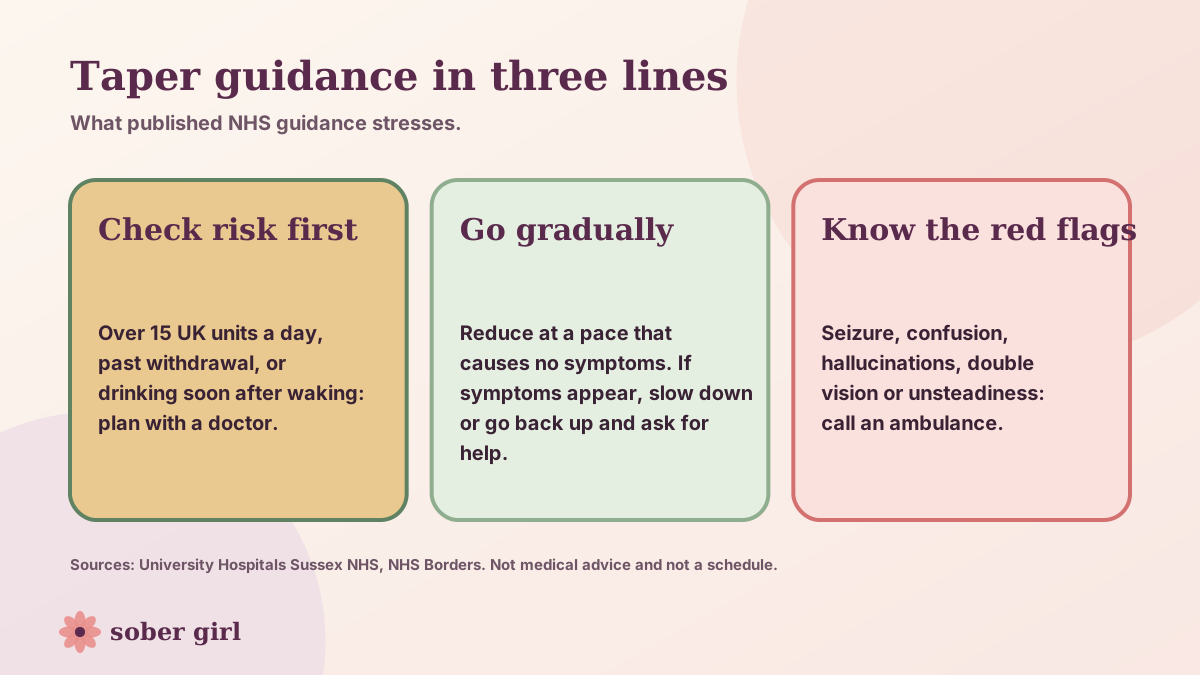
Whether you can taper at home depends on how dependent you are, and a doctor should decide that, not an article. NHS guidance says a person is at risk of withdrawal and needs a plan if they drink over 15 UK units a day (about 8 to 9 US standard drinks, by our arithmetic), have had withdrawal symptoms before, or drink soon after waking to relieve shakes or sweats [1]. Anyone who has had seizures or hallucinations when stopping should get professional help before cutting down at home [2]. Mild to moderate withdrawal without other risk factors can often be managed as an outpatient with a doctor [3]. Call an ambulance for a seizure, confusion, hallucinations, double vision or unsteadiness [2].
Before you taper: is it safe for you?
Picture someone who has had a bottle of wine most nights for years and decides, on a Sunday, that they are done. By Tuesday their hands are shaking and they are sweating through the sheets. This page exists so the plan comes before the Sunday.
Withdrawal can be serious. An NHS hospital leaflet says it can cause confusion, hallucinations and seizures, and can be fatal if left untreated [2]. See delirium tremens for what the severe end looks like.
| Question | Why it matters |
|---|---|
| Do you drink over 15 UK units a day? (about ½ bottle of spirits, 1½ bottles of wine, 6 pints of regular beer, or 3 cans of super lager) | Heavy daily drinking raises the risk of withdrawal |
| Have you had withdrawal symptoms before when you cut back or stopped? | Past withdrawal predicts more; symptoms can take a few days to start |
| Do you drink soon after waking to relieve shakes or sweats? | That is a sign your body is already withdrawing between drinks |
NHS Borders adds that it is not advisable to stop drinking abruptly at this level, and that intake should be gradually reduced to decrease the risk of serious harm [1]. For scale: a UK unit is 8 grams of alcohol, so 15 units is 120 grams, a little over 8 US standard drinks of 14 grams each [4] (our arithmetic).
Track it in Sober Girl
Who should not taper at home
- If you have had seizures or hallucinations when you tried to stop before. The Sussex NHS leaflet says to get professional help from an alcohol support team before trying to cut down at home, because you need extra help [2].
- If you have severe symptoms or other risk factors. The American Family Physician review says only mild to moderate withdrawal without additional risk factors should be treated as an outpatient when possible, while severe or complicated withdrawal needs the emergency department and inpatient care [3].
- If you have serious psychiatric or medical conditions, such as suicidal thoughts, the American Family Physician review says inpatient treatment is advised [5].
- If you cannot reduce without symptoms. If you are in withdrawal at your usual intake, you may have underestimated how much you drink; NHS Borders advises noting that and getting support [1].
What NHS guidance says about cutting down gradually
We are not giving you a schedule. We are reporting what two NHS patient leaflets say, so you can bring it to a clinician. They differ, which is the point: the right pace is individual.
| University Hospitals Sussex [[nhsSussex]] | NHS Borders [[nhsBorders]] | |
|---|---|---|
| Start | Keep a drinking diary, measure drinks, aim for a stable planned daily intake for one week | Work out your typical daily intake; hold it for about 3 days and watch for shakes and sweating |
| Reduction | Then cut down about 10% every four days; if withdrawal symptoms appear, go back up to the level where you had none and hold for a week, then try 10% a week | Set your own pace; eight days is typical, for example about three-quarters of your intake by day 2 and about half by day 4 |
| Peak | Not stated | Withdrawal often peaks on day 2 or 3; use extra support then |
| If it gets worse | Seek help; call an ambulance for red-flag signs | If things are getting worse by day 5, contact a local alcohol service or call 111 |
Practical steps from the same leaflets
- Measure and write it down. Use the same size glass or a measuring cup, and note each day’s intake. Be honest with yourself and others [1].
- Pick one drink. It is usually easier to detox with a single type of drink [1]. Switching to a lower-strength drink, adding water or a mixer and alternating with soft drinks also helps [2].
- Space your drinks out through the day [2], and many people find midday drinks easier to cut first while keeping early and late doses steady [1].
- Eat well and drink water. Good nutrition matters, especially thiamine (vitamin B1) from bread, rice, fish and meat, and take any prescribed thiamine or multivitamins as directed [1] [2].
- Tell someone, have food and necessities in the house, and arrange a safe place to stay. Ask a trusted adult to help measure and monitor [1] [2].
- Be patient with sleep. It may take time to improve; keep a routine [1]. See sleep after quitting alcohol.
Warning signs: call for urgent help
The Sussex leaflet says to call an ambulance if you have a seizure, become confused, start to see or hear things that do not exist, develop double vision or become unsteady on your feet, and to tell anyone you live with so they can call if you cannot [2]. NHS Borders adds that seizures can happen even if you have never had one, and to call 111 for urgent advice [1]. In the US, call 911.
What a doctor can add
A clinician can assess your risk with a validated scale and decide whether you can be treated as an outpatient or need hospital care. Benzodiazepines are first-line for moderate to severe withdrawal, with carbamazepine or gabapentin as options for milder cases, and outpatients should be checked daily for up to five days after the last drink [3]. They can also prescribe thiamine and start longer-term treatment: primary care physicians should offer to start treatment for alcohol use disorder, including medicines [3]. See medicines that help you stay stopped.
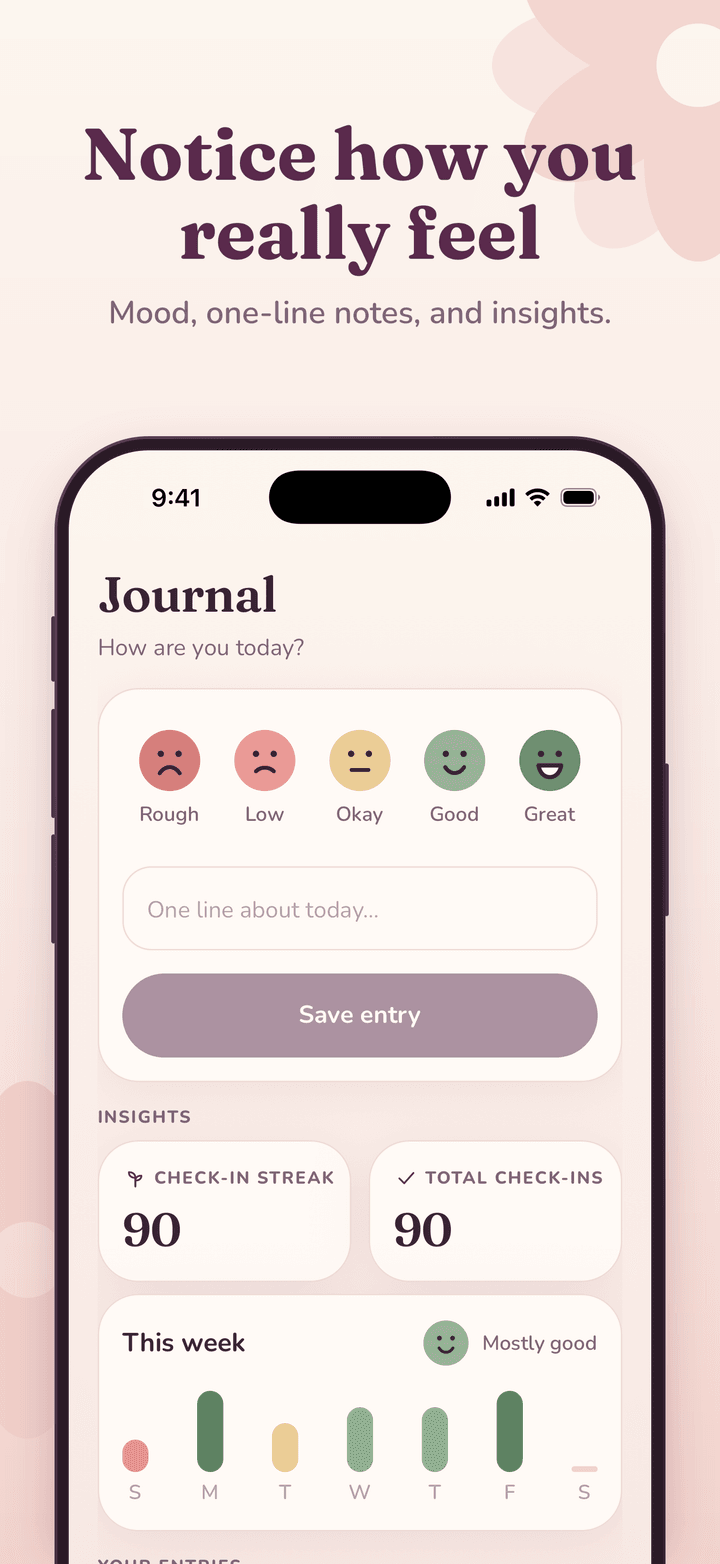
If your goal is to cut down rather than stop, mindful drinking, moderation management and the Sinclair Method are covered separately. A private tracker such as the Sober Girl app can log your daily drinks while you reduce, but it is a diary, not medical care.
Is Sober Girl right for you?
- use an iPhone or an Android phone
- want a private tracker, with your journal kept on your device
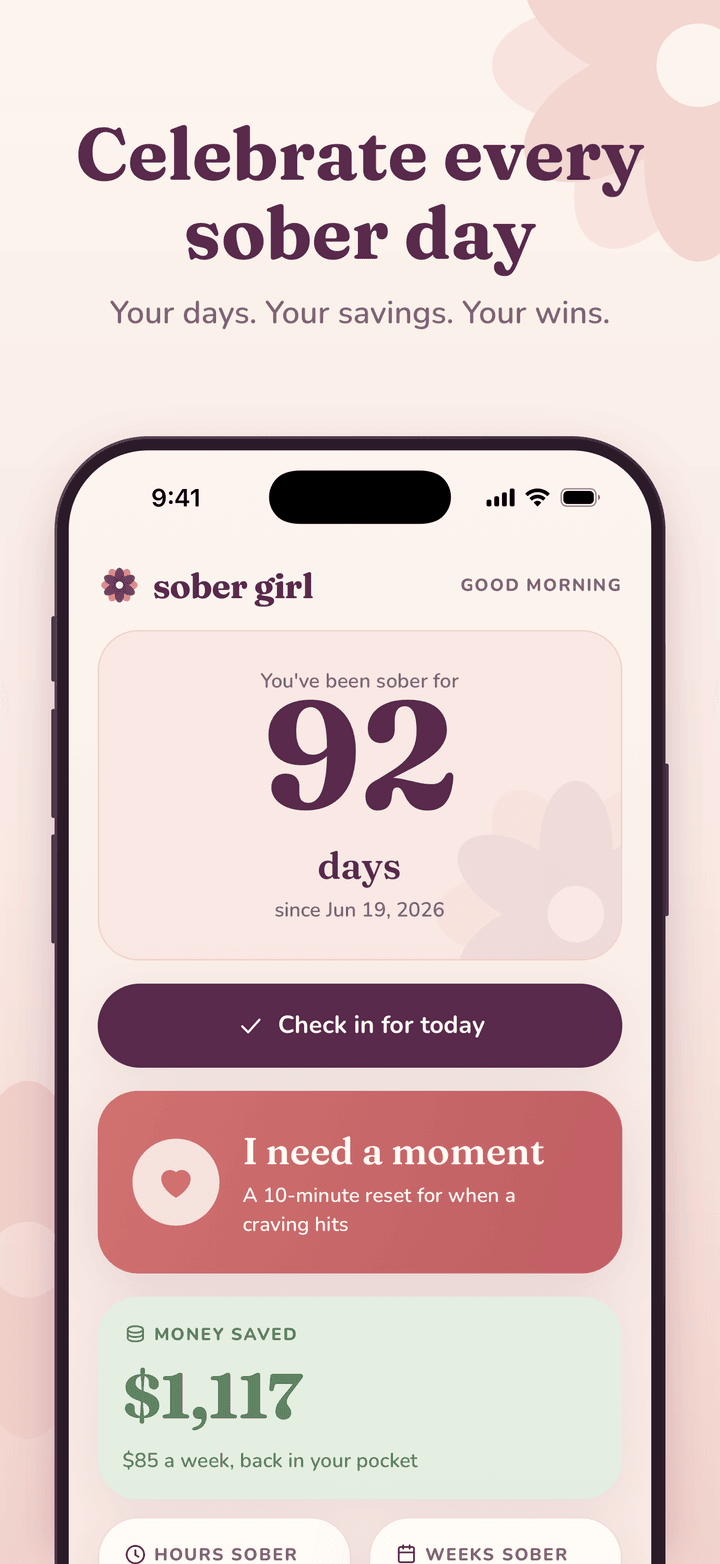
- want a day counter, money saved and a daily check-in in one calm place
- want a Craving SOS with a breathing exercise and a 10-minute timer
- want to start free and add Plus only if you need the journal, insights or milestone cards
- want a community feed, live coaching or an AI chat
- want a structured multi-week education program
- need medical help for heavy drinking or withdrawal. An app is not treatment, so see the safety notes above
Frequently asked questions
Can I taper off alcohol at home?
Only some people can, and a doctor should decide. Anyone who drinks heavily every day, has had withdrawal before or drinks soon after waking should plan with a clinician rather than going it alone.
Is it dangerous to stop drinking suddenly?
It can be. Withdrawal can cause seizures, confusion and hallucinations and can be fatal if untreated, so heavy daily drinkers should not stop abruptly without medical advice.
How fast should I cut down?
There is no single answer. One NHS leaflet describes cutting about 10% every four days, another an eight-day example; both stress going at a pace that does not cause symptoms. Ask a clinician for yours.
What if I get withdrawal symptoms while tapering?
One NHS leaflet says it means you are cutting down too quickly, to go back to the level where you had no symptoms and hold it, and to seek help if symptoms are severe.
When should I call an ambulance while cutting down?
For a seizure, confusion, seeing or hearing things that are not there, double vision or being unsteady on your feet. In the US, call 911.
Do I need vitamins when I taper?
NHS guidance stresses good nutrition and thiamine (vitamin B1). Take any prescribed thiamine or multivitamins as directed and ask your doctor.
Is tapering better than going cold turkey?
For heavy daily drinkers, gradual reduction or medically supervised withdrawal is generally advised over stopping suddenly on your own. A doctor can tell you which fits.
What medicines help after I stop?
Naltrexone, acamprosate and disulfiram are approved to help people stay stopped, and a doctor can prescribe them alongside counseling.
Sources
- Advice for heavy drinkers, on cutting back or stopping alcohol use. NHS Borders (Scotland), patient advice sheet. Patient advice. Screening questions for withdrawal risk (over 15 UK units a day, past withdrawal, drinking soon after waking to relieve shakes), an example eight-day reduction, withdrawal peaking on day 2 or 3, and when to call for urgent help.
- How to safely reduce your alcohol intake (patient information). University Hospitals Sussex NHS Foundation Trust. Patient leaflet. Do not stop suddenly if you are in withdrawal; cut down gradually; get professional help first if you have had seizures or hallucinations when stopping. Call an ambulance for a seizure, confusion, hallucinations, double vision or unsteadiness.
- Alcohol Withdrawal Syndrome: Outpatient Management. Tiglao SM, Meisenheimer ES, Oh RC. American Family Physician 2021;104(3):253–262. Clinical review. Mild to moderate withdrawal without added risk factors can be treated as an outpatient when possible; severe or complicated withdrawal needs the emergency department and inpatient care. Outpatients should be monitored daily for up to five days after the last drink.
- What Is A Standard Drink?. NIAAA.
- Outpatient Management of Alcohol Withdrawal Syndrome. Muncie HL Jr, Yasinian Y, Oge’ L. American Family Physician 2013;88(9):589–595. Clinical review. Withdrawal symptoms begin 6 to 24 hours after the last drink; withdrawal seizures can occur 24 to 72 hours after it.
- Alcohol withdrawal. MedlinePlus (US National Library of Medicine), reviewed 1 January 2025 by Frank D. Brodkey, MD.
- National Helpline. SAMHSA. Free, confidential, 24/7 treatment referral line: 1-800-662-4357.
How we write these. Every figure above links to the source it came from, and we label self-reported and observational results as such. Where we could not find a source we trust, the page says so instead of filling the gap. Sober Girl is made by ShipAI Lab and this is not medical advice. Sources were checked on 6 October 2026. If you spot an error, email us at [email protected].
Keep reading
Today is day one.
Sober Girl is a private sobriety tracker for women, on iPhone and Android: day counter, money saved, craving SOS and a tree that grows with you. Free to start.