White knuckling sobriety: what it means and what to do instead
Staying sober by gritting your teeth works for a while. Here is why people burn out on it, what research says about the moments that matter, and what to put around your willpower.
White knuckling is an informal term for staying sober by sheer willpower, with no plan or support behind it, like gripping a rail so hard your knuckles go pale. It tends to fail at the moments that count. A NIAAA-published overview of relapse research says negative emotional states and interpersonal conflict triggered more than half of relapse episodes, and social pressure more than 20% [1]. The same overview says people with an effective coping response gain confidence they can cope, which lowers the chance of relapse [1]. So the fix is not more willpower. It is a specific plan for the hard moment.
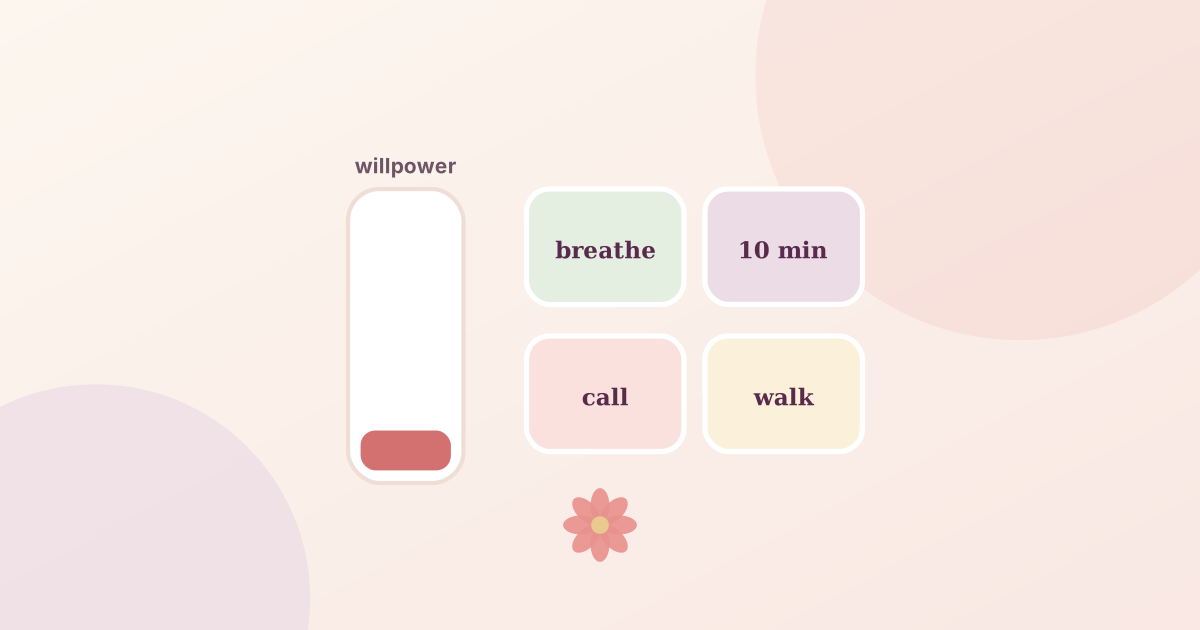
What white knuckling means
To white-knuckle something is to get through it by sheer grip, the way a nervous passenger grips an armrest. In sobriety it describes quitting on willpower alone: no plan for the hard evening, no one told, no tools, just clenched resolve and a countdown. It is not a medical term. We use it here as the description people use for the way they felt.
It is not weak to have done it. Many people start this way, and some of it is unavoidable on day one. The problem is relying on it past the first few weeks, because willpower is a poor match for the situations that cause most slips.
Track it in Sober Girl
What research says about the moments that matter
| Situation | Share of relapse episodes |
|---|---|
| Negative emotional states (anger, anxiety, depression, frustration, boredom) and interpersonal conflict together | More than half [1] |
| Social pressure | More than 20% [1] |
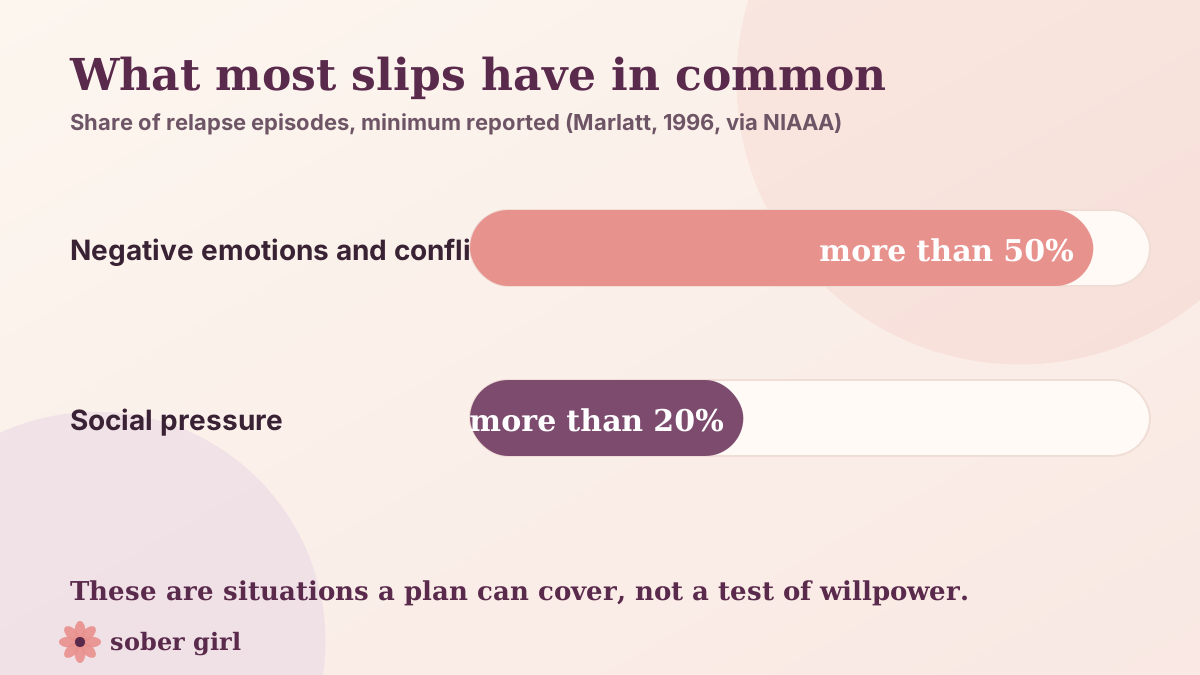
Look at the list. Anger, boredom, a row with a partner, a friend pushing a drink. These are not problems that more grit solves. They are problems that a plan solves. The same overview says that a person with an effective coping response gains confidence they can cope with the situation, which lowers the probability of relapse [1].
One long study points the same way, though it measured something narrower. In 461 people followed for 16 years, those in remission at three years who relied more on avoidance coping were more likely to have relapsed by year 16 [2]. That is not the same as white knuckling, and it is a cohort of people who sought help, not a trial. It does suggest that how you cope matters over years.
What to do instead of gritting your teeth
- Name your top three moments. For most people it is a time (6 pm), a feeling (stress) and a place (a particular friend’s house). Write them down.
- Give each moment one move that is not "resist". NIAAA suggests reminding yourself of your reasons, distracting yourself with a healthy activity, and riding the urge out as normal and temporary [3].
- Use ten minutes. Set a timer and do something with your hands. Most urges crest and fall in that window. Urge surfing walks through it.
- Rehearse before you need it. Run your breathing exercise once on a calm day.
- Make one other person part of the plan. Not a confession, a line: "If I text you at 9 pm, ask me what I had for dinner."
- Know when it is more than willpower. If cravings are strong or frequent, a doctor can discuss the three FDA-approved medications for alcohol use disorder: naltrexone, acamprosate and disulfiram [4].
The evidence for urge surfing in particular comes from a small study of student smokers, which the authors call preliminary [5]. We include it because the technique is cheap and it costs nothing to try, not because it is proven for alcohol.
Today’s focus: put a tool at each of your three moments
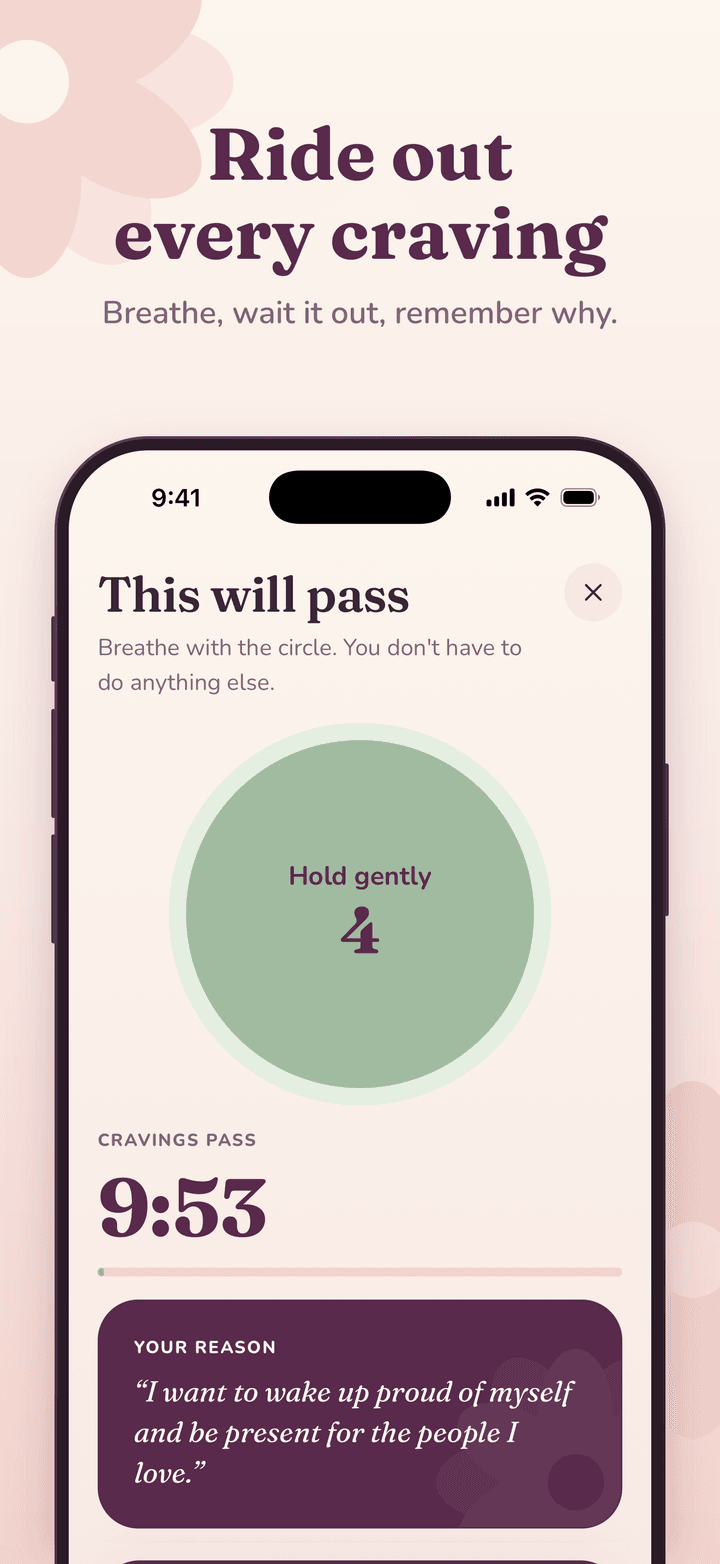
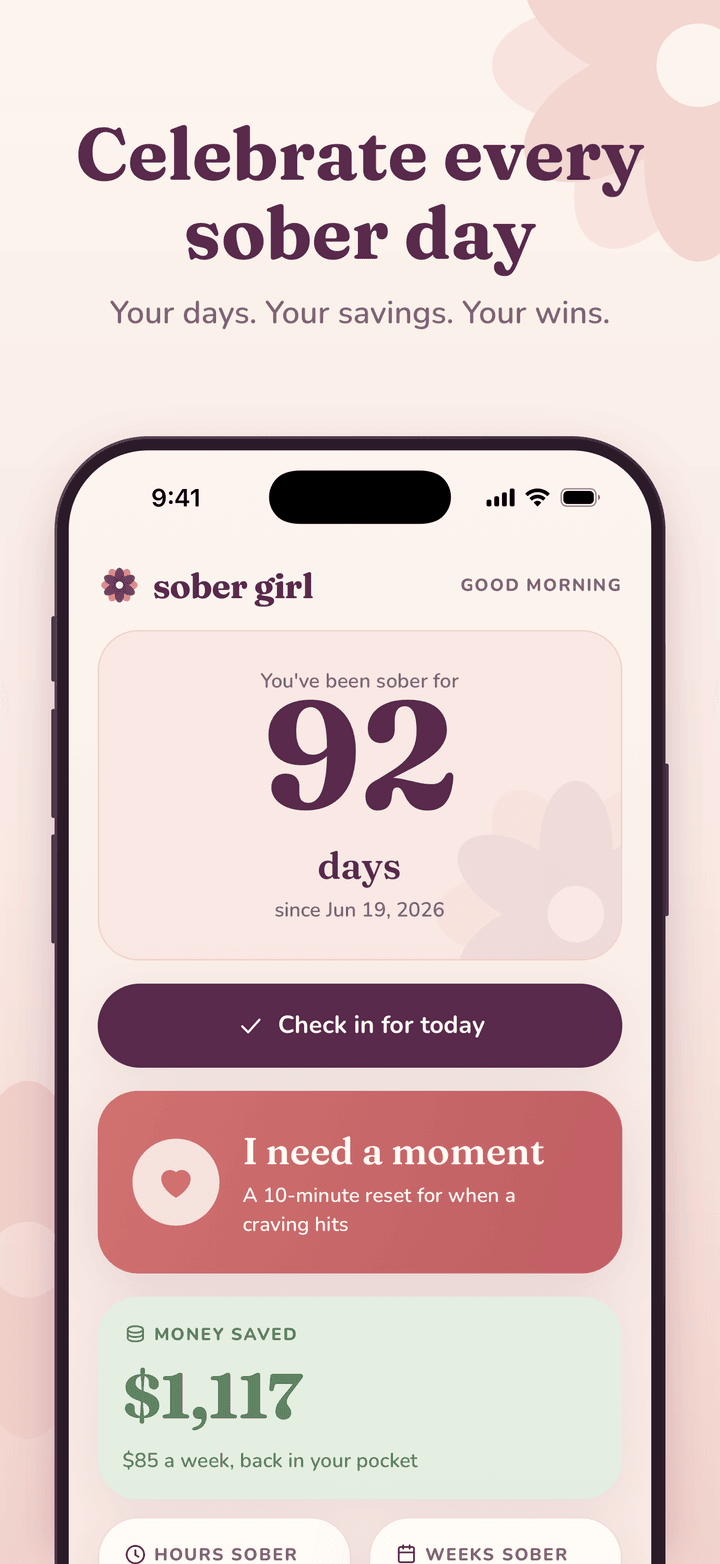
Pick the 6 pm moment, the stress moment and the social moment. For each, decide the first ten minutes before the day arrives. In Sober Girl the Craving SOS puts a breathing exercise and a 10-minute timer one tap away, and your counter and money saved sit under it as a reason to wait. The sobriety calculator shows your own numbers.
When the tools are not enough
If you drink heavily, you should not white-knuckle the stop itself. NIAAA’s Alcohol Treatment Navigator [6] helps you find professionals and programs, and mutual-help groups are another route (see our AA alternatives).
Is Sober Girl right for you?
- use an iPhone or an Android phone
- want a private tracker, with your journal kept on your device
- want a day counter, money saved and a daily check-in in one calm place
- want a Craving SOS with a breathing exercise and a 10-minute timer
- want to start free and add Plus only if you need the journal, insights or milestone cards
- want a community feed, live coaching or an AI chat
- want a structured multi-week education program
- need medical help for heavy drinking or withdrawal. An app is not treatment, so see the safety notes above
Frequently asked questions
What does white knuckling mean in sobriety?
It means staying sober on willpower alone, without a plan, tools or support, the way you might grip an armrest on a bumpy flight. It is an informal term, not a medical one.
Is white knuckling sobriety bad?
It is not a moral failing, and many people start this way. It is a poor long-term plan because the situations behind most slips are emotions, conflict and social pressure, which a plan handles better than grit does.
What triggers most relapses?
In Marlatt’s analysis, summarised by NIAAA, negative emotional states and interpersonal conflict were behind more than half of relapse episodes, and social pressure more than 20%.
How do I stop white knuckling it?
Name your three hardest moments, give each one a specific move, use a ten-minute timer for urges, tell one person, and see a doctor if cravings are strong or frequent. A tracker with a craving tool can keep the first steps in your pocket.
Does Sober Girl help with cravings?
Sober Girl has a Craving SOS with a breathing exercise and a 10-minute timer, a day counter and money saved. It is a self-help tool, not treatment, and it has not been tested in a trial.
Sources
- Relapse Prevention: An Overview of Marlatt’s Cognitive-Behavioral Model. Larimer ME, Palmer RS, Marlatt GA. Alcohol Research & Health 1999;23(2):151-160 (NIAAA).
- Rates and predictors of relapse after natural and treated remission from alcohol use disorders. Moos RH, Moos BS. Addiction 2006. 461 people followed for 16 years. A cohort study of people who sought help, not a trial.
- How to Stop Alcohol Cravings. NIAAA, Rethinking Drinking.
- Professional support. NIAAA, Rethinking Drinking. Lists the three FDA-approved medications for alcohol use disorder and when to see a health professional.
- Surfing the urge: brief mindfulness-based intervention for college student smokers. Bowen S, Marlatt A. Psychology of Addictive Behaviors, 2009. A study of 123 student smokers, not drinkers. The authors call the data preliminary.
- NIAAA Alcohol Treatment Navigator. NIAAA.
- Alcohol withdrawal. MedlinePlus (US National Library of Medicine), reviewed 1 January 2025 by Frank D. Brodkey, MD.
- National Helpline. SAMHSA. Free, confidential, 24/7 treatment referral line: 1-800-662-4357.
How we write these. Every figure above links to the source it came from, and we label self-reported and observational results as such. Where we could not find a source we trust, the page says so instead of filling the gap. Sober Girl is made by ShipAI Lab and this is not medical advice. Sources were checked on 6 October 2026. If you spot an error, email us at [email protected].
Keep reading
Today is day one.
Sober Girl is a private sobriety tracker for women, on iPhone and Android: day counter, money saved, craving SOS and a tree that grows with you. Free to start.