Alcohol and cholesterol: what drinking does to your lipid panel
Maybe a doctor once told you red wine was good for your cholesterol. The real picture is more interesting, and less flattering to the wine.
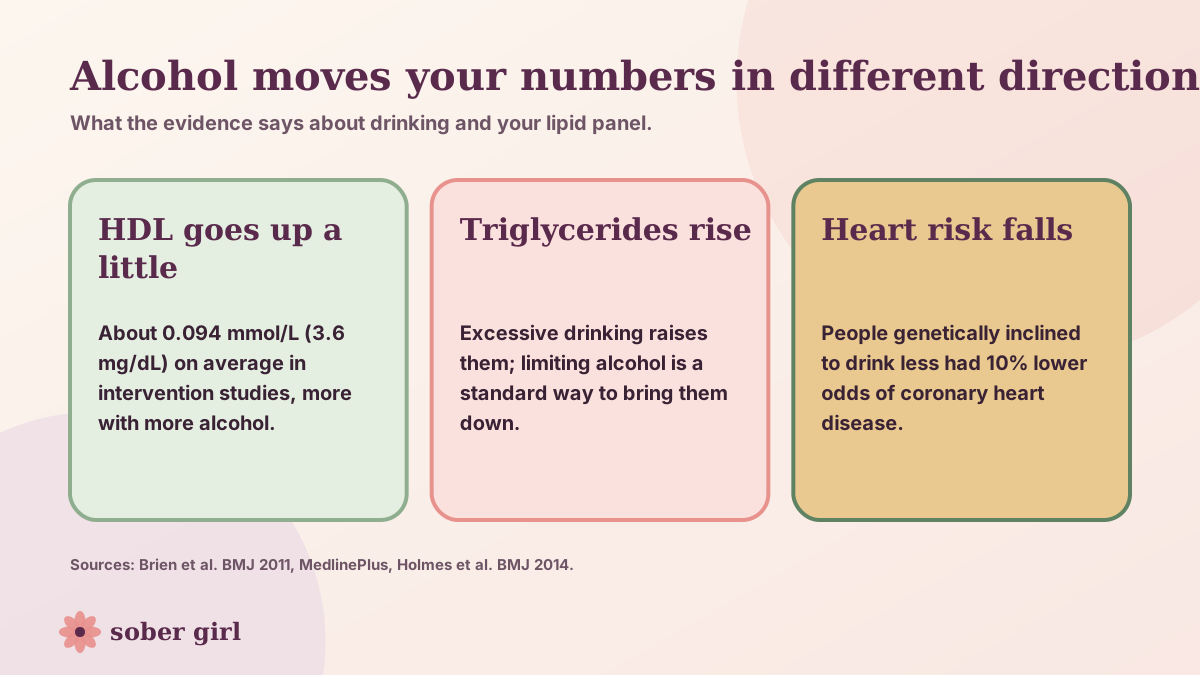
Alcohol raises HDL, the “good” cholesterol, a little: in a meta-analysis of intervention studies, HDL rose by about 0.094 mmol/L (around 3.6 mg/dL by our conversion) on average, more with more alcohol [1]. Moderate drinking did not change triglycerides in those studies [1], but excessive drinking raises triglycerides and limiting alcohol is a standard way to lower them [2]. The HDL bump is not a reason to drink: a genetic study of 261,991 people found that those with a gene variant linked to drinking less had a better cardiovascular profile and 10% lower odds of coronary heart disease, at every level of drinking [3].
Does alcohol raise cholesterol?
It depends which number you look at. A lipid panel is several numbers, and alcohol pulls them in different directions. For years that let drinking look healthier than it is.
| Number | What alcohol does | Evidence |
|---|---|---|
| HDL (“good”) cholesterol | Goes up a little, more with more alcohol: about 0.094 mmol/L (3.6 mg/dL) on average | Intervention studies [1] |
| Triglycerides | No change with moderate drinking in those studies; raised by excessive drinking | Studies [1] and MedlinePlus [2] |
| Heart disease risk | Lower in people genetically inclined to drink less, at every level of drinking | Genetic study [3] |
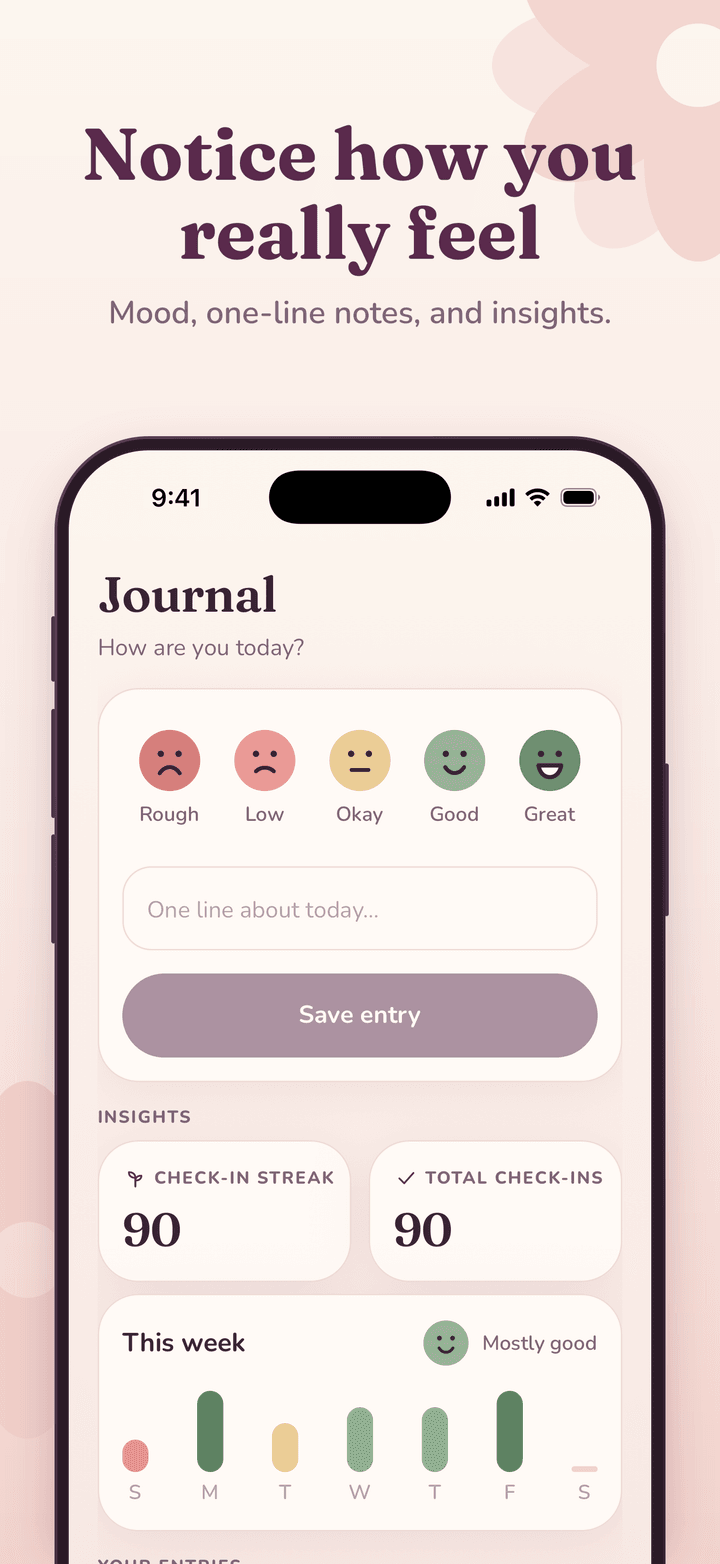
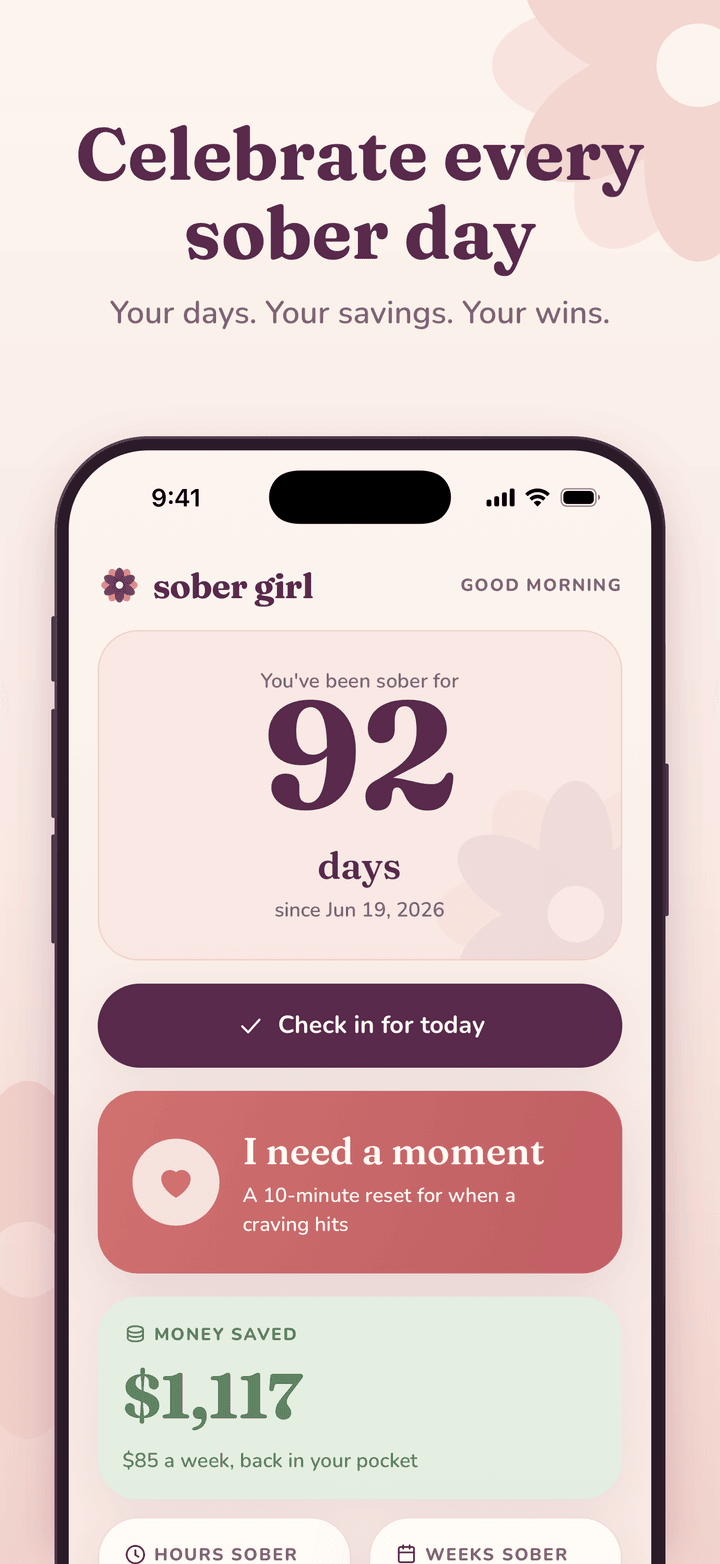
Track it in Sober Girl
The HDL story, and why it misled people
When researchers pooled studies that gave adults without heart disease alcohol and then measured their blood, HDL went up, and it went up more with more alcohol [1]. Higher HDL usually goes with lower heart risk, so this looked like a mechanism for the idea that a glass of wine protects the heart.
Genetics offered a fairer test. Some people carry a gene variant that makes alcohol less pleasant, so they drink less for reasons unrelated to their health or wealth. In 261,991 people, carriers drank 17% less, had lower blood pressure, smaller waists and lower body mass index, and had 10% lower odds of coronary heart disease [3]. The benefit held among light and moderate drinkers too, and the authors concluded that drinking less is good for cardiovascular health even for light to moderate drinkers [3]. A slightly higher HDL does not outweigh that. Wine’s reputation does not hold up much better on its own terms; see is red wine good for you.
Alcohol and triglycerides
Triglycerides are the most common type of fat in the body [2]. In the intervention studies, moderate amounts of alcohol did not change them [1]. Heavier drinking is different: MedlinePlus lists excessive alcohol use as a cause of high triglycerides and limiting alcohol as one of the lifestyle treatments [2]. If your panel shows high triglycerides and you drink most days, your doctor is likely to ask about alcohol first.
What happens to cholesterol when you stop drinking
- HDL may dip slightly, since alcohol was nudging it up [1]. That is not a sign your heart is worse off [3].
- Triglycerides may come down if you were drinking heavily [2].
- Other heart numbers tend to improve. In a one-month study, insulin resistance, blood pressure and weight all fell [4]; see alcohol and blood pressure.
To see your own change, get a lipid panel before you stop and another after a couple of months, ideally at the same lab and time of day, and fasting if your doctor asks for it. Pair it with liver tests if you like: see liver recovery after quitting alcohol.
Is Sober Girl right for you?
- use an iPhone or an Android phone
- want a private tracker, with your journal kept on your device
- want a day counter, money saved and a daily check-in in one calm place
- want a Craving SOS with a breathing exercise and a 10-minute timer
- want to start free and add Plus only if you need the journal, insights or milestone cards
- want a community feed, live coaching or an AI chat
- want a structured multi-week education program
- need medical help for heavy drinking or withdrawal. An app is not treatment, so see the safety notes above
Frequently asked questions
Does alcohol raise cholesterol?
It raises HDL, the “good” cholesterol, slightly. Excessive drinking raises triglycerides. Genetic evidence shows that drinking less is better for heart health overall.
Does red wine lower cholesterol?
Alcohol in any drink nudges HDL up a little; results were similar across wine, beer and spirits in intervention studies. That does not translate into a healthier heart for drinkers.
Will my cholesterol go down if I quit drinking?
Triglycerides may fall if you drank heavily. HDL may dip slightly, which is not harmful in itself. Blood pressure, insulin resistance and weight tend to improve.
Does alcohol raise triglycerides?
Excessive drinking does, and limiting alcohol is a standard way to lower them. Moderate amounts did not change triglycerides in intervention studies.
Should I stop drinking before a cholesterol test?
Follow your doctor’s instructions. If you want to see what alcohol is doing to your numbers, compare a test while drinking with one after a couple of months without.
Sources
- Effect of alcohol consumption on biological markers associated with risk of coronary heart disease: systematic review and meta-analysis of interventional studies. Brien SE, Ronksley PE, Turner BJ, Mukamal KJ, Ghali WA. BMJ 2011;342:d636. 44 intervention studies in adults without heart disease. Alcohol raised HDL cholesterol by 0.094 mmol/L on average (dose-dependent) and did not change triglycerides.
- Triglycerides. MedlinePlus (US National Library of Medicine), updated 10 August 2025.
- Association between alcohol and cardiovascular disease: Mendelian randomisation analysis based on individual participant data. Holmes MV, Dale CE, Zuccolo L, et al. BMJ 2014;349:g4164. 261,991 people of European descent. Those with a gene variant linked to drinking less had a better cardiovascular profile and 10% lower odds of coronary heart disease, at every level of drinking.
- Short-term abstinence from alcohol and changes in cardiovascular risk factors, liver function tests and cancer-related growth factors: a prospective observational study. Mehta G, Macdonald S, Cronberg A, et al. BMJ Open 2018;8:e020673. Observational study. 94 people who chose to abstain for a month and 47 who kept drinking.
- Alcohol withdrawal. MedlinePlus (US National Library of Medicine), reviewed 1 January 2025 by Frank D. Brodkey, MD.
- National Helpline. SAMHSA. Free, confidential, 24/7 treatment referral line: 1-800-662-4357.
How we write these. Every figure above links to the source it came from, and we label self-reported and observational results as such. Where we could not find a source we trust, the page says so instead of filling the gap. Sober Girl is made by ShipAI Lab and this is not medical advice. Sources were checked on 6 October 2026. If you spot an error, email us at [email protected].
Keep reading
Today is day one.
Sober Girl is a private sobriety tracker for women, on iPhone and Android: day counter, money saved, craving SOS and a tree that grows with you. Free to start.