PAWS after alcohol: why you can feel off for weeks after the worst has passed
The shakes are gone, the first week is behind you, and you still feel flat, wired, or awake at 3 a.m. You are not imagining it, and it usually eases.
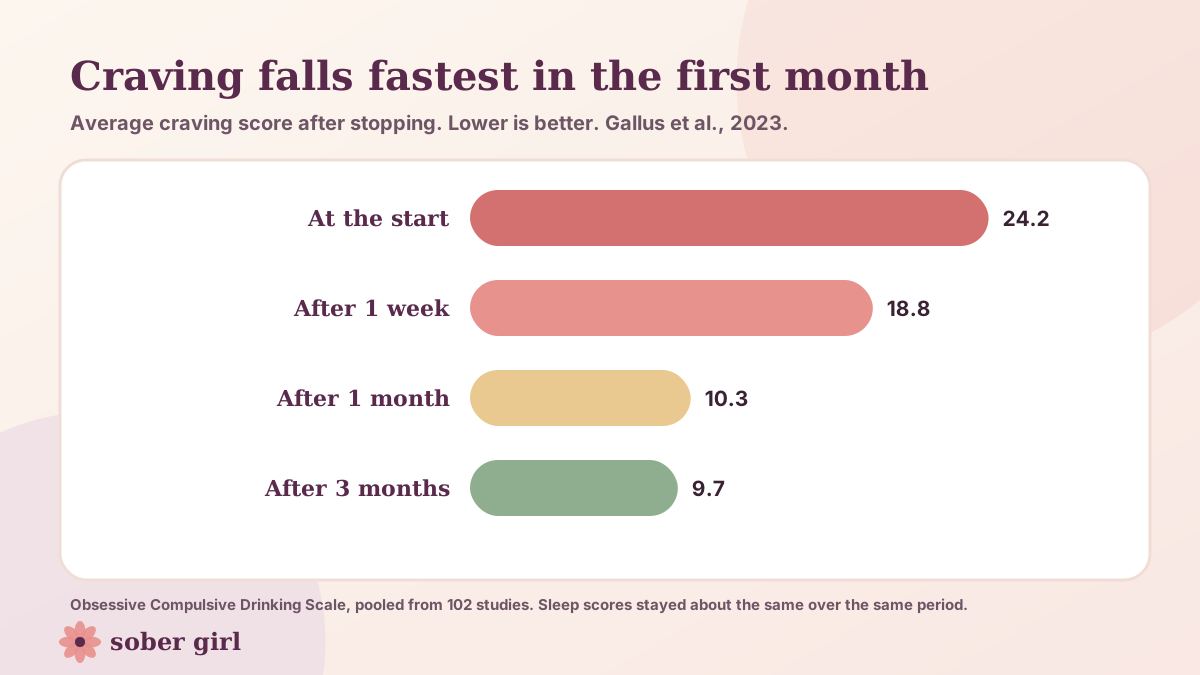
PAWS (post-acute withdrawal syndrome) is the name people use for symptoms that linger after acute alcohol withdrawal ends. Researchers call it protracted alcohol withdrawal: symptoms such as craving, poor sleep and low mood that can persist for weeks, months or even years after drinking stops [1]. In a review of 102 studies, average craving scores fell from 24.2 at the start to 18.8 after one week, 10.3 after one month and 9.7 after three months [1]. MedlinePlus says mood swings, tiredness and sleeplessness linked to withdrawal can last a year or more [2]. If your mood drops low or you think about harming yourself, contact a doctor or call or text 988 in the US [3].
What is PAWS?
Week three. You have stopped drinking, the sweats and tremors are long gone, and yet you feel irritable, anxious, flat, or you cannot sleep. A lot of people assume that means something has gone wrong, or that they are failing at sobriety. It usually means the brain is still settling.
A systematic review in Current Neuropharmacology describes alcohol withdrawal as having phases: acute, early and protracted. Protracted alcohol withdrawal has symptoms that may persist for several weeks, months or even years after drinking stops [1]. The review focuses on craving, sleep disorders and anhedonia (loss of pleasure) [1], and other trials describe the same picture as anxiety, irritability, mood instability, insomnia and cravings [4].
A note on wording: "PAWS" is the term most people search for and use online, while the research literature uses "protracted alcohol withdrawal." They point to the same experience. The research on it is real but still limited, which is why this page sticks to what studies have measured.
Track it in Sober Girl
PAWS symptoms
- Craving, which comes in waves and tends to fade over the first months
- Sleep problems, such as trouble falling or staying asleep and unrefreshing sleep
- Anxiety and irritability
- Mood swings or low mood, and reduced pleasure in everyday things
- Tiredness that does not match how much you did
MedlinePlus lists the same long-lasting group among the symptoms linked to alcohol withdrawal: emotional mood swings, feeling tired and sleeplessness, which may last a year or more [2]. That is the outer end, not the typical course for everyone.
How long does it last? What the data show
The best numbers come from the 2023 review, which pooled 102 publications (70 randomized trials and 32 cohort studies) and tracked craving on the Obsessive Compulsive Drinking Scale. Craving dropped sharply in the first month and then flattened [1].
| When | Everyone | Treated with medicine | Not treated |
|---|---|---|---|
| At the start | 24.2 | 23.9 | 25.3 |
| After 1 week | 18.8 | 18.8 | 13.9 |
| After 1 month | 10.3 | 8.7 | 13.2 |
| After 3 months | 9.7 | 8.8 | 11.4 |
Two honest caveats. First, sleep did not follow the same curve: in four studies using the Epworth Sleepiness Scale, scores stayed about the same from baseline (7.3) to three months (7.1) [1]. Sleep may be the slowest symptom to settle. Second, the review found that drug treatment may speed up symptom reduction in the first three weeks [1], but these averages come from different studies, which is why treated people did not always look better at every time point, and they hide wide differences between people.
What helps
- Keep a routine. Regular sleep and wake times, meals and movement give a recovering brain predictable signals. Our guide to sleep after quitting alcohol covers the sleep side.
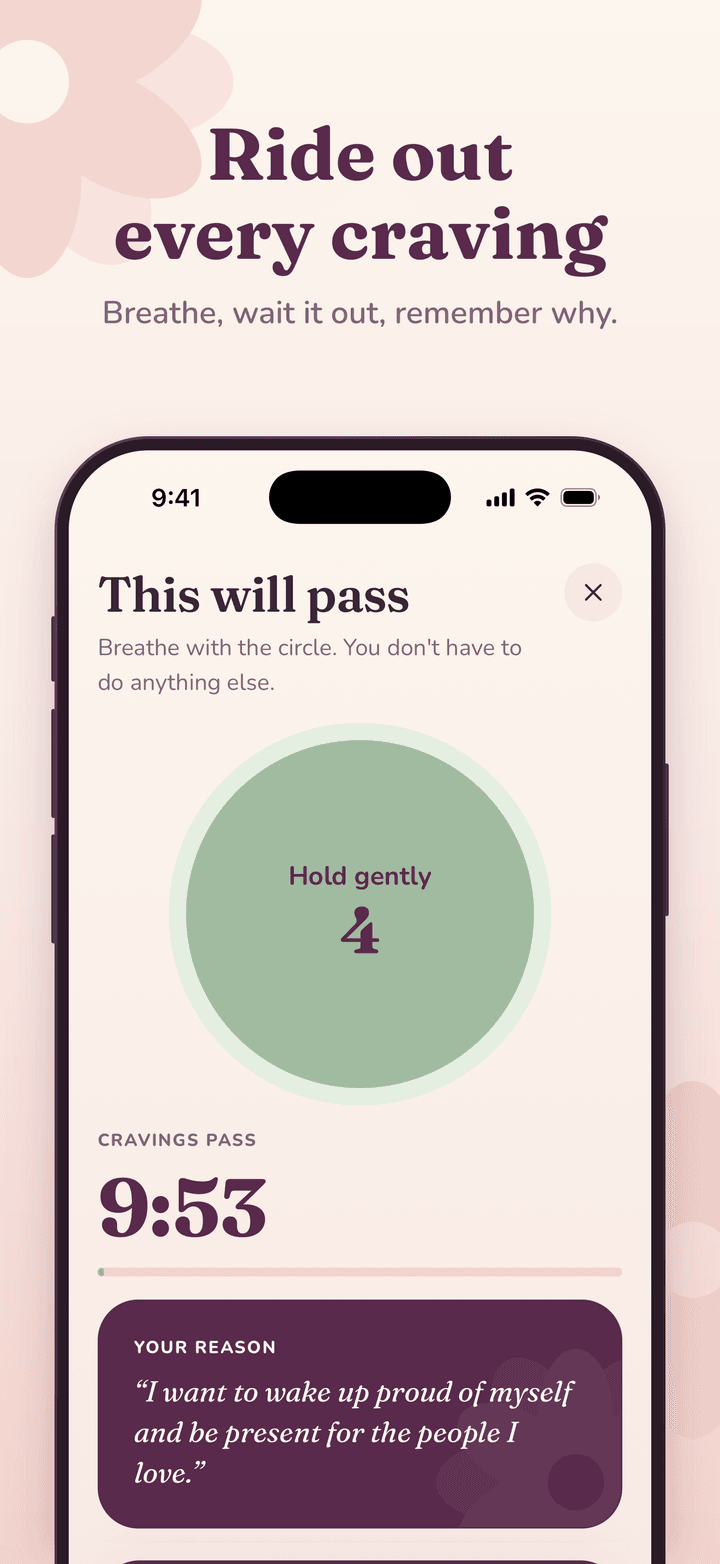
- Ride out cravings. They peak and pass. Urge surfing and how to stop alcohol cravings give practical steps.
- Ask about medicines. The review suggests drug treatment may reduce symptoms faster [1], and naltrexone, acamprosate and Antabuse are the approved options [5]. Acamprosate is aimed at exactly this early-abstinence stretch.
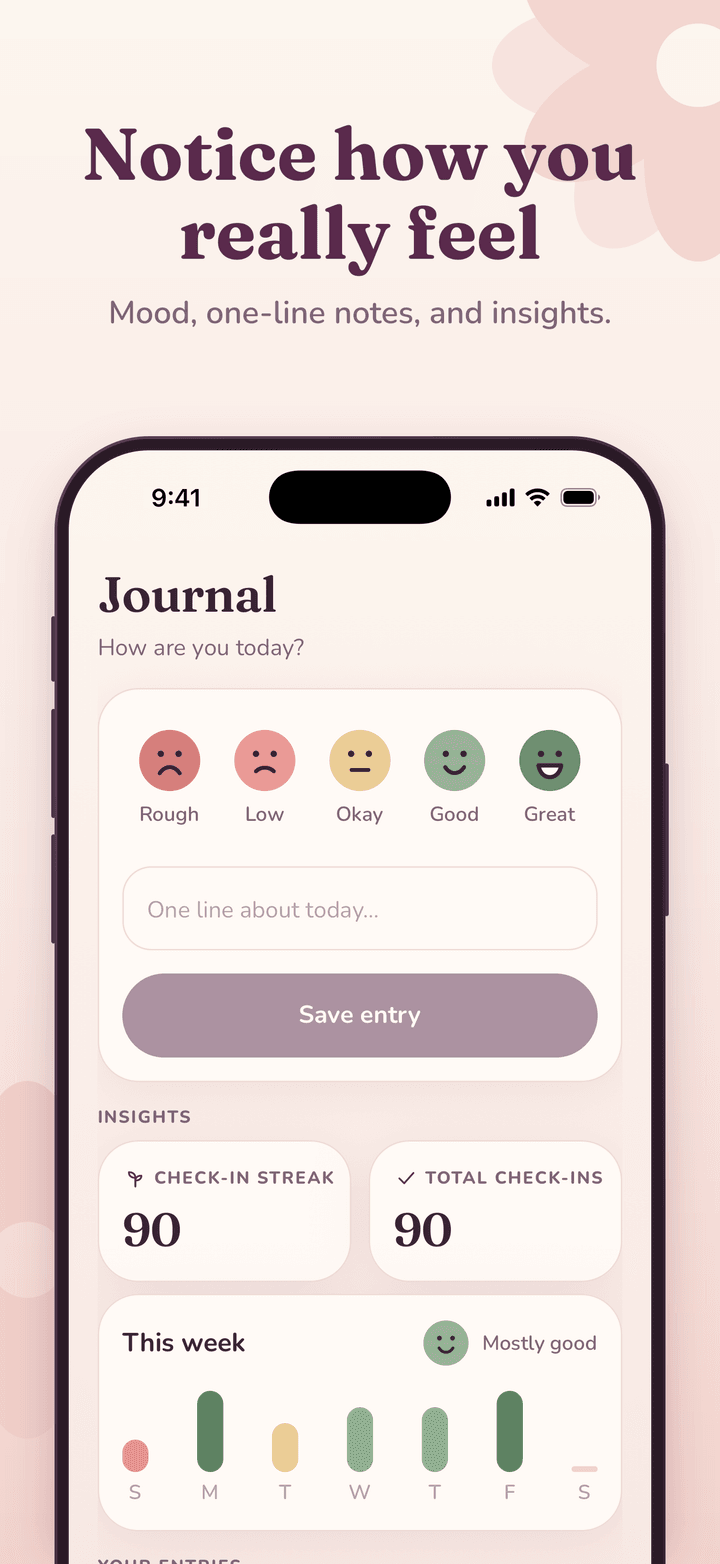
- Track how you feel. A short daily note on mood, sleep and craving shows a trend you cannot see day to day, and gives your doctor something concrete.
- Lean on people. Friends, a counselor or a support group make a rough patch shorter. See AA alternatives.
When to talk to a doctor
See a doctor if low mood, anxiety or sleeplessness is making daily life hard, if symptoms are getting worse rather than better, or if you are tempted to drink to cope. Depression can appear even if you do not go back to drinking [6], and medicines and therapy can help. If you have thoughts of harming yourself, get help right away: in the US, call or text 988 [3].
Is Sober Girl right for you?
- use an iPhone or an Android phone
- want a private tracker, with your journal kept on your device
- want a day counter, money saved and a daily check-in in one calm place
- want a Craving SOS with a breathing exercise and a 10-minute timer
- want to start free and add Plus only if you need the journal, insights or milestone cards
- want a community feed, live coaching or an AI chat
- want a structured multi-week education program
- need medical help for heavy drinking or withdrawal. An app is not treatment, so see the safety notes above
Frequently asked questions
What is PAWS from alcohol?
The term people use for symptoms that linger after acute withdrawal, such as craving, poor sleep, anxiety, irritability and low mood. Researchers call it protracted alcohol withdrawal.
How long does PAWS last after quitting alcohol?
It varies. In a 102-study review, craving scores fell by about half within a month and stayed low at three months, but MedlinePlus says mood swings, tiredness and sleeplessness can last a year or more for some people.
What are the symptoms of protracted alcohol withdrawal?
Craving, sleep problems, anxiety, irritability, mood swings or low mood, reduced enjoyment, and tiredness.
Does sleep improve as fast as cravings?
Not necessarily. In four studies, sleepiness scores stayed about the same from baseline to three months, so sleep may be one of the slower symptoms to settle.
Is PAWS dangerous?
The symptoms themselves are not like acute withdrawal, but low mood can become serious. See a doctor if mood drops or you think about harming yourself, and in the US call or text 988.
Can medicine help with PAWS?
The 2023 review suggests drug treatment may speed up symptom reduction in the first three weeks. Ask your doctor about naltrexone, acamprosate and other options.
Why do I feel worse weeks after I quit?
The brain adapts to alcohol and takes time to rebalance. Many people notice anxiety, low mood and poor sleep for weeks. It tends to ease, but tell a doctor if it does not.
Is PAWS a reason to start drinking again?
No. Drinking brings back the cycle. Use routine, support, a craving plan and, if needed, medicine, and talk to a doctor if you are struggling.
Sources
- Symptoms of Protracted Alcohol Withdrawal in Patients with Alcohol Use Disorder: A Comprehensive Systematic Review. Gallus S, Lugo A, Borroni E, et al. Current Neuropharmacology 2023;21:409–416. 102 publications (70 randomized trials, 32 cohort studies). Craving scores fell from 24.2 at baseline to 18.8 at 1 week, 10.3 at 1 month and 9.7 at 3 months. Sleep scores stayed stable. The authors confirm protracted withdrawal after the acute phase and say drug treatment may speed symptom reduction.
- Delirium tremens. MedlinePlus (US National Library of Medicine), reviewed 1 January 2025.
- 988 Suicide & Crisis Lifeline. 988 Lifeline. Call, text or chat, free and confidential, 24/7.
- Effect of Transcutaneous Auricular Vagus Nerve Stimulation on Protracted Alcohol Withdrawal Symptoms in Male Alcohol-Dependent Patients. Wang YM, Xu YY, Zhai Y, et al. Frontiers in Psychiatry 2021;12:678594. Randomized trial in 114 patients. Describes protracted alcohol withdrawal symptoms as including anxiety, irritability, mood instability, insomnia and cravings, which make abstinence difficult and raise relapse risk.
- Treatment for Alcohol Problems: Finding and Getting Help. NIAAA, updated February 2025.
- Acamprosate. MedlinePlus (US National Library of Medicine), read 7 November 2026. Drug information page. A delayed-release tablet taken three times a day, used with counseling and social support after you have stopped drinking. It does not cause an unpleasant reaction if you drink.
- Alcohol withdrawal. MedlinePlus (US National Library of Medicine), reviewed 1 January 2025 by Frank D. Brodkey, MD.
- National Helpline. SAMHSA. Free, confidential, 24/7 treatment referral line: 1-800-662-4357.
How we write these. Every figure above links to the source it came from, and we label self-reported and observational results as such. Where we could not find a source we trust, the page says so instead of filling the gap. Sober Girl is made by ShipAI Lab and this is not medical advice. Sources were checked on 6 October 2026. If you spot an error, email us at [email protected].
Keep reading
Today is day one.
Sober Girl is a private sobriety tracker for women, on iPhone and Android: day counter, money saved, craving SOS and a tree that grows with you. Free to start.