Alcohol tolerance: what it means when it takes more to feel the same
Some people are proud of a high tolerance. Doctors treat it as a warning light. Here is the difference, and what to do if you recognize yourself.
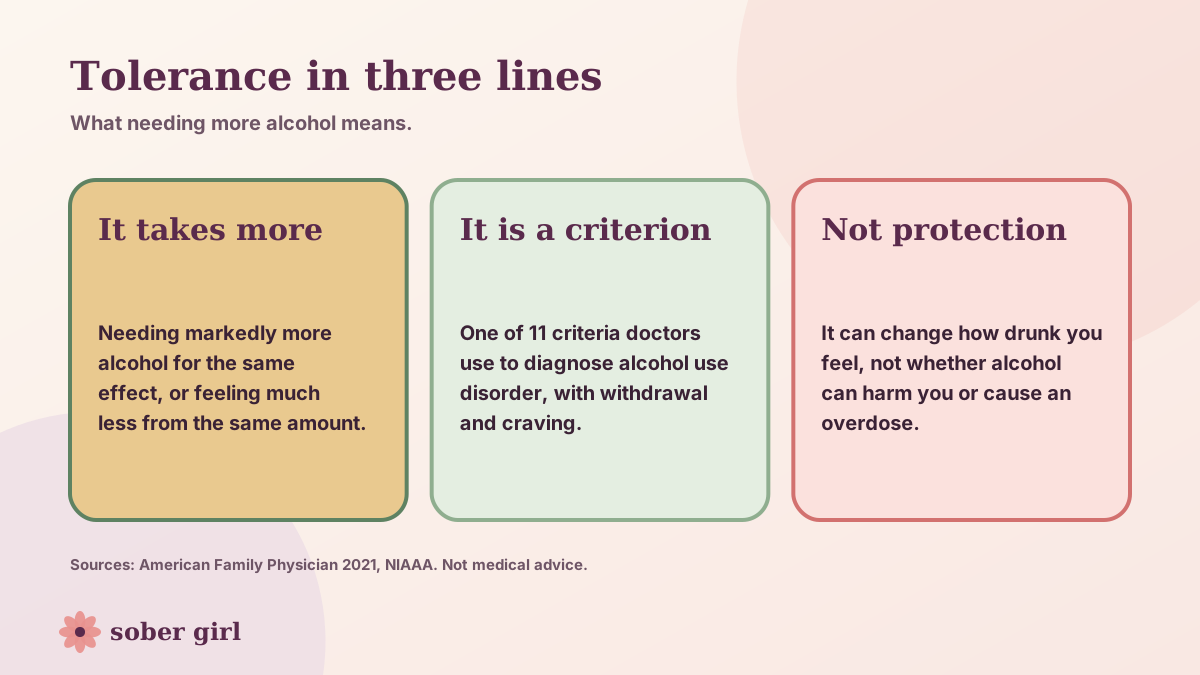
Alcohol tolerance is needing markedly more alcohol to feel the effect you want, or feeling markedly less effect from the same amount [1]. It is one of the 11 criteria doctors use to diagnose alcohol use disorder, alongside withdrawal, craving and drinking more than intended [1]. A high tolerance does not make you safe. NIAAA lists tolerance among the factors that decide when drinking becomes dangerous, but it does not stop alcohol from causing harm, including an overdose [2]. If you notice you need more than you used to, that is a reason to take a closer look, not a sign you can handle it.
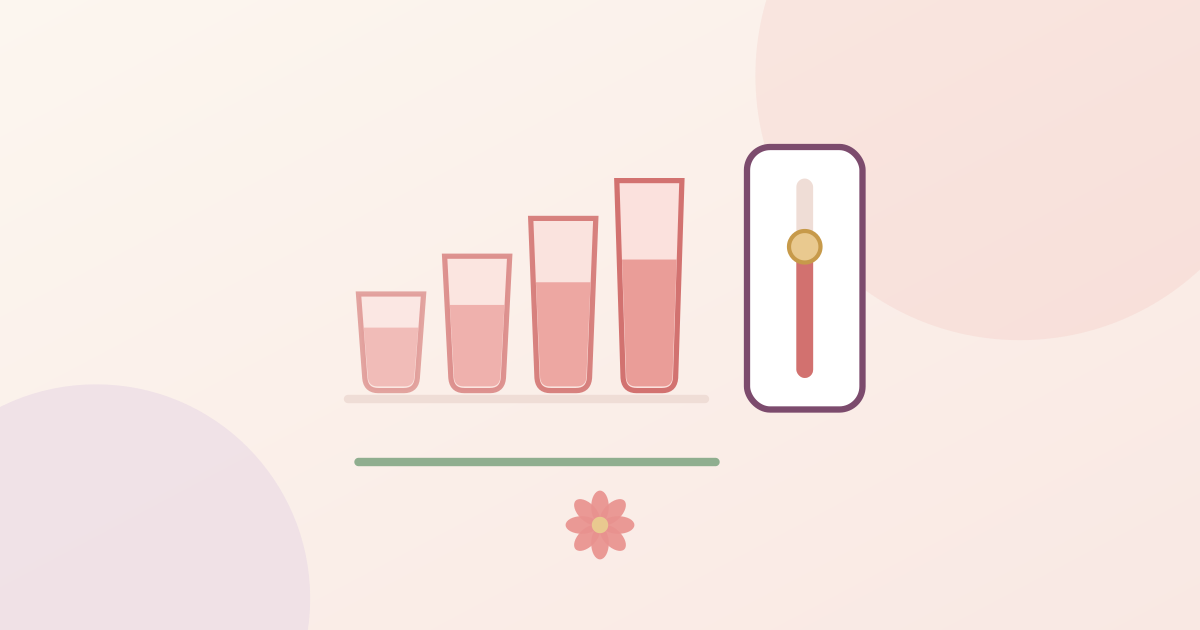
What is alcohol tolerance?
You used to be done after two glasses. Now two feels like nothing, and you are on your fourth before you notice anything. Friends say you can hold your drink. That drift is tolerance, and it tends to sneak up.
The American Family Physician review uses the clinical definition: tolerance is a need for markedly increased amounts of alcohol to achieve intoxication or the desired effect, or a markedly diminished effect with continued use of the same amount [1]. In plain words, the same drinks stop doing what they did.
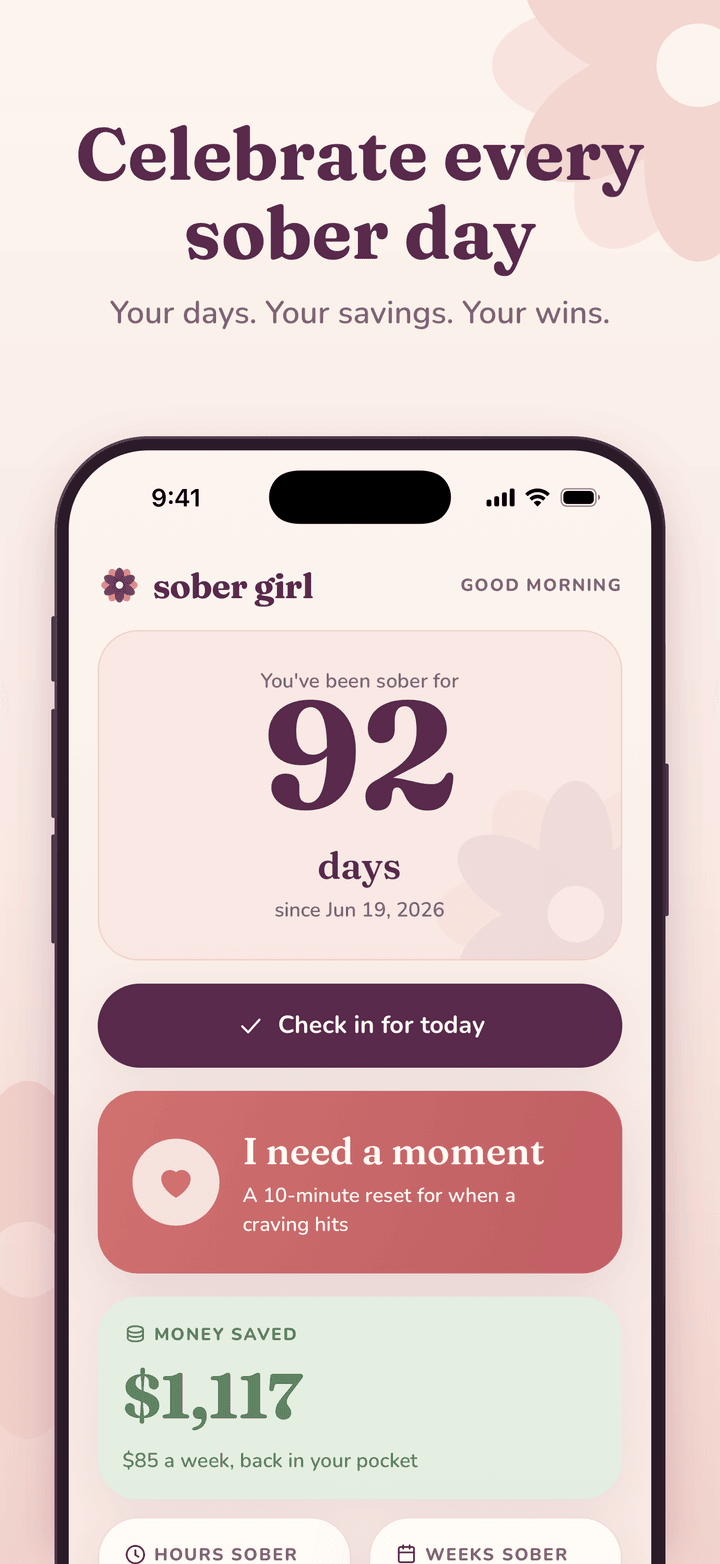
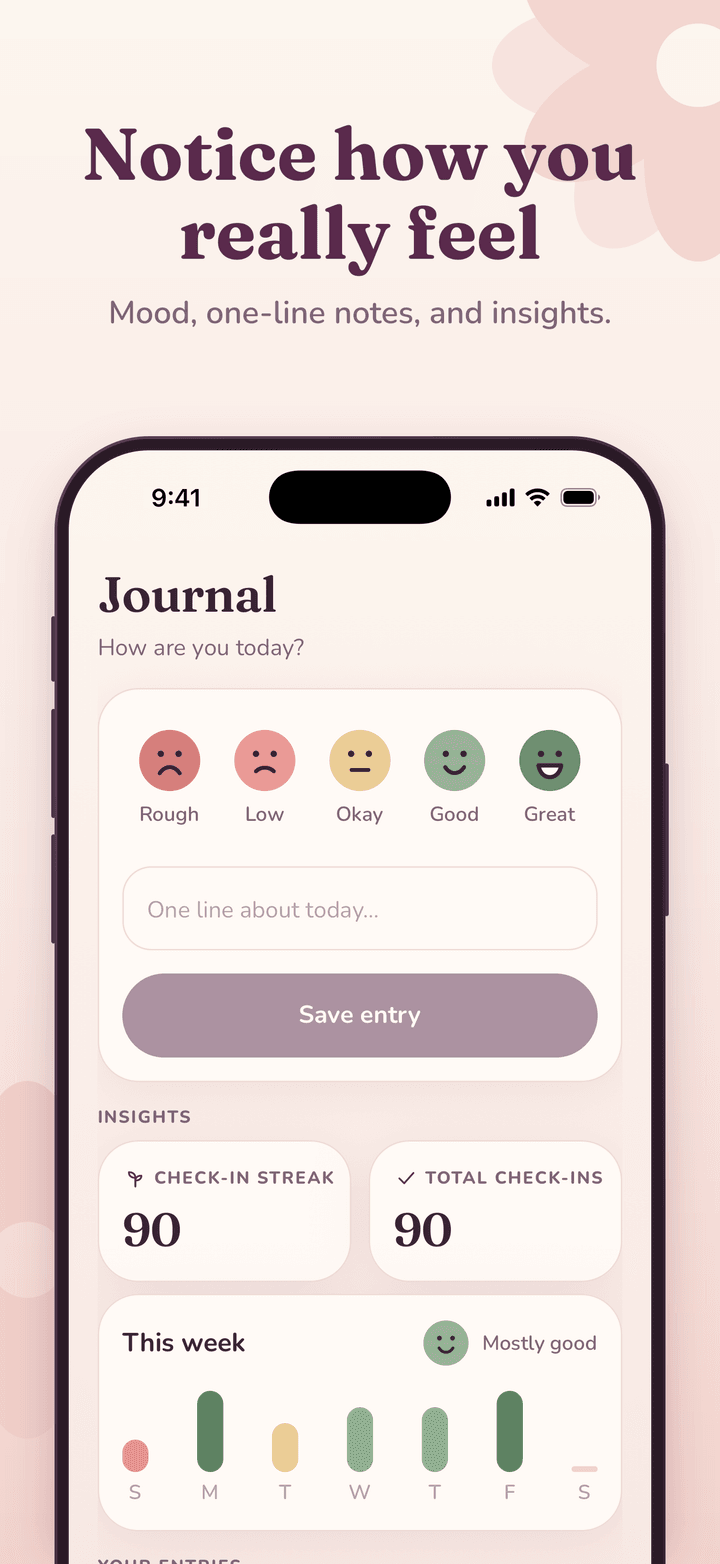
Track it in Sober Girl
Why tolerance is a warning sign, not a skill
Tolerance is one of the 11 symptoms in the diagnostic criteria for alcohol use disorder, along with withdrawal, craving, trying and failing to cut down, drinking more or longer than planned, and continuing to drink despite problems [1]. and NIAAA’s fact sheet on alcohol use disorder explains how the criteria are used [3]. See the 11 questions doctors use and the free 3-question AUDIT-C screen.
| What you notice | What is still happening in your body |
|---|---|
| It takes more drinks to feel buzzed | Alcohol is still reaching your blood, liver and brain in the same amounts [2] |
| You seem to handle it better than friends | The risk of overdose, injury and long-term harm is not removed; tolerance is only one factor among age, sex, speed of drinking, medicines and food [2] |
| You feel fine until you drink a lot | Blood alcohol can still climb to dangerous levels, and it can keep rising after you stop [2] |
High tolerance and overdose: the false comfort
NIAAA names age, sensitivity to alcohol (tolerance), sex, speed of drinking, medications and food as the factors that decide where impairment becomes danger [2]. Tolerance can change how drunk you feel. NIAAA explains that at high blood alcohol levels the brain areas that control breathing, heart rate and temperature start to shut down [2], and a person who does not feel very drunk can still reach those levels. See the signs in alcohol poisoning symptoms.
Hangovers tell a related story. In a pooled analysis of 924 people, those who had hangovers more often had more severe ones, a pattern the authors call reverse tolerance [4]. So tolerance to the buzz does not mean tolerance to the next morning. Our hangover page has the details.
Tolerance and withdrawal go together
The body that adapts to needing more alcohol also adapts to expecting it. That is why withdrawal can follow when drinking stops or drops sharply, and why tolerance and withdrawal are both on the diagnostic list [1]. If you have built a high tolerance through heavy daily drinking, do not stop suddenly on your own. Read how to taper off alcohol safely and the alcohol withdrawal timeline.
What to do if you recognize it
- Count honestly. Note how many drinks it takes now compared with a year ago. A simple drinking diary is enough.
- Check the other signs. Use the AUDIT-C screen and the 11 criteria. Several yes answers are a reason to talk to a doctor [3].
- Cut back with a plan, or stop with medical advice if you drink heavily every day. See mindful drinking, moderation management and medicines that help.
- Tell someone. A friend, a doctor or a counselor makes the next step easier.
- Track your days. A private counter, like the one in the Sober Girl app, shows progress without any pressure.
Is Sober Girl right for you?
- use an iPhone or an Android phone
- want a private tracker, with your journal kept on your device
- want a day counter, money saved and a daily check-in in one calm place
- want a Craving SOS with a breathing exercise and a 10-minute timer
- want to start free and add Plus only if you need the journal, insights or milestone cards
- want a community feed, live coaching or an AI chat
- want a structured multi-week education program
- need medical help for heavy drinking or withdrawal. An app is not treatment, so see the safety notes above
Frequently asked questions
What is alcohol tolerance?
Needing markedly more alcohol to feel the effect you want, or feeling markedly less effect from the same amount.
Is high alcohol tolerance a sign of alcoholism?
Tolerance is one of 11 diagnostic criteria for alcohol use disorder, but one sign alone is not a diagnosis. It is a reason to look at the other signs and talk to a doctor.
Does high tolerance protect you from harm?
No. It can change how drunk you feel, but not whether alcohol can harm you, and you can still reach dangerous blood alcohol levels.
Can a high tolerance cause an overdose?
Yes, tolerance is only one factor in overdose risk, and people who feel little effect can keep drinking to dangerous levels. Know the signs of alcohol poisoning.
What are the signs of alcohol tolerance?
Needing more drinks than before to feel the same, feeling little effect from usual amounts, and being told you hold your drink well.
Does tolerance mean withdrawal is likely?
Tolerance and withdrawal often go together in heavy drinking. If you drink heavily every day, do not stop suddenly on your own; plan with a doctor.
Do hangovers get easier with tolerance?
No. A pooled analysis of 924 people found hangovers were more severe in people who had them more often, called reverse tolerance.
What should I do if I notice my tolerance rising?
Track your drinks, check yourself against the 11 criteria and the AUDIT-C, and talk to a doctor or counselor about cutting back or stopping safely.
Sources
- Alcohol Withdrawal Syndrome: Outpatient Management. Tiglao SM, Meisenheimer ES, Oh RC. American Family Physician 2021;104(3):253–262. Clinical review. Mild to moderate withdrawal without added risk factors can be treated as an outpatient when possible; severe or complicated withdrawal needs the emergency department and inpatient care. Outpatients should be monitored daily for up to five days after the last drink.
- Understanding the Dangers of Alcohol Overdose. NIAAA fact sheet, read 7 November 2026. Alcohol overdose, sometimes called alcohol poisoning, is when so much alcohol is in the blood that the brain areas controlling breathing, heart rate and temperature begin to shut down. Lists the danger signs, says to call 911 and not to leave the person alone, and says cold showers, hot coffee and walking do not help.
- Understanding Alcohol Use Disorder. NIAAA fact sheet, updated January 2025.
- The Relationship Between Alcohol Hangover Frequency and Hangover Severity. Rîșniță S, Išerić E, Zijlstra MN, Stock AK, Verster JC. Journal of Clinical Medicine 2025;14(7):2428. Five studies combined (924 people). Hangover frequency and severity were positively correlated (r = 0.692; 0.526 after adjusting for sex, age and weekly drinking): people who have hangovers more often have worse ones.
How we write these. Every figure above links to the source it came from, and we label self-reported and observational results as such. Where we could not find a source we trust, the page says so instead of filling the gap. Sober Girl is made by ShipAI Lab and this is not medical advice. Sources were checked on 6 October 2026. If you spot an error, email us at [email protected].
Keep reading
Today is day one.
Sober Girl is a private sobriety tracker for women, on iPhone and Android: day counter, money saved, craving SOS and a tree that grows with you. Free to start.