Alcoholic ketoacidosis: the emergency that follows heavy drinking and not eating
It is less well known than withdrawal or alcohol poisoning, and it is often missed. This is what it is, who gets it, and why it needs a hospital.
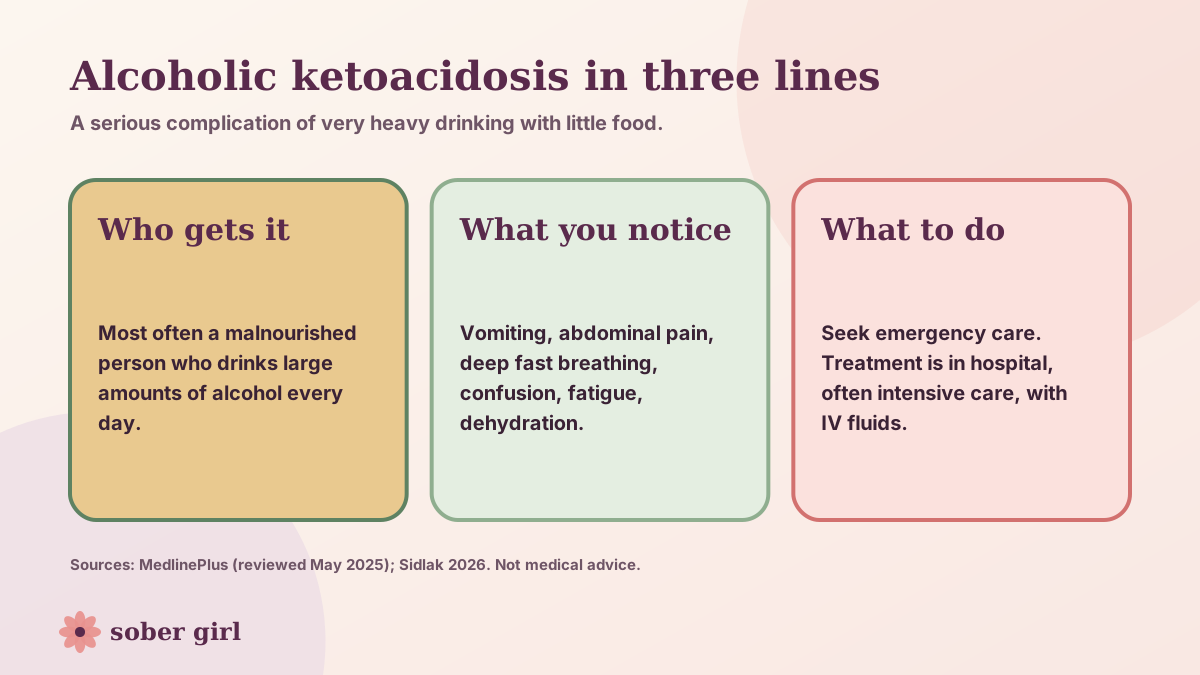
Alcoholic ketoacidosis is a buildup of ketones, which are acids the body makes when it breaks down fat for energy, in the blood because of alcohol use. It is caused by very heavy drinking and most often happens in a malnourished person who drinks large amounts of alcohol every day [1]. Symptoms include nausea and vomiting, abdominal pain, deep and rapid breathing, agitation or confusion, fatigue and signs of dehydration [1]. It can be life-threatening and needs emergency medical care, usually in a hospital and often in intensive care [1]. In one multi-center review of emergency visits, it complicated 11% to 26% of alcohol-related visits depending on the definition, and was often not diagnosed [2].
What is alcoholic ketoacidosis?
A typical story goes like this: several days of heavy drinking, almost no food, then vomiting that will not stop and abdominal pain that gets worse. The person cannot keep anything down, breathing becomes deep and fast, and they end up in the emergency room. That sequence is how alcoholic ketoacidosis (AKA) often presents.
MedlinePlus defines it as a buildup of ketones in the blood due to alcohol use. Ketones are a type of acid that form when the body breaks down fat for energy, and the condition is an acute form of metabolic acidosis, too much acid in the body fluids [1]. It is caused by alcohol, not by diabetes or diet, so the cause is what separates it from other forms of ketoacidosis.
Track it in Sober Girl
Causes and who is at risk
AKA is caused by very heavy alcohol use. It most often occurs in a malnourished person who drinks large amounts of alcohol every day [1]. The two ingredients that matter are heavy drinking and not eating, and the second is easy to miss: people who are drinking heavily often eat little. That is also why preventing it comes down to limiting how much you drink [1].
It sits among the other serious alcohol emergencies we cover: alcohol poisoning, where breathing slows, and delirium tremens, a severe form of withdrawal. Treatment of AKA includes medicines to prevent alcohol withdrawal [1], a sign of how closely these problems are linked.
Symptoms of alcoholic ketoacidosis
- Nausea and vomiting, and loss of appetite
- Abdominal pain
- Deep, labored, rapid breathing
- Agitation or confusion, and a changed level of alertness that may lead to coma
- Fatigue and slow movements
- Dehydration signs: dizziness, lightheadedness and thirst
These are the symptoms MedlinePlus lists [1]. None is specific to AKA, which is why it is easy to mistake for something else. If you or someone else has these symptoms after heavy drinking, seek emergency medical help [1].
| Alcoholic ketoacidosis | Alcohol poisoning | Delirium tremens | |
|---|---|---|---|
| When | After days of heavy drinking with little food [1] | Too much alcohol too fast; BAC keeps rising [3] | Usually 48 to 96 hours after the last drink [4] |
| Typical signs | Vomiting, abdominal pain, deep fast breathing [1] | Slow breathing, cannot wake, vomiting, bluish skin [3] | Confusion, hallucinations, fever, tremors [4] |
| What to do | Emergency care [1] | Call 911 [3] | Emergency care, hospital stay [4] |
How doctors diagnose it
MedlinePlus lists the usual tests: arterial blood gases to measure acid and oxygen levels, a blood alcohol level, blood chemistries and liver function tests, a complete blood count, a clotting test (prothrombin time), a toxicology study to look for other poisons, and urine ketones [1].
It is under-recognized. In a 2026 multi-center chart review of 905 emergency visits with alcohol-related complaints, 26% had an elevated anion gap, a marker of acidosis, and using a stricter definition (ketones in the urine plus acidosis) 11% had AKA. The author concludes AKA complicates 11% to 26% of alcohol-related emergency visits and that the diagnosis was infrequent [2]. If you go to a hospital after a binge with little food, say so; it helps staff look for it.
How is it treated?
Treatment usually means intravenous fluids (a salt and sugar solution), frequent blood tests, and vitamin supplements for malnutrition. People are usually admitted to hospital, often to the intensive care unit. Alcohol use is stopped to help recovery, and medicines may be given to prevent alcohol withdrawal symptoms [1].
Prompt medical attention improves the overall outlook, and how severe the drinking is and whether there is liver disease or other problems also affect it [1]. Complications can include coma and seizures, gastrointestinal bleeding, an inflamed pancreas (pancreatitis) and pneumonia, and the condition can be life-threatening [1].
Preventing it, and what to do after
- Limit how much you drink. MedlinePlus says this is how to prevent it [1].
- Do not drink heavily on an empty stomach for days. Malnutrition is part of the picture [1].
- Do not stop suddenly on your own if you drink heavily every day; plan with a doctor, since withdrawal can be dangerous too [5].
- Ask about support. After an emergency like this, medicines that help you cut down or stop and the guide to quitting on your own are the next step.
Is Sober Girl right for you?
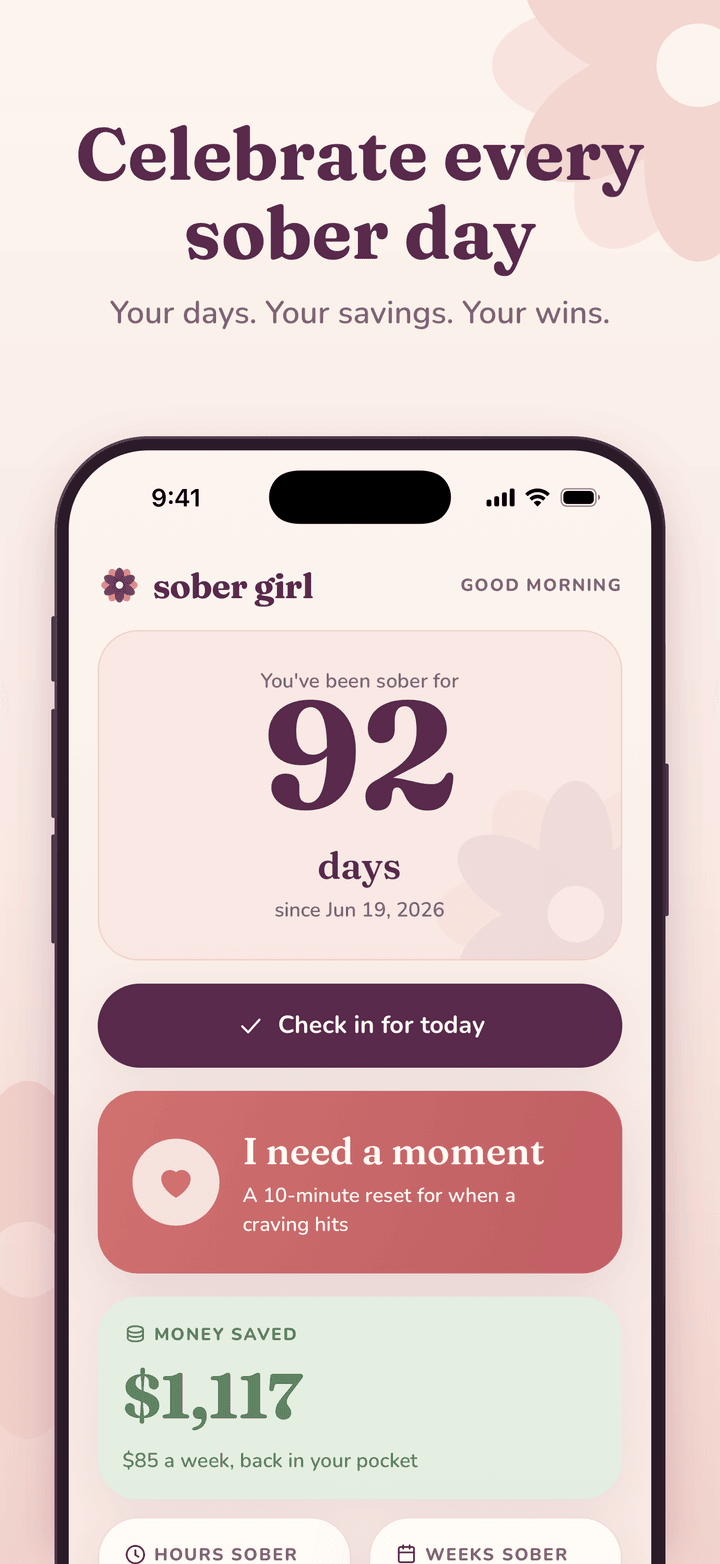
- use an iPhone or an Android phone
- want a private tracker, with your journal kept on your device
- want a day counter, money saved and a daily check-in in one calm place
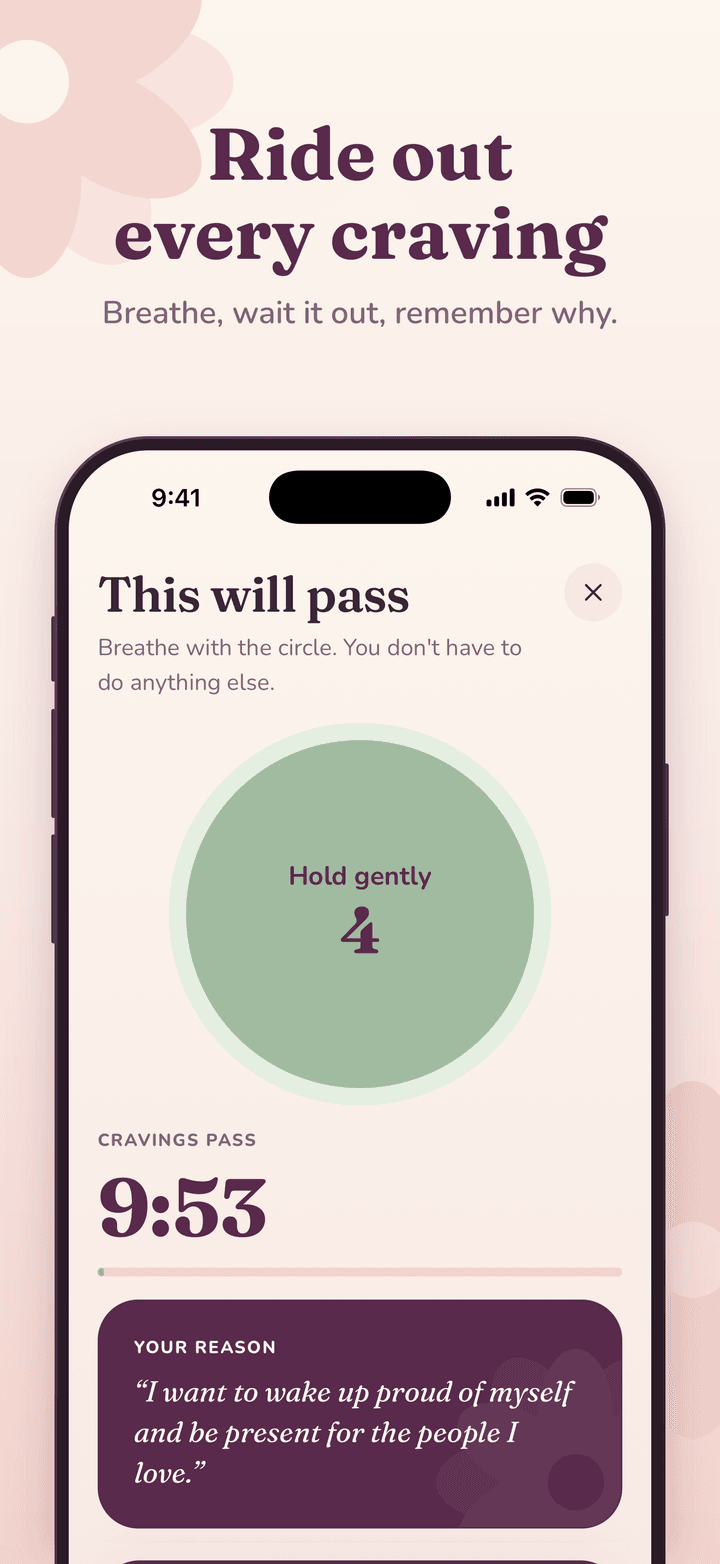
- want a Craving SOS with a breathing exercise and a 10-minute timer
- want to start free and add Plus only if you need the journal, insights or milestone cards
- want a community feed, live coaching or an AI chat
- want a structured multi-week education program
- need medical help for heavy drinking or withdrawal. An app is not treatment, so see the safety notes above
Frequently asked questions
What is alcoholic ketoacidosis?
A buildup of ketones, acids the body makes when it breaks down fat for energy, in the blood caused by very heavy alcohol use, usually in a malnourished person who drinks large amounts every day.
What are the symptoms of alcoholic ketoacidosis?
Nausea and vomiting, abdominal pain, deep and rapid breathing, agitation or confusion, fatigue, loss of appetite and signs of dehydration such as dizziness and thirst.
Is alcoholic ketoacidosis an emergency?
Yes. It can be life-threatening. If you or someone else has symptoms after heavy drinking, seek emergency medical help.
How is alcoholic ketoacidosis treated?
In hospital, often intensive care, with intravenous salt and sugar fluids, frequent blood tests, vitamins, and medicines to prevent alcohol withdrawal symptoms. Alcohol is stopped to help recovery.
Is alcoholic ketoacidosis the same as diabetic ketoacidosis?
No. Alcoholic ketoacidosis is caused by very heavy drinking, often with little food, not by diabetes. Doctors use blood and urine tests, including ketones and blood gases, to find the cause.
How common is alcoholic ketoacidosis?
A 2026 multi-center review found it complicated 11% to 26% of alcohol-related emergency visits, depending on how strictly it was defined, and that it was often not diagnosed.
Who is most at risk of alcoholic ketoacidosis?
People who drink very heavily and daily, especially those who are malnourished or eat little while drinking.
How can you prevent alcoholic ketoacidosis?
Limiting how much you drink prevents it. If you drink heavily every day, talk to a doctor about stopping safely rather than stopping suddenly on your own.
Sources
- Alcoholic ketoacidosis. MedlinePlus (US National Library of Medicine), reviewed 19 May 2025 by Jacob Berman, MD, MPH. A buildup of ketones in the blood caused by very heavy alcohol use, most often in a malnourished person who drinks large amounts every day. Usually treated in hospital, often in intensive care. Can be life-threatening.
- Frequency of alcoholic ketoacidosis in the emergency department. Sidlak A. American Journal of Emergency Medicine 2026;pp. 122–125. Multi-center chart review of 905 emergency department visits with alcohol-related complaints. Alcoholic ketoacidosis complicated 11% to 26% of visits depending on how strictly it was defined, and was infrequently diagnosed.
- Understanding the Dangers of Alcohol Overdose. NIAAA fact sheet, read 7 November 2026. Alcohol overdose, sometimes called alcohol poisoning, is when so much alcohol is in the blood that the brain areas controlling breathing, heart rate and temperature begin to shut down. Lists the danger signs, says to call 911 and not to leave the person alone, and says cold showers, hot coffee and walking do not help.
- Delirium tremens. MedlinePlus (US National Library of Medicine), reviewed 1 January 2025.
- Alcohol withdrawal. MedlinePlus (US National Library of Medicine), reviewed 1 January 2025 by Frank D. Brodkey, MD.
- National Helpline. SAMHSA. Free, confidential, 24/7 treatment referral line: 1-800-662-4357.
How we write these. Every figure above links to the source it came from, and we label self-reported and observational results as such. Where we could not find a source we trust, the page says so instead of filling the gap. Sober Girl is made by ShipAI Lab and this is not medical advice. Sources were checked on 6 October 2026. If you spot an error, email us at [email protected].
Keep reading
Today is day one.
Sober Girl is a private sobriety tracker for women, on iPhone and Android: day counter, money saved, craving SOS and a tree that grows with you. Free to start.