Antabuse (disulfiram): how it works, what the reaction feels like, and the risks
It is the oldest of the three medicines for alcohol use disorder and the only one built to make drinking unpleasant. That makes the details matter.
Antabuse is the brand name for disulfiram, a once-a-day tablet that causes unpleasant effects if you drink even small amounts of alcohol: flushing, headache, nausea, vomiting, chest pain, weakness, blurred vision, sweating and anxiety [1]. The effects begin about 10 minutes after alcohol enters the body and last an hour or more [1]. It does not cure alcohol use disorder; it discourages drinking [1]. A reaction can happen for up to 2 weeks after your last tablet, and it must never be given without the person’s full knowledge [1].
What is Antabuse?
Some people stop drinking and want a backstop for the night they might not trust themselves. Antabuse is designed for exactly that: take a tablet in the morning, and if you do drink later, you will regret it within minutes. It does not touch cravings. It raises the cost of giving in.
MedlinePlus describes disulfiram as a medicine for chronic alcohol use in a class called alcohol deterrents. It causes unpleasant effects when even small amounts of alcohol are consumed, and it is not a cure, but it discourages drinking [1]. NIAAA lists it as one of three US-approved medicines, alongside naltrexone and acamprosate, and calls all three non-addictive [2].
Track it in Sober Girl
What happens if you drink on Antabuse?
The reaction can include flushing of the face, headache, nausea, vomiting, chest pain, weakness, blurred vision, mental confusion, sweating, choking, trouble breathing and anxiety. It starts about 10 minutes after alcohol enters your body and lasts an hour or more [1].
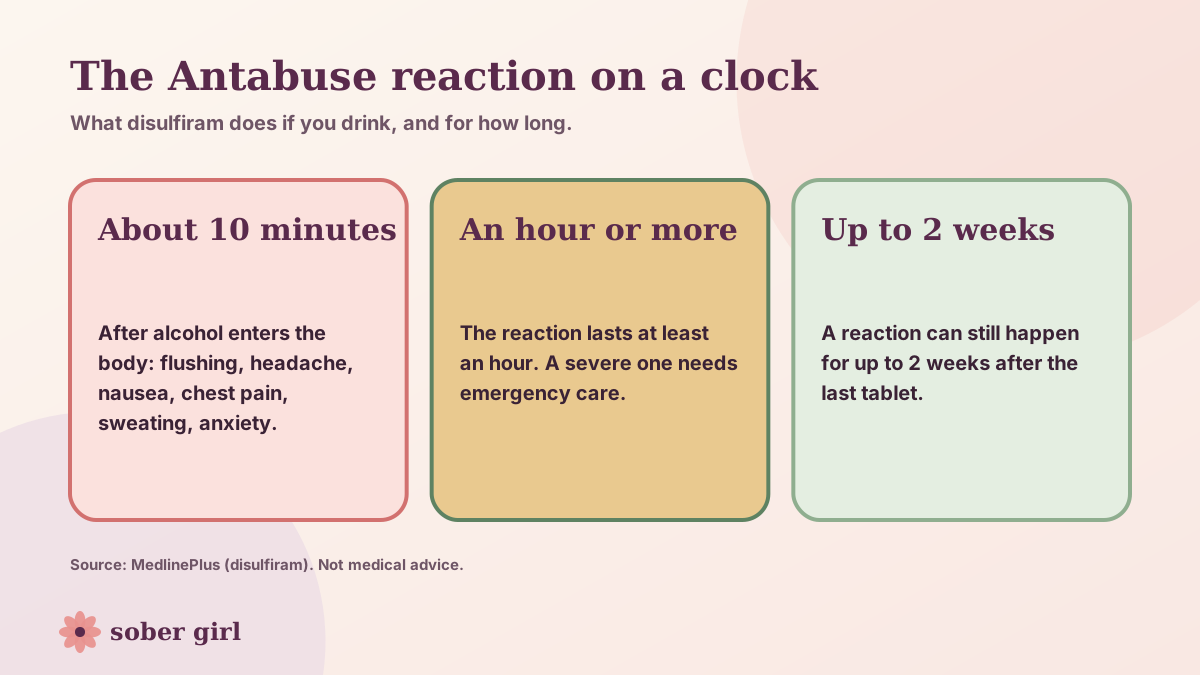
Two timing rules matter. You should not take the first tablet until at least 12 hours after your last drink, and the reaction can still occur for up to 2 weeks after you stop taking it [1]. If a reaction feels severe, treat it as an emergency and call 911.
Side effects and who should not take it
Common effects listed by MedlinePlus include a skin rash or acne, mild headache, drowsiness, tiredness, impotence, and a metallic or garlic-like taste. Call your doctor right away for signs that could mean liver trouble: unusual tiredness, loss of appetite, lower abdominal pain, vomiting, yellow skin or eyes, dark urine or clay-colored stools [1].
Tell your doctor if you have severe heart disease, in which case you will probably be told not to take it, or if you have diabetes, thyroid disease, epilepsy, brain damage, or kidney or liver disease, and if you are pregnant or breast-feeding [1]. It must never be given to someone who is intoxicated or without their full knowledge [1].
How does it compare with the other medicines?
Antabuse works through consequences, so it only helps if you take it. The 2023 JAMA review calculated numbers needed to treat only for medicines with at least moderate strength of evidence, and it reported them for acamprosate (11) and oral naltrexone (18) rather than for disulfiram [3]. That does not mean disulfiram never works; it means the reviewed evidence is stronger for the other two, and that results can depend on whether someone else supervises the dose. Your doctor can weigh that for you.
See acamprosate and naltrexone for the other two, and the guide to quitting on your own for the steps around any medicine. Only a few people use one at all: 1.6% of US adults with alcohol use disorder in the past year [4].
How Antabuse is taken
- Once a day, by mouth, exactly as prescribed. Do not take more or less, or more often [1].
- Swallowing trouble? MedlinePlus says the tablets can be crushed and mixed into water, coffee, tea, milk, a soft drink or fruit juice [1]. Take it only with your own knowledge and consent, never hidden.
- Missed a dose? Take it when you remember, unless the next dose is almost due, and never double up [1].
- Do not stop on your own. Talk to your doctor first, since the reaction can continue for up to 2 weeks after the last tablet [1].
- Wait at least 12 hours after your last drink before the first dose [1].
Pros, cons and who it tends to suit
| In its favour | Against | |
|---|---|---|
| How it works | Gives a clear, immediate consequence for drinking [1] | Does nothing for cravings, so urges still need a plan [2] |
| Dosing | One tablet a day [1] | Only works if you keep taking it, and the reaction can come on for 2 weeks after stopping [1] |
| Safety | Non-addictive [2] | A strong reaction with alcohol; not for severe heart disease; liver warning signs to watch [1] |
| Evidence | Used for decades as an alcohol deterrent [1] | The 2023 JAMA review reported numbers needed to treat for acamprosate and naltrexone, not disulfiram [3] |
People who tend to consider it are those who have already decided to stop, want a firm backstop, and are willing to avoid every hidden source of alcohol. If cravings are your main problem, naltrexone or acamprosate may fit better.
Questions to ask your doctor
- Is disulfiram safe with my heart, liver, kidney, thyroid and other conditions, and with my other medicines?
- How do I check labels for hidden alcohol, and for how many weeks after stopping should I keep avoiding it?
- Who will check in with me while I take it, and what do I do if I feel a reaction?
- Would naltrexone or acamprosate suit my cravings better?
Is Sober Girl right for you?
- use an iPhone or an Android phone
- want a private tracker, with your journal kept on your device
- want a day counter, money saved and a daily check-in in one calm place
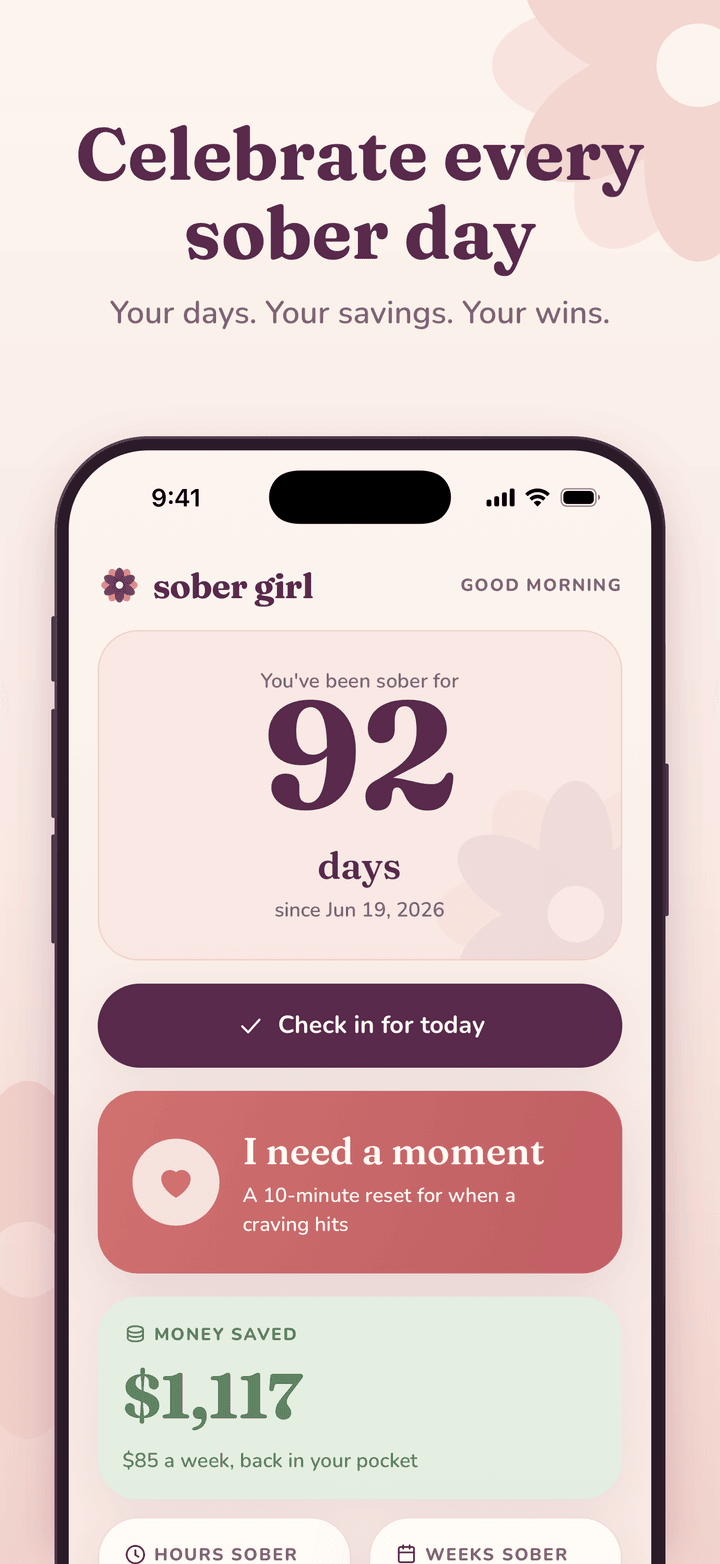
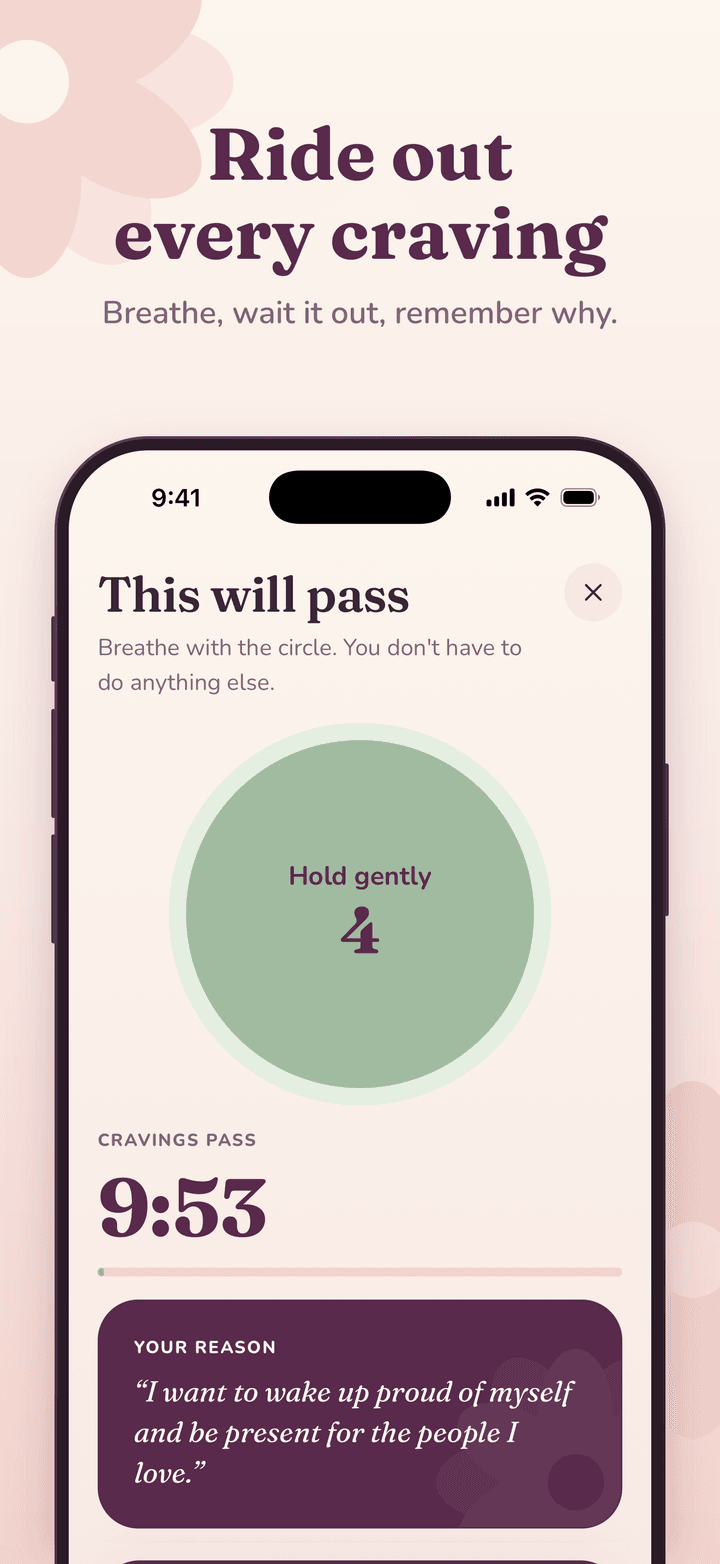
- want a Craving SOS with a breathing exercise and a 10-minute timer
- want to start free and add Plus only if you need the journal, insights or milestone cards
- want a community feed, live coaching or an AI chat
- want a structured multi-week education program
- need medical help for heavy drinking or withdrawal. An app is not treatment, so see the safety notes above
Frequently asked questions
What happens if you drink on Antabuse?
You get an unpleasant reaction within about 10 minutes: flushing, headache, nausea, vomiting, chest pain, weakness, sweating and anxiety, lasting an hour or more.
How long does Antabuse stay in your system?
A reaction to alcohol can still happen for up to 2 weeks after your last tablet, so avoid alcohol and alcohol-containing products for several weeks after stopping.
Does Antabuse stop cravings?
No. It does not reduce the urge to drink; it makes drinking unpleasant. Naltrexone and acamprosate are the medicines aimed at urges and early abstinence.
Can you take Antabuse without knowing?
No. MedlinePlus warns that disulfiram must never be given to someone without their full knowledge, and never to someone who is intoxicated.
Is Antabuse safe?
It can cause serious reactions with alcohol and, in some people, liver problems, and it is not suitable for everyone, such as people with severe heart disease. Take it only as prescribed and report signs like yellow skin or dark urine.
How soon after drinking can you start Antabuse?
Not until at least 12 hours after your last drink, according to MedlinePlus. It should never be given to someone who is intoxicated.
Can you crush Antabuse tablets?
MedlinePlus says tablets can be crushed and mixed with water, coffee, tea, milk, a soft drink or juice if you cannot swallow them, but only with the person’s full knowledge.
What happens if you miss a dose of Antabuse?
Take it as soon as you remember unless the next dose is almost due, in which case skip it. Never take a double dose.
Sources
- Disulfiram. MedlinePlus (US National Library of Medicine), read 7 November 2026. Drug information page. Unpleasant effects begin about 10 minutes after alcohol enters the body and last an hour or more; a reaction can occur for up to 2 weeks after stopping.
- Treatment for Alcohol Problems: Finding and Getting Help. NIAAA, updated February 2025.
- Pharmacotherapy for Alcohol Use Disorder: A Systematic Review and Meta-Analysis. McPheeters M, O’Connor EA, Riley S, et al. JAMA 2023;330:1653–1665. Meta-analysis of 118 trials and 20,976 participants. Number needed to treat to prevent a return to any drinking: 11 for acamprosate (95% CI 1 to 32) and 18 for oral naltrexone 50 mg a day (95% CI 4 to 32); to prevent a return to heavy drinking, 11 for oral naltrexone. Diarrhea was more common with acamprosate (risk ratio 1.58).
- Use of Medications for Alcohol Use Disorder in the US: Results From the 2019 National Survey on Drug Use and Health. Han B, Jones CM, Einstein EB, Powell PA, Compton WM. JAMA Psychiatry 2021;78(8):922–924. Of 14.1 million US adults with past-year alcohol use disorder, 1.6% (about 223,000) reported using a medication for it.
How we write these. Every figure above links to the source it came from, and we label self-reported and observational results as such. Where we could not find a source we trust, the page says so instead of filling the gap. Sober Girl is made by ShipAI Lab and this is not medical advice. Sources were checked on 6 October 2026. If you spot an error, email us at [email protected].
Keep reading
Today is day one.
Sober Girl is a private sobriety tracker for women, on iPhone and Android: day counter, money saved, craving SOS and a tree that grows with you. Free to start.