Late or missed period with PCOS: a straight answer
A late period with PCOS is stressful because it could mean several things. The app does not guess. Once your current cycle is longer than 35 days it shows one card on Home that says what a long cycle can mean and when it is worth speaking to your doctor.
How late is my period? Check it here
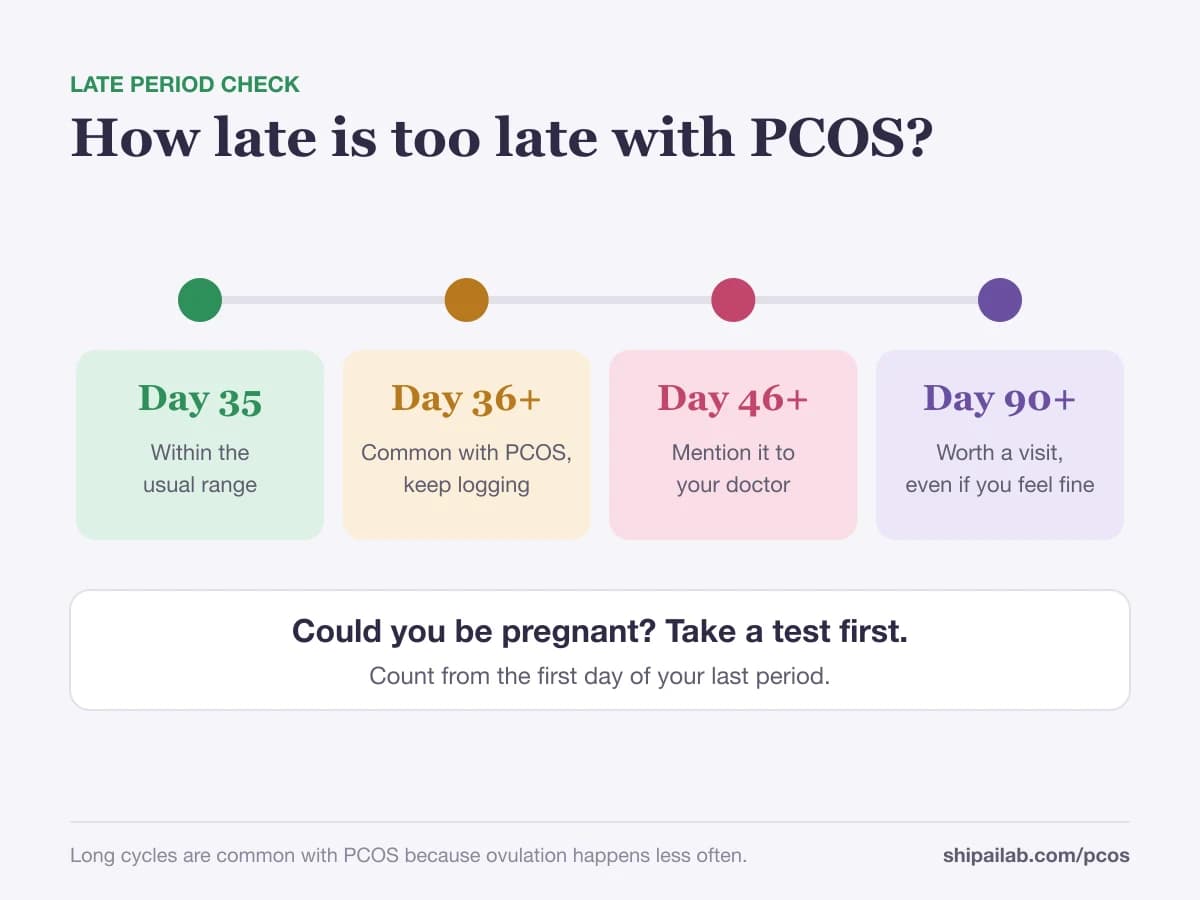
The same stages the app uses, worked out from the date your last period started.
Pick the date your last period started.
Works in your browser. Nothing you type is sent anywhere. Not a diagnosis or a pregnancy check.
Three stages, three different messages
The card appears only when the current cycle is longer than the usual 35 days. What it says depends on how long it has been.
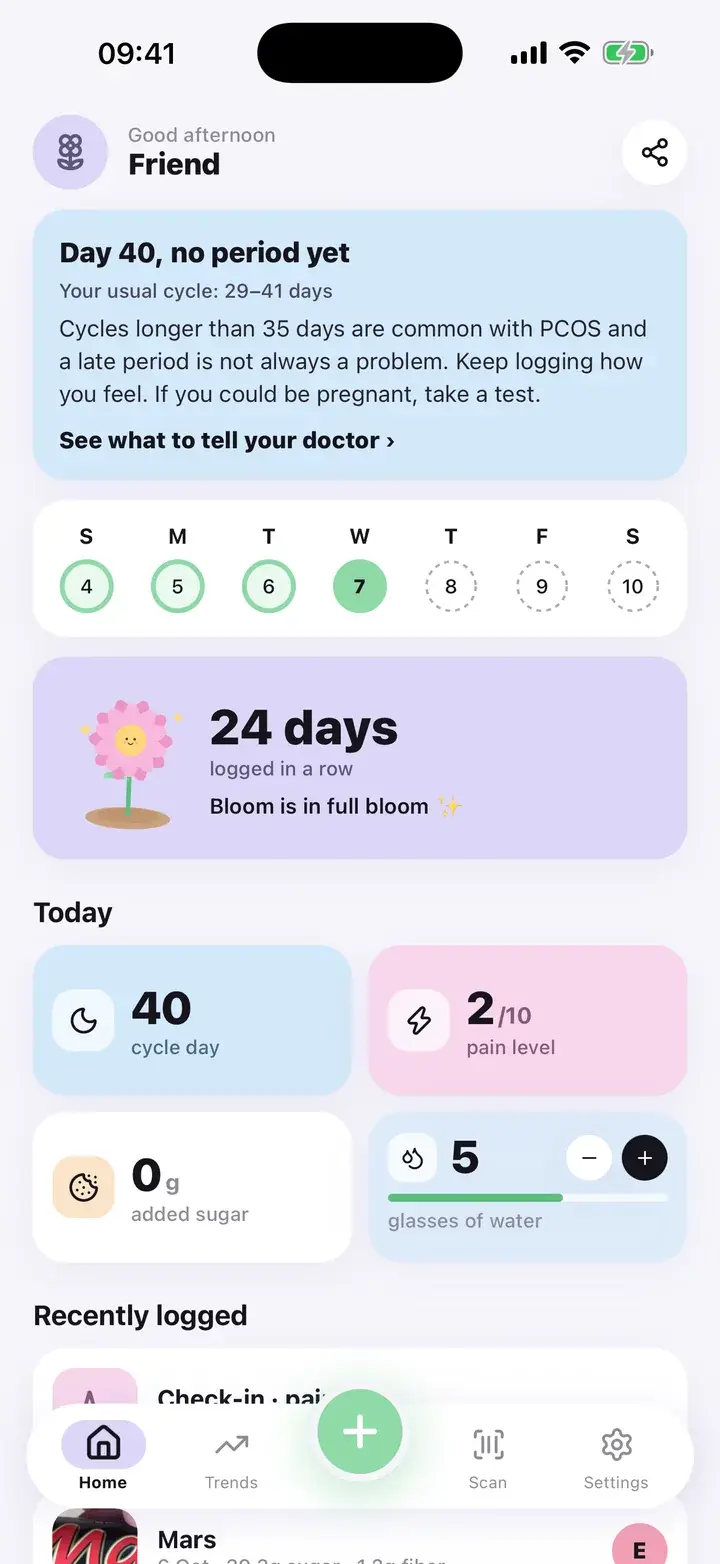
Day 36 to 45: a calm card titled “Day N, no period yet”. It says cycles longer than 35 days are common with PCOS and a late period is not always a problem, suggests you keep logging how you feel, and says to take a pregnancy test if you could be pregnant.
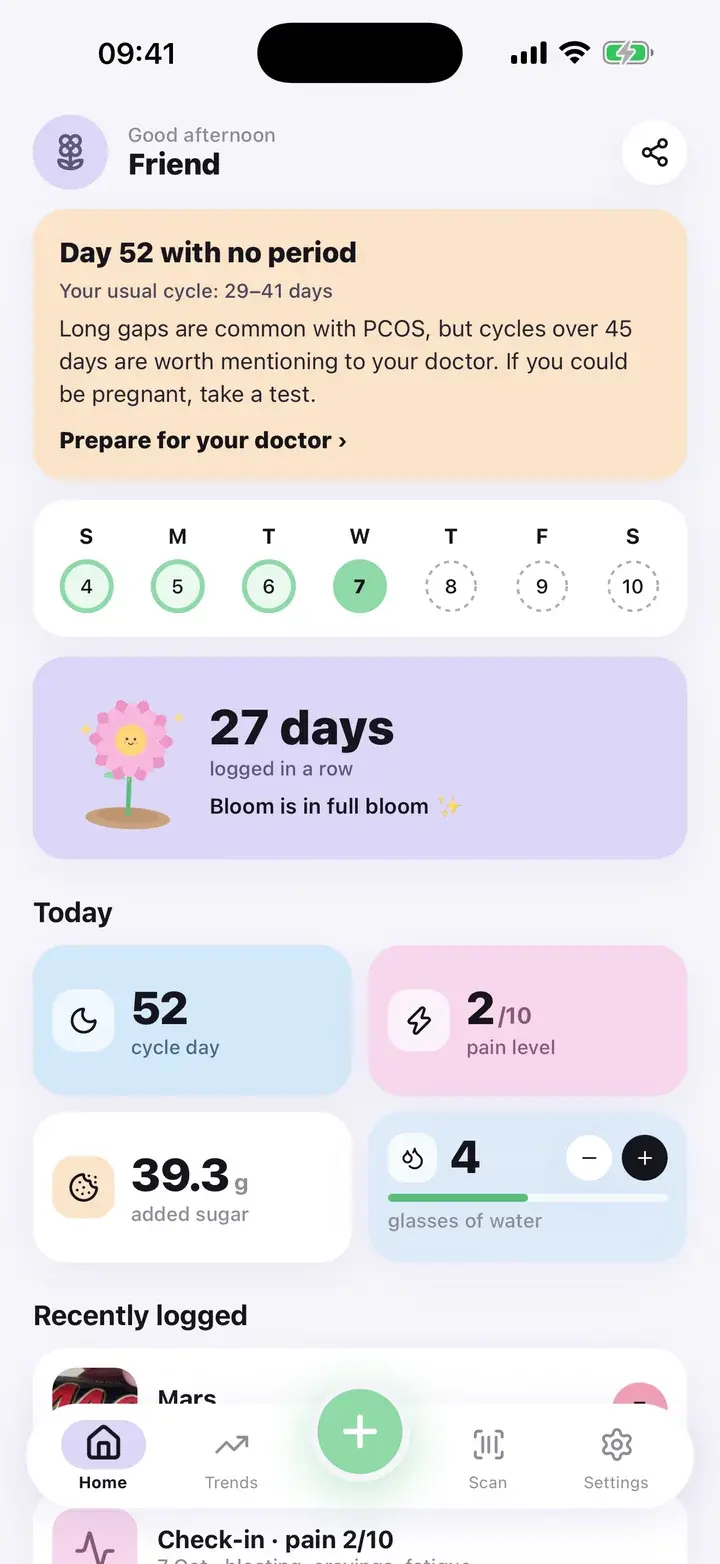
Day 46 to 89: the tone changes. Long gaps are common with PCOS, but cycles over 45 days are worth mentioning to your doctor, and the pregnancy test reminder stays.
Day 90 or more: “Day N with no period”. Three months or more without a period is worth a visit to your doctor, even if you feel fine.
Left: the calm stage. Right: after day 45.
Your own usual range, next to it
If you have at least two completed cycles logged, the card also shows your usual range, for example “Your usual cycle: 29 to 41 days”. That is your own history, which is a better yardstick than a textbook number.
The button on the card opens the doctor report, so what you tell your doctor is already written down: your cycle lengths, bleeding days and symptoms.
Good to know
On-device only
The card is worked out from your own log on your phone. Nothing is sent anywhere.
Wording is fixed
The messages are written once and do not change based on a model or an ad. Every stage is listed on this page.
Needs your period days logged
It works from the last period start the app knows about: the date from setup, or the bleeding days you logged since.
It will not tell you when your period will arrive, will not say you are pregnant or not pregnant, and will not say your cycle is a symptom of any condition. A long cycle is a reason to look, not a conclusion.
Questions
Why 35 days?
21 to 35 days is the commonly used range for a regular cycle. The card only appears after day 35.
Is a missed period normal with PCOS?
Long gaps between periods are common with PCOS, because ovulation happens less often or not at all. Common is not the same as fine: a cycle over 45 days is worth mentioning to your doctor, and 3 months or more with no period is worth a visit.
Why does PCOS cause late or no periods?
With PCOS, higher androgen and insulin levels can stop an egg from being released on schedule. Without ovulation the lining is not shed on time, so the period comes late or skips.
My pregnancy test is negative and my period is still late. What now?
Note the date and keep logging. If the cycle passes 45 days, mention it to your doctor; if you still could be pregnant, test again in a few days, because a test taken too early can miss it.
Can the app tell me if I am pregnant?
No. If you could be pregnant, take a pregnancy test. The card says so at every stage.
I had a period but did not log it. Will the card be wrong?
It counts from the last period start the app knows about, so it can run ahead of reality. Log flow on the days it happens and the history stays accurate.
Does it replace seeing a doctor?
No. Its job is to say when a visit is worth it and to help you prepare for one.
The screenshots on this page are from the real app, filled with sample entries made for this page. They are not anyone’s health data. Not a medical device. By Hicham Zaidi. Updated .